Support
Trump says Iran ceasefire is over as US strikes revive Oil market risk
President Donald Trump said the tentative US ceasefire with Iran is effectively over after Washington launched new strikes and revoked a waiver that had allowed Iranian oil sales. The escalation followed attacks on ships transiting the Strait of Hormuz, raising the risk of renewed conflict and bringing fresh volatility back to oil and global markets.
Trump said the tentative US-Iran ceasefire is “over.”
The US launched new strikes against Iran after attacks on three ships in Hormuz.
Washington revoked a waiver that allowed Iranian oil sales.
Oil prices rose again after recently falling back from a peak near $125 a barrel.
Trump declares the Iran ceasefire effectively over
President Donald Trump said the tentative ceasefire between the US and Iran is effectively over, raising the risk that the two countries could slide back into direct military conflict.
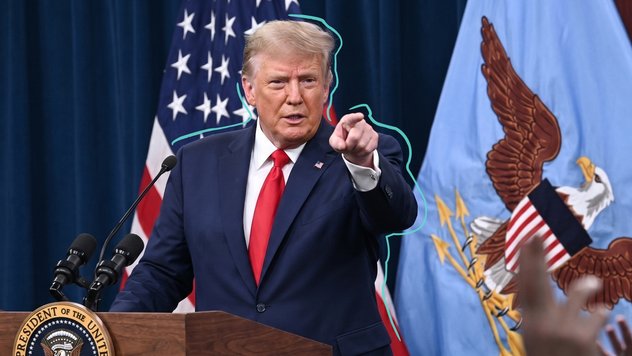
Speaking in Ankara during the NATO summit, Trump said he viewed the ceasefire process as finished and expressed deep pessimism about further engagement with Tehran. His comments came shortly after the US launched a new wave of strikes against Iran and revoked a waiver that had allowed the sale of Iranian oil.
The latest escalation is the most serious challenge yet to the interim peace framework between Washington and Tehran. That agreement had paused the fighting and opened a 60-day negotiation window for a broader deal.
Now, the future of that process is uncertain.
Hormuz attacks trigger US response
The immediate trigger was a series of attacks on commercial shipping in the Strait of Hormuz.
Three ships transiting the waterway were attacked, with Washington blaming Iran. Tehran has repeatedly said it will not allow vessels to move through the critical energy corridor without its permission.
The attacks directly challenged one of the core elements of the interim agreement: a halt to strikes on commercial shipping. The US waiver allowing Iranian oil sales was another key part of the understanding.
By launching new strikes and revoking the waiver, Washington signaled that it views Iran as having violated the basis of the ceasefire. Tehran, in turn, argued that the US military response and waiver revocation violated the agreement.
That creates a dangerous cycle. Each side now claims the other broke the deal first, making it harder to restart negotiations without further escalation.
Oil markets react to renewed conflict risk
The developments quickly brought volatility back to energy markets.
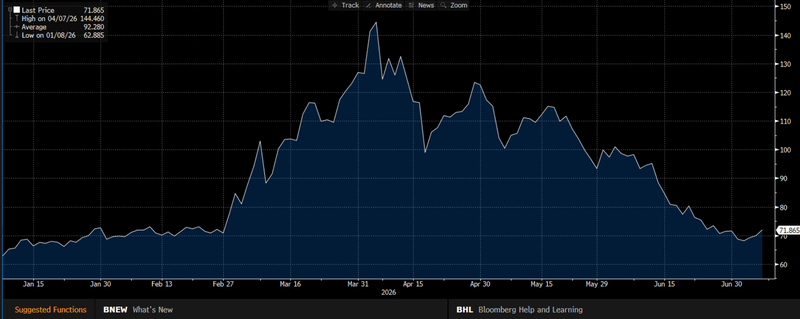
Oil prices had surged near $125 a barrel in late April during the height of the conflict, as traders priced the risk of a major disruption to Gulf energy flows. Prices later moved back toward pre-conflict levels as signs of recovery in shipping and supply eased fears of a prolonged shock.
That calm is now under pressure again.
Source: Bloomberg
After the US Treasury revoked the oil-sale waiver, crude prices rose on Tuesday. The move showed how sensitive the market remains to any change in the US-Iran relationship, especially when the Strait of Hormuz is involved.
Hormuz is one of the world’s most important energy chokepoints. Any renewed threat to shipping through the waterway can quickly lift the geopolitical risk premium in oil prices, even if physical flows have not yet been fully disrupted.
The oil waiver becomes a major pressure point
The revoked waiver is central to the latest escalation.
The waiver had allowed Iranian oil sales during the interim negotiating period. It was part of the mechanism designed to create incentives for Tehran to keep shipping lanes open and remain engaged in talks.
Removing that waiver increases financial pressure on Iran and reduces one of the economic benefits Tehran had received from the ceasefire framework.
For oil markets, the decision matters because it raises questions about Iranian exports and future supply availability. If Iranian barrels are restricted again while Hormuz tensions rise, traders may rebuild a risk premium into crude prices.
At the same time, the market must balance that risk against recent signs that energy flows were improving and that supply disruptions were easing.
Negotiations remain possible, but the path is harder
US officials have indicated that negotiators will continue trying to reach a final agreement with Iran. Trump also said he would not stop negotiators from continuing to engage, despite his own skepticism.
The obstacles are significant.
Key sticking points include future tolls on traffic through Hormuz, the unfreezing of Iranian assets and Iran’s nuclear ambitions. Each issue is difficult on its own. Together, they make a broader agreement much harder to finalize, especially after new military action.
Talks had resumed last week after the two countries exchanged strikes. They were then suspended again as Iran began a weeklong mass funeral for Supreme Leader Ali Khamenei, who was assassinated on the first day of the conflict in late February. Khamenei is set to be buried in Mashhad on July 9.
Qatar has said the next meeting will be scheduled as soon as possible after the funeral processions.
Political pressure rises for Trump
The renewed escalation also carries domestic political risks for Trump.
The war has damaged his political standing at a sensitive moment, with midterm elections approaching in November. Higher energy prices have added to voter concerns about the cost of living, while Trump’s approval ratings are near record lows amid dissatisfaction with his handling of the economy and the conflict.
Trump has argued that ending hostilities would bring Americans quick relief at the pump and that stock-market gains would support household confidence. But the latest escalation makes that message harder to sustain.
If oil prices rise again, the political cost could increase. Higher gasoline prices tend to affect voters quickly and visibly, making energy markets a direct political issue.
Markets face a renewed risk premium
For markets, the key question is whether this is a temporary breakdown or the start of a deeper conflict.
A return to negotiations could stabilize oil prices if shipping through Hormuz remains open and Iranian exports are not sharply reduced. But any additional attacks on vessels, further US strikes or tighter enforcement on Iranian oil sales could push energy prices higher again.
That would matter beyond oil.
Higher crude prices can feed into inflation expectations, complicate central-bank policy and weigh on consumer confidence. For equity markets, renewed Middle East risk can pressure risk appetite, especially if investors start to price another energy shock.
The timing is also important. Markets had recently become more comfortable with the idea that the worst of the conflict premium was fading. Trump’s comments and the new US actions have challenged that assumption.