Support
DXY forecast: can US CPI revive the Dollar after strong jobs data?
The US Dollar Index is holding near 101.70 ahead of today’s inflation report, after giving back most of Friday’s rise. The interesting part is that the dollar fell while the probability of a December fed rate hike increased to more than 80%.
Markets are pricing an 83% probability of a Fed rate hike in December.
DXY fell as lower oil prices reduced inflation concerns and encouraged a return to riskier assets.
A hot CPI report must lift expectations beyond one December hike to give the dollar a stronger and more lasting move.
Why did DXY fall while rate-hike expectations increased?
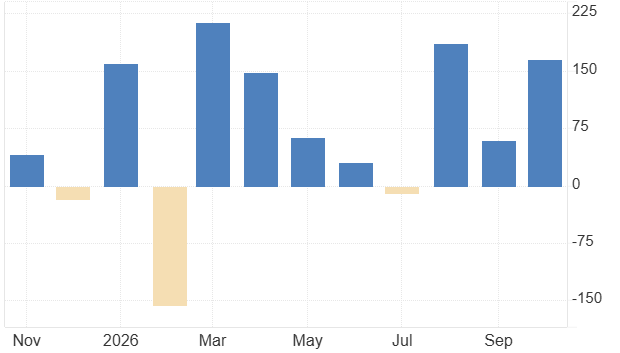
Friday’s strong employment report appeared to give the dollar a straightforward reason to rise. The US economy added 165,000 jobs in October, well above expectations of 65,000, while the broader labour data showed that the economy continues to handle restrictive interest rates.
That pushed the probability of a December rate hike from around 72% before the report to more than 80%. DXY responded by rising toward 102.30. However, the index fell back toward 101.70 on Monday even as the probability of a December hike climbed further to around 83%.
The move tells us that Friday’s dollar rise was built on two sources of support. The first was higher US rate expectations. The second was demand for the dollar as the Middle East conflict, elevated oil prices and weakness in technology shares pushed investors toward safer assets.
Source: U.S. Bureau of Labor Statistics
The first source remained in place on Monday, but the second disappeared
Positive signals from the talks between Washington and Tehran pushed Brent crude down almost 6% on Monday. Reports suggested that the US had accepted Iran’s right to enrich uranium up to 3.67%, while arrangements were being made to discuss the return of IAEA inspectors.
The possibility of an agreement reduced fears of further military escalation and disruption to oil supplies; however, the market was not abandoning the possibility of a December Fed hike. That expectation was already largely priced in.
What changed was the geopolitical side of the dollar trade: progress with Iran reduced demand for defensive dollar positions, while lower oil prices eased some of the inflation pressure that had supported expectations of tighter US monetary policy.
Positioning also played a role
Traders had already built large, long-dollar positions, making it harder for the currency to extend its rise without a new surprise. When oil fell and equities recovered, some of those positions were closed, accelerating the decline in DXY.
Oil connects geopolitics, inflation and the dollar
Oil has become one of the main links between the Middle East conflict and Fed policy. When oil was rising, it supported the dollar through several channels.
Higher energy costs increased headline inflation, strengthened the argument for tighter monetary policy and weakened risk appetite. The dollar therefore benefited both from higher rate expectations and safe-haven demand.
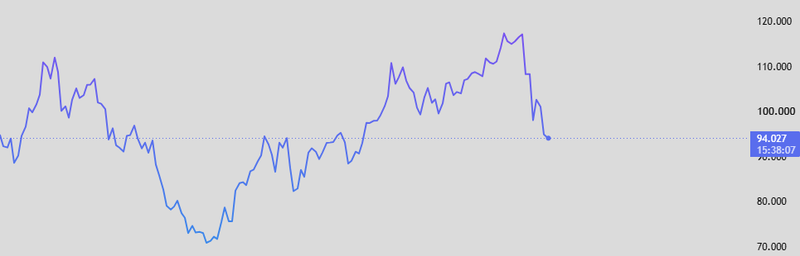
That relationship began to reverse after Brent dropped from its high near $118 to around $94. The decline reduced fears of an extended energy shock and allowed investors to consider a slower inflation path. It also supported equities by lowering the expected cost pressure on companies and households.
However, lower oil does not automatically remove the case for a December hike. Energy mainly affects headline inflation. The Fed will be more concerned about whether price increases are spreading through rents, services, wages and imported goods. This is why today’s CPI report cannot be judged by the headline number alone.
Source: Trading view
What does today’s CPI report need to show?
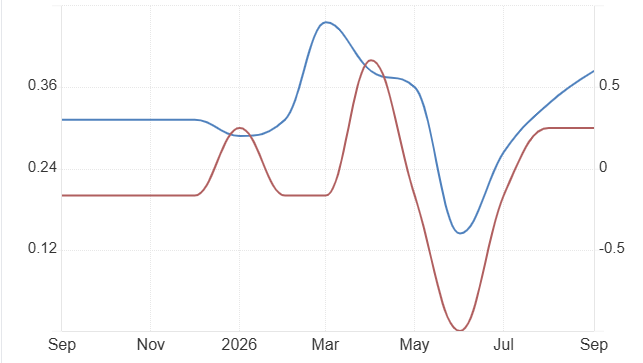
Headline CPI is expected to rise by 0.3% month on month in October, slowing from 0.6% in September. Core inflation, which excludes food and energy, is expected to rise by 0.2%, compared with 0.3% previously.
The report will be unusual because the Bureau of Labor Statistics may not publish the normal annual comparison. The federal shutdown prevented the collection of October 2025 prices, leaving the market more dependent on the monthly figures and the breakdown inside the report.
A strong headline figure caused mainly by energy or food would still support the dollar, but its effect may be limited after the recent fall in oil. Traders could see that pressure as temporary, particularly if core inflation slows.
Source: U.S. Bureau of Labor Statistics
A stronger core reading would carry more weight
If shelter, services and imported goods continue rising, the Fed would have clearer evidence that inflation is spreading beyond energy. Combined with the strong jobs report, that would leave policymakers with little reason to delay another hike.
The strongest dollar scenario would therefore be more than a high headline CPI figure. It would require firm core inflation, broad price increases and evidence that companies are passing higher wage, tariff and import costs on to consumers.
A soft report would create a more difficult situation for DXY
The market has already priced an 83% probability of a December hike, leaving considerable room for those expectations to fall.
If both headline and core inflation come in below forecasts, traders may conclude that the strong labour market does not require another immediate increase in rates. That could pull Treasury yields lower and place DXY under renewed pressure.
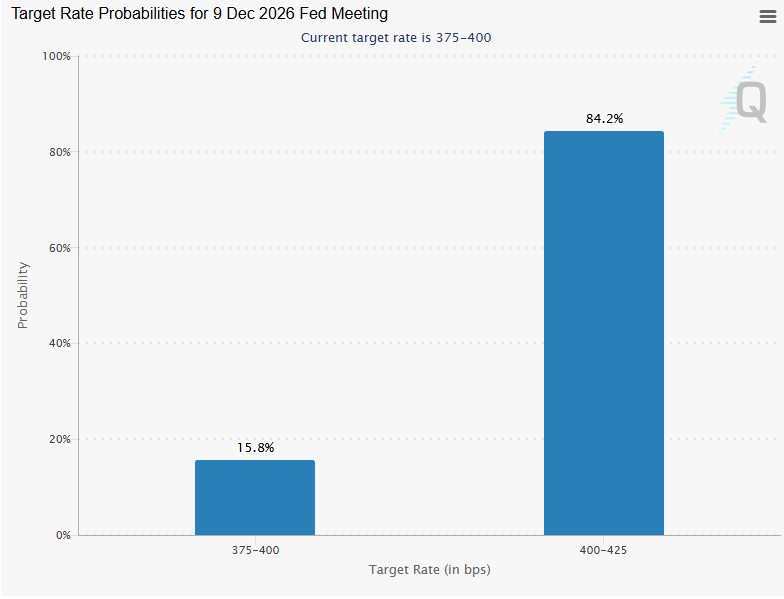
Source: CME Group
Why a hot CPI report may not be enough on its own
With the probability of a December hike already above 80%, there is limited room for the market to increase that expectation. A strong CPI report could push the probability closer to 100%, but that alone may not produce a large or lasting dollar rally.
For DXY to move decisively higher, the data may also need to change expectations for what happens after December.
If inflation appears persistent, markets could begin pricing another hike in early 2027 or expect the Fed to keep rates at restrictive levels for longer. That would raise the expected path of US interest rates rather than merely confirm one meeting, providing the dollar with stronger support.
If CPI only confirms a December hike without changing the longer-term path, DXY could rise initially and then lose momentum as traders take profits.