Support
 Gold slips toward a weekly loss as higher yields revive Fed tightening fears
Gold is heading for a weekly decline as rising bond yields and persistent inflation revive expectations for further Fed tightening.
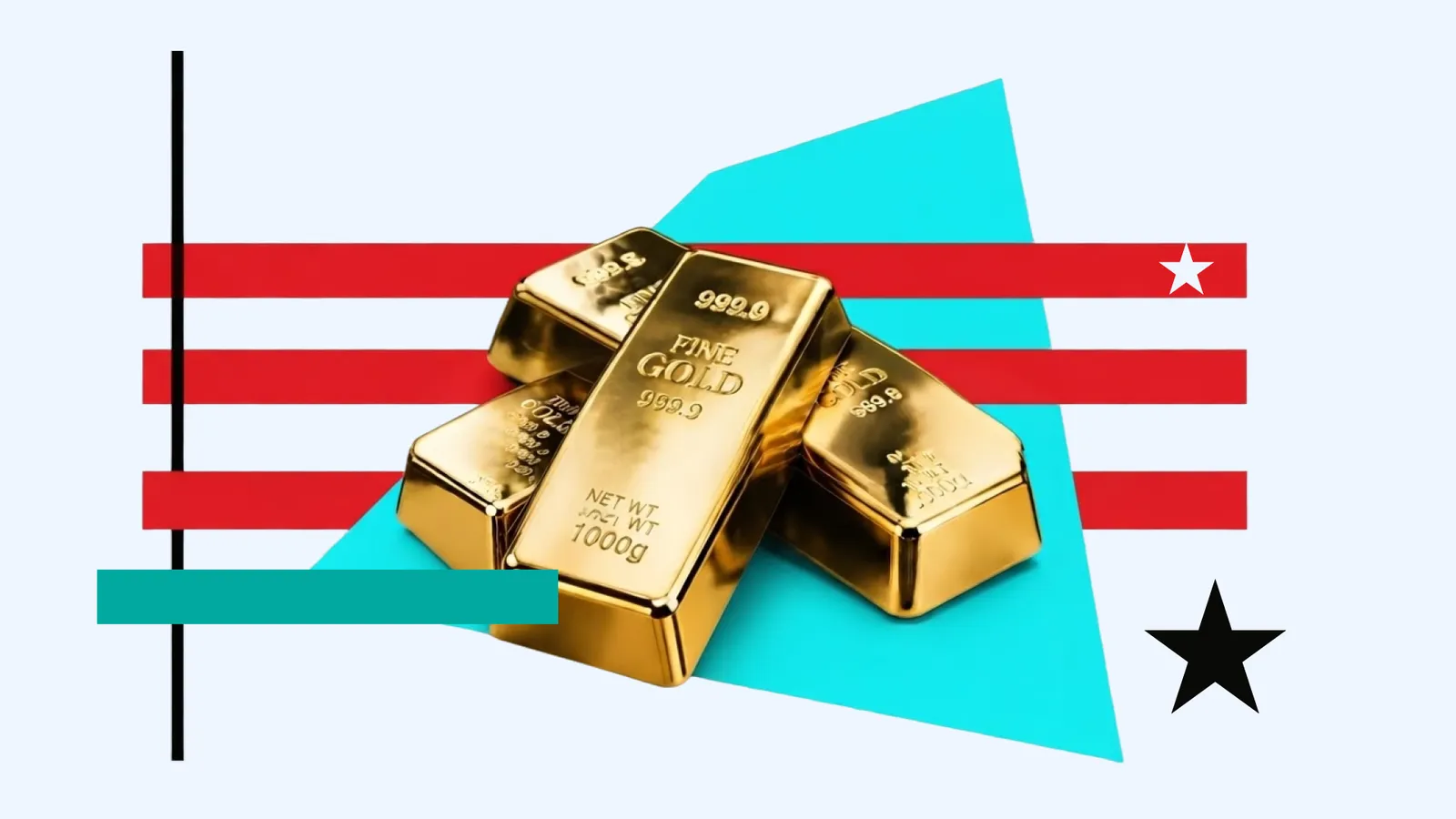
Gold traded near $4,300 an ounce on Friday but remained about 2% lower on the week.
The 30-year Treasury yield approached 5.5%, its highest level in more than two decades.
Elevated oil prices have reinforced inflation concerns and increased expectations for additional Fed rate hikes.
Gold has spent most of September in a relatively narrow range around $4,300 as markets repeatedly reprice the Fed outlook.
Silver traded near $63.88 an ounce and was on track for a weekly decline of more than 3%.
Gold is struggling against a higher-yield environment
Gold is set to finish the week lower as rising Treasury yields and renewed inflation concerns increase the probability that the Federal Reserve will have to tighten monetary policy further.
Bullion edged higher on Friday to trade around $4,283 an ounce, but remained roughly 2% below last Friday’s level.
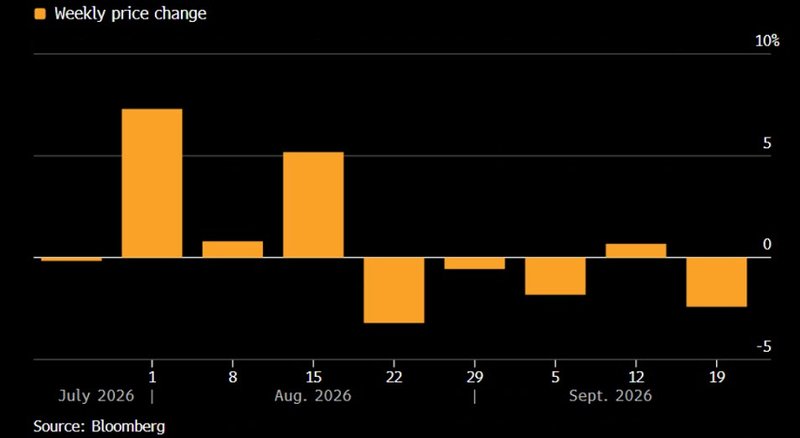
Source: Bloomberg
The pressure has come from a combination of higher energy prices, stronger economic data and a sharp move higher in bond yields.
That is a difficult mix for gold.
The metal offers no interest income, so when government bond yields rise, investors have a stronger incentive to hold interest-bearing assets instead.
This does not automatically end the longer-term gold story, but it makes sustained gains more difficult in the short term.
Treasury yields are becoming the biggest headwind
The bond market has become the most important driver for gold.
Selling in U.S. Treasuries intensified as investors reassessed the inflation outlook and became more concerned about the scale of government borrowing.
The yield on the 30-year Treasury climbed to just below 5.5%, its highest level in more than 20 years.
At those levels, gold faces a much more competitive environment.
Investors can earn substantial nominal yields from government bonds while taking significantly less price risk than they would in many other assets.
The effect becomes even stronger if real yields, meaning nominal yields adjusted for inflation expectations, also rise.
Historically, gold tends to struggle most when both real yields and the dollar are moving higher at the same time.
Oil is feeding directly into the Fed debate
Energy prices have added another layer of pressure.
Oil rose more than 7% over two sessions before pulling back on Friday, as traders reacted to changing expectations surrounding a possible phased agreement involving Iran and the Strait of Hormuz.
The market is sensitive to any development that could improve energy supply conditions because oil has become a major part of the inflation outlook.
Higher energy prices feed into transportation, manufacturing and household costs.
If they remain elevated long enough, they can influence broader inflation expectations and strengthen the case for additional Fed tightening.
That is why gold traders have become increasingly focused on crude prices.
The issue is not simply whether oil rises or falls on a particular day.
It is whether high energy costs keep inflation sticky enough to force the Fed to maintain higher rates for longer.
Fed tightening expectations are back in focus
The Federal Reserve has already restarted its tightening cycle, and markets are increasingly debating how many more hikes may follow.
Persistent inflation, resilient economic data and higher energy prices have all made it harder for investors to assume that the latest hike will be the last.
That creates a challenging backdrop for bullion.
If the Fed raises rates further, short-term yields can remain elevated and the dollar may stay supported.
Both factors increase the opportunity cost of holding gold.
Gold therefore needs either a decline in yields, a weaker dollar, renewed financial stress or stronger safe-haven demand to offset the pressure coming from monetary policy.
At the moment, none of those catalysts has become strong enough to generate a decisive breakout.
Why gold is stuck around $4,300
Gold has traded in a relatively narrow range around $4,300 an ounce throughout September.
That consolidation reflects a market caught between powerful but opposing forces.
On one side are rising yields, tighter Fed policy and a relatively firm dollar.
On the other are fiscal concerns, geopolitical risk and long-term demand for gold as a portfolio hedge.
Neither side has been strong enough to take full control.
That is why price action has become increasingly compressed.
Every move higher in gold encounters pressure from yields.
Every significant decline attracts investors who still view the metal as protection against inflation, currency debasement and geopolitical instability.
The result is a market waiting for a new catalyst.
A fresh catalyst may be needed for the next major move
Gold’s longer-term support remains intact, but the current environment suggests that another meaningful leg higher may require a change in one of the major macro variables.
A decline in Treasury yields would help immediately.
So would a weaker dollar.
A renewed deterioration in geopolitical conditions could also increase safe-haven demand.
Alternatively, evidence that Fed tightening is starting to weaken growth materially could revive expectations that monetary policy will eventually need to ease.
Without one of those developments, gold may continue trading sideways or under pressure.
The market has already priced a large amount of fiscal and geopolitical uncertainty.
To break decisively above its recent range, it may need something new.
The longer-term gold thesis has not disappeared
The short-term weakness does not necessarily invalidate the broader bullish argument.
Many investors continue to see gold as protection against rising government debt, currency weakness and financial instability.
That demand is particularly important when concerns about fiscal sustainability remain elevated.
Gold has also regained its traditional role as a hedge against policy uncertainty.
This helps explain why the metal has held relatively well even as long-term yields have moved sharply higher.
In previous cycles, a move toward 5.5% in the 30-year Treasury yield could have created much more severe pressure on gold.
The fact that bullion remains near $4,300 suggests underlying demand remains resilient.
The relationship between gold and yields remains critical
From here, the most important question is whether bond yields keep rising.
If the 30-year yield remains close to 5.5% or moves higher, gold could continue struggling to regain upward momentum.
Higher yields change portfolio allocation decisions.
Institutional investors do not need to abandon gold entirely, but they may reduce exposure when government bonds offer increasingly attractive returns.
That creates a ceiling on speculative demand.
The opposite is also true.
If yields retreat because inflation fears ease or the Fed becomes less hawkish, gold could quickly regain momentum.
This makes the Treasury market the most important cross-asset signal for bullion in the near term.
Silver is under even more pressure
Silver has also struggled this week.
The metal traded near $63.88 an ounce on Friday and was on course for a weekly decline of more than 3%.
Silver tends to react more aggressively than gold because it sits between precious metals and industrial commodities.
Higher rates can weaken investment demand, while concerns about economic growth can affect expectations for industrial consumption.
That combination can produce larger swings.
The broader weakness across precious metals therefore reinforces the message coming from gold: higher yields are currently the dominant force.
The dollar is another variable to watch
The dollar remained broadly steady after five consecutive sessions of gains.
That matters because gold is priced in dollars.
A stronger U.S. currency makes bullion more expensive for buyers using other currencies, which can reduce demand at the margin.
If the dollar continues rising alongside Treasury yields, the pressure on gold could become more pronounced.
If the dollar begins weakening while yields stabilize, the market could find support more quickly.
This is why the interaction between yields and the dollar matters more than either variable alone.
What could change the current gold outlook
Several developments could alter the balance.
A meaningful decline in oil prices would reduce inflation pressure and weaken the case for additional Fed hikes.
Softer U.S. economic data could have a similar effect by raising concerns that tighter monetary policy is beginning to slow growth.
A deterioration in geopolitical conditions could also increase demand for safe-haven assets.
Finally, any renewed concern over the U.S. fiscal position or Treasury market stability could strengthen the case for holding gold despite elevated yields.
Until one of those catalysts appears, gold may remain trapped between long-term support and short-term monetary headwinds.
Why gold may stay under pressure until yields turn lower
Gold’s weekly decline reflects a market that is still fundamentally sensitive to interest rates.
Bullion remains near $4,300, but the combination of sticky inflation, elevated oil prices and a 30-year Treasury yield near 5.5% is making further upside difficult.
The longer-term case for gold remains intact.
Fiscal concerns have not disappeared.
Geopolitical risks remain elevated.
Demand for portfolio protection is still strong.
But those factors are currently being offset by a much more immediate problem: the return available on competing assets is rising.
As long as Treasury yields continue climbing and the Fed remains open to further tightening, gold may struggle to escape its September range.
The next meaningful move higher probably requires a change in the rates story.
Until then, the bond market remains in control.