Support
Markets can live with a hawkish Fed, but uncertainty remains the bigger risk
The Fed’s hawkish message removed one major source of uncertainty, but high oil prices, 5% Treasury yields and questions around AI spending are preventing investors from fully embracing risk.

The Fed’s latest rate hike helped restore confidence that policymakers are serious about inflation without signaling an aggressive tightening cycle
The 10-year Treasury yield remains close to 5%, keeping pressure on equity valuations and borrowing costs.
Brent crude is still trading above $100 a barrel, leaving energy-driven inflation as the biggest near-term risk to the rate outlook.
Swap markets are pricing roughly three additional Fed hikes by the end of July 2027.
AI spending remains a key source of uncertainty, with investors becoming more selective across semiconductors, software and other technology beneficiaries.
The Fed removed one uncertainty without removing the risks
Markets may be able to live with higher interest rates more comfortably than they can live with uncertainty over how the Federal Reserve will respond to inflation.
That is one of the clearest conclusions after last week’s rate decision.
The Fed raised rates and delivered a distinctly hawkish message, reinforcing its determination to bring inflation under control while stopping short of signaling an aggressive sequence of hikes.
For investors, that distinction matters.
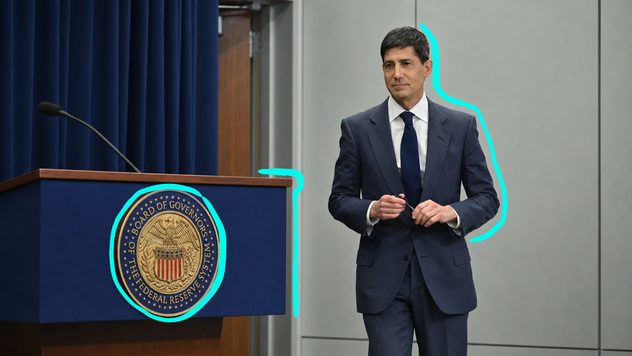
The decision clarified the Fed’s reaction function after months of uncertainty over how Chair Kevin Warsh would respond to persistent inflation, higher energy prices and political pressure surrounding monetary policy.
Markets now have a better idea of what the central bank is prepared to do.
That clarity itself has value.
A hawkish Fed is easier to price than an unpredictable Fed
Investors do not necessarily need easy monetary policy to remain constructive on equities.
They need to understand the rules.
The Fed’s latest decision showed that policymakers are willing to tighten if inflation remains persistent, while also suggesting they do not currently see the need for an aggressive hiking cycle.
That gives markets a framework. Inflation stays high, rates can rise. Inflation cools, the Fed can pause.
The uncertainty before the meeting was more damaging because investors did not know whether the Fed would prioritize inflation, growth or the tightening already delivered through bond markets.
That ambiguity has diminished.
The harder problem now lies outside the Fed’s direct control.
Oil above $100 keeps the inflation problem alive
Brent crude has retreated from recent highs but remains above $100 a barrel, leaving energy prices as the biggest obstacle to a more comfortable market outlook.
As long as oil remains elevated, investors cannot assume the inflation problem is fading.
Higher energy prices feed directly into transport and production costs and can eventually spread into a much wider range of goods and services.
Diesel is particularly important because it sits deep inside the economic supply chain.
Trucks, trains, agriculture, construction and logistics all depend heavily on it. A sustained rise in diesel prices can therefore create inflation pressure well beyond petrol stations.
This is why energy has become central to the Fed outlook.
The September hike may have restored policy credibility, but persistent oil inflation could force policymakers to become even more restrictive.
The next rate moves may be determined by energy
Swap markets are now pricing approximately three additional rate hikes by the end of July 2027.
That is a meaningful amount of further tightening.
Whether those hikes are ultimately delivered may depend heavily on the path of oil prices.
If geopolitical tensions ease and crude falls materially, headline inflation should receive immediate relief and the Fed may gain more room to wait.
If Brent remains above $100 or rises again, the situation becomes much more difficult.
Persistent energy inflation could begin affecting wages, consumer inflation expectations and broader services prices.
At that point, the Fed would face a stronger argument for further action even if some parts of the economy begin slowing.
The 10-year Treasury yield near 5% is the real market stress test
The bond market remains the most important signal for risk assets.
The 10-year Treasury yield is again testing the 5% area, a level high enough to compete much more aggressively with equities for capital.
At 5%, investors can earn a substantial nominal return from government debt without taking equity risk.
That changes the valuation equation.
Stocks do not necessarily need to fall simply because Treasury yields are high, particularly if earnings are growing quickly.
But investors will demand stronger profit growth to justify elevated multiples.
The higher the risk-free rate moves, the less tolerance the market has for disappointing earnings.
That is particularly important for expensive growth stocks whose valuations depend heavily on profits expected years into the future.
Why equities have remained resilient
Despite the rise in rates, the fundamental picture for U.S. equities has not deteriorated dramatically.
Corporate earnings remain strong. Credit spreads are contained.
Equity volatility remains relatively subdued.
Those conditions suggest the financial system is absorbing tighter policy without showing the stress normally associated with the late stages of a severe economic downturn.
This explains why equities have not broken down even as Treasury yields approach levels that would historically create significant pressure.
Investors appear to be distinguishing between two different forms of higher rates.
One is higher yields because inflation is persistent while economic and earnings growth remain strong.
The other is higher yields combined with deteriorating growth, weaker credit and falling profits.
The second environment would be considerably more dangerous.
So far, markets are not pricing that scenario as the dominant outcome.
The yield curve remains one of the key signals
The shape of the Treasury curve will be particularly important from here.
If long-term yields rise because investors expect stronger nominal growth while the curve remains healthy, equities may be able to absorb much of the move.
A renewed inversion or a disorderly repricing would send a different signal.
It could imply monetary policy is becoming restrictive enough to threaten future economic activity.
Investors therefore need to look beyond the simple level of the 10-year yield.
A 5% yield alongside strong growth and a functioning credit market is very different from a 5% yield accompanied by widening spreads and collapsing growth expectations.
For now, the market remains closer to the first scenario.
Investors entered the Fed meeting cautiously positioned
The market reaction also reflects how investors were positioned before the decision.
Rather than going into the meeting with excessive risk exposure, investors had already become more defensive.
Exposure was reduced. Hedges were added.
That helped limit the risk of a violent selloff when the Fed delivered its hike.
The large quarterly options expiry on Friday also helped reset positioning, removing a significant amount of outstanding derivatives exposure and potentially allowing markets to trade more freely afterward.
This matters because major corrections often become worse when investors are heavily positioned in the same direction.
The current setup appears less crowded.
That does not eliminate downside risk, but it reduces one source of instability.
AI is becoming the second major uncertainty
Energy is not the only issue keeping investors cautious.
The market is increasingly questioning how quickly the enormous investment in artificial intelligence will generate sufficient returns.
AI-related capital spending has become one of the most powerful drivers of the U.S. economy and corporate earnings expectations.
But the scale of that investment also creates risk.
Data centers, semiconductors, networking equipment, electricity infrastructure and cloud capacity require enormous amounts of capital.
Investors are now asking whether revenue growth will ultimately justify those expenditures.
That question has become particularly important as borrowing costs rise.
An AI project that looks attractive with cheap capital can become much less compelling when corporate financing rates increase substantially.
The AI trade is already becoming more selective
Technology is no longer trading as one unified AI theme.
Semiconductor stocks have largely stalled over the past two months and have become more volatile.
Software, meanwhile, has begun recovering relative strength.
That rotation suggests investors are moving beyond the early phase of the AI trade, when almost any company exposed to chips or infrastructure benefited from enthusiasm around spending.
The next stage will likely depend much more on earnings.
Companies able to demonstrate genuine productivity improvements, recurring revenue and strong returns on AI investment may continue receiving premium valuations.
Businesses relying primarily on expectations of future demand may face greater pressure.
This is particularly important when Treasury yields are close to 5%.
The hurdle rate for speculative growth is rising.
S&P 500 valuations have already adjusted
One reason equities may be more resilient than the headline level of interest rates suggests is that valuations have already compressed.
The S&P 500 has experienced a significant de-rating over the past year.
Forward earnings estimates have risen strongly while valuation multiples have fallen, meaning much of the index’s adjustment has occurred through earnings rather than a major collapse in share prices.
The benchmark now trades only modestly above its longer-term valuation average.
That gives the market somewhat more protection than it had when multiples were substantially more stretched.
It also suggests investors are already refusing to pay increasingly higher prices simply for growth.
Strong earnings are now required.
Earnings may decide whether the rally resumes
The next major corporate earnings season arrives within weeks and could become the catalyst that determines whether risk appetite strengthens again.
If companies continue beating expectations while maintaining healthy guidance, investors may become more willing to tolerate elevated Treasury yields.
Strong earnings growth can offset some of the valuation pressure produced by higher discount rates.
A disappointing season would be more problematic.
Investors are already questioning AI returns, energy costs are increasing and monetary policy is becoming tighter.
If profit expectations begin falling at the same time, the argument for holding equities becomes considerably weaker.
That makes the upcoming reporting season unusually important.
The market is not ready for defensives yet
There are reasons for greater caution, but the current environment does not yet resemble a classic recession trade.
Economic activity remains resilient.
Earnings growth is still positive.
Credit markets are functioning.
That makes a wholesale move into defensive sectors premature.
Instead, the market may increasingly reward quality, value and income.
Companies with strong balance sheets, reliable free cash flow and less dependence on cheap financing become more attractive as rates rise.
Highly leveraged or expensive speculative businesses face the opposite problem.
This type of rotation would be consistent with a market adjusting to structurally higher rates rather than preparing for an immediate economic contraction.
The Fed decision may have been a clearing event
The September meeting removed one of the largest sources of uncertainty hanging over markets.
Before the decision, investors were unsure whether the Fed would raise rates, how Warsh would explain the move and whether the central bank would signal a much more aggressive path.
Now they know.
The Fed is prepared to fight inflation. It is willing to raise rates.
It is not currently signaling an immediate sequence of aggressive hikes.
That combination is easier for markets to price.
The remaining uncertainty now comes primarily from inflation itself.
Why markets can tolerate a hawkish Fed but not another inflation shock
The outlook for equities remains constructive, but the path is unlikely to be smooth.
The Fed has given investors something they badly needed: clarity.
It demonstrated that inflation above target will provoke a policy response while avoiding a message that suggested the economy requires a severe monetary tightening cycle.
That removes one important source of uncertainty.
But oil remains above $100, the 10-year Treasury yield is testing 5%, and markets are pricing several more rate increases over the coming year.
At the same time, investors are becoming more skeptical about whether the enormous AI investment cycle will generate returns quickly enough to justify current expectations.
Those risks explain why markets are not fully embracing the bullish case despite strong earnings and contained credit stress.
The distinction from here is critical.
Higher rates alone do not necessarily end an equity rally.
Higher rates combined with falling earnings and renewed inflation would be a much bigger problem.
For now, investors appear willing to accept a hawkish Fed.
What they are far less prepared for is another inflation shock that forces it to become even more hawkish.