Support
 UK bond yields are making Healey’s growth plan harder to deliver
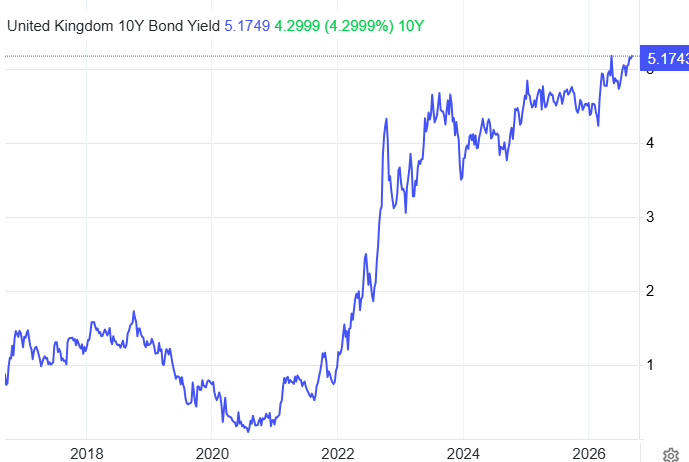
John Healey used his first major speech as chancellor to argue that Britain can still return to stronger growth, but the bond market is asking a harder question: who pays for it? The government is heading into October 28 budget with borrowing costs close to their highest levels in years. The 10-year gilt yield was around 5.29%, the highest since 2007.

The UK 10-year gilt yield is around 5.16%, close to levels last seen nearly two decades ago.
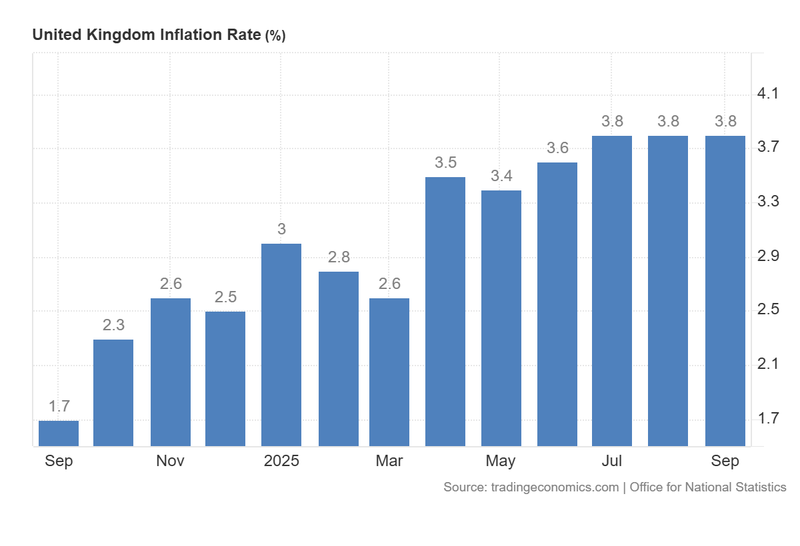
UK CPI reading was 2.9% in July, up from 2.6% in June.
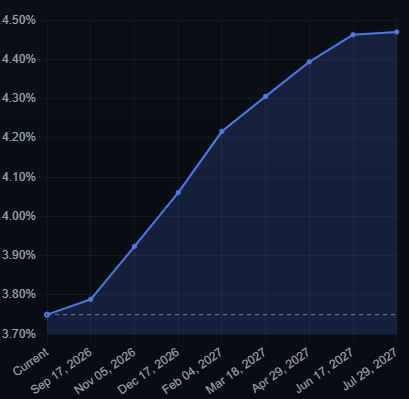
Expectations for a rate increase by the end of 2026 have strengthened
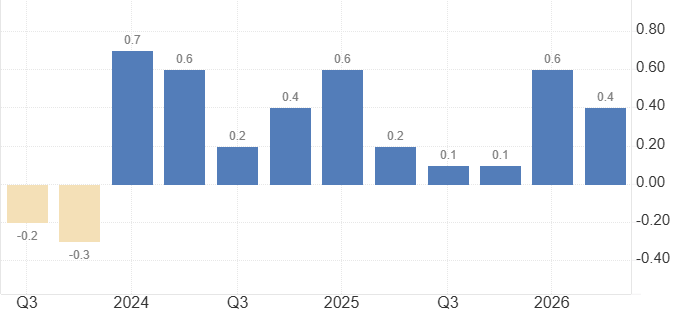
UK GDP growth over the three months to June was 0.4%.
Bond market is asking a different question
The UK 10-year gilt yield is around 5.16%, close to levels last seen nearly two decades ago. That makes every new spending commitment more expensive and leaves the government with less room to support growth without adding to borrowing pressure.
Healey announced a £150 million British Business Bank fund for fast-growing companies and university spinouts in northern England, alongside plans to give regional authorities more control over investment and business rates. The government also wants to reduce regulatory delays that it argues are holding back private investment.
The amount is small compared with the size of the UK economy and public finances. That is why the political response has focused less on the individual fund and more on whether the government has a plan large enough to change the growth picture.
Source: Trading economics
Why the gilt market matters more than the £150 million
Britain's borrowing costs are already feeding into the wider economy. Mortgage rates have started moving higher as gilt yields rise, with major lenders increasing some fixed-rate products. That means higher government borrowing costs are quickly becoming higher household borrowing costs as well.
The UK is therefore caught between two competing pressures
The government wants faster investment and stronger regional growth. The Bank of England is worried about inflation. And investors want compensation for holding long-dated UK debt while government borrowing remains high. That leaves fiscal policy with less freedom than it had when yields were close to zero.
Healey's message was that fiscal credibility and growth should work together. He argued that controlling costs and removing barriers to investment would help create the conditions for stronger private-sector growth. But the Budget will have to put numbers behind that argument.
The market will want to know where the money comes from, how much borrowing is required and whether the fiscal rules still leave enough room after debt-interest costs are considered. The Financial Times reported that the government's fiscal buffer could shrink sharply ahead of the Budget, leaving less protection against higher borrowing costs.
Inflation is making the Bank of England's job harder
The latest UK CPI reading was 2.9% in July, up from 2.6% in June. Core CPI remained at 2.6%, while services inflation eased to 3.4%. On its own, that would not necessarily force the Bank of England to raise rates.
Source: Office for National Statistics
The problem is energy
The Middle East conflict has pushed oil and other energy costs higher, and the Bank has already warned that the shock could feed into UK inflation later this year. In July, three MPC members wanted a 25bp rate increase to 4%, although the majority kept Bank Rate at 3.75%.
Huw Pill now wants the Bank to move earlier rather than wait for inflation to become harder to control. His argument is simple: a smaller increase now could prevent a much larger tightening later if the energy shock spreads into wages and domestic prices. Markets have started taking that risk more seriously. Expectations for a rate increase by the end of 2026 have strengthened, with another move being considered for early 2027.
Source: Rate probability
The October Budget is becoming the real test
Healey's speech did little to settle the biggest questions facing the market. He avoided giving details on future tax policy, while the government remains committed to its existing fiscal rules and has promised not to raise income tax, VAT, corporation tax or National Insurance.
The government wants to increase investment, support regional growth and maintain spending commitments. At the same time, it faces high debt-interest costs, expensive gilts and an economy that is not growing fast enough to make fiscal arithmetic easier. UK GDP growth over the three months to June was 0.4%. That is positive, but hardly strong enough to remove the pressure on fiscal policy.
Source: Office for National Statistics