Support
Yen carry trade unwind: could Japanese inflation trigger another wave of selling?
The technology selloff put yen-funded positions under pressure. Whether that develops into a deeper unwind depends partly on how Japan’s inflation changes expectations for the Bank of Japan.

Yen appreciation adds currency losses to the pressure on overseas equity positions.
Inflation could prolong the adjustment if investors bring forward expectations of BoJ tightening.
A recovery in technology shares will offer less relief if the yen keeps strengthening.
The yen could complicate a recovery in technology shares
Thursday’s selloff put yen-funded investments under pressure from two directions. Technology shares fell as concerns over AI spending weighed on sentiment, while the yen strengthened to around 156.96 per dollar. Investors also sought safety in Treasuries, pushing the US 10-year yield down 19.3 basis points to 4.953%.
For investors with unhedged yen borrowing, the currency move compounded the equity losses. Their US holdings were worth less, while repaying the original borrowing required more dollars. That can prompt investors to reduce exposure even when their longer-term view of technology companies remains intact.
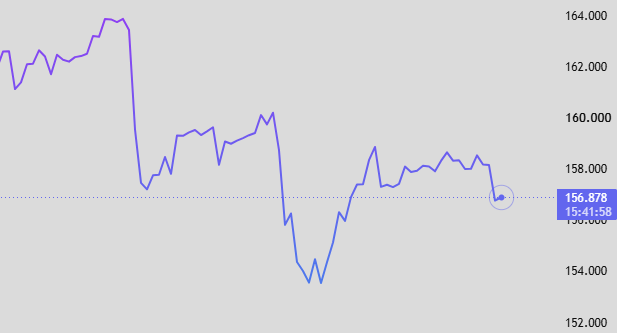
Source: Trading view
USD/JPY suggests the market response has started to change
The Bank of Japan’s September rate hike failed to produce a sustained recovery in the yen. USD/JPY climbed back towards 158, suggesting that investors remained willing to borrow yen as long as overseas returns justified the funding cost. Higher Japanese rates had not yet changed that calculation enough to reverse the currency’s weakness.
September’s inflation data accelerated to 2.1% from 1.7%. A separate measure excluding both fresh food and energy rose to 2.4% from 1.9% that added a stronger reason to reconsider that assumption, after it exceeded the BoJ’s 2% target for the first time in nine months. The release was just days after Ueda’s warning that the central bank could not allow underlying inflation to accelerate further, reinforcing the possibility that policy would need to tighten again.
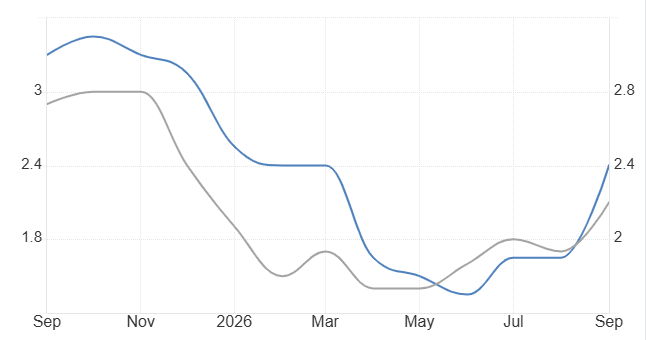
Source: Ministry of Internal Affairs & Communications
Inflation did not necessarily trigger the entire move
The significance for USD/JPY is that investors had largely looked through the September rate hike, but persistent inflation makes it harder to assume that Japanese borrowing costs will remain low relative to returns elsewhere. If the BoJ moves towards further tightening, the funding advantage that supports yen-funded positions could gradually narrow.
The subsequent decline towards 156 came as these policy concerns coincided with renewed pressure on technology shares and demand for safer assets. Inflation did not necessarily trigger the entire move, but it strengthened the case for a change in Japan’s policy outlook at a time when global investors were already reassessing risk. Whether that marks the beginning of a sustained carry trade unwind will depend on whether the yen’s recovery persists and investors continue to reduce exposure.
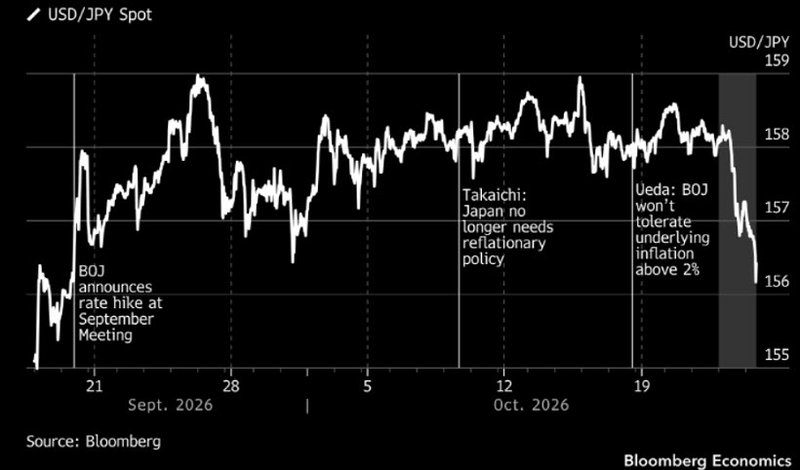
Source: Bloomberg
The currency move is particularly important for leveraged positions
When an investor borrows yen and converts it into dollars, a stronger yen increases the dollar amount needed to repay the original borrowing. If the US asset is also losing value, the investor faces a double disadvantage: the investment is worth less, while the liability has become more expensive to settle in dollar terms.
That combination can force a change in behaviour before investors abandon their longer-term outlook for technology shares. Once losses approach risk limits or available capital becomes constrained, reducing exposure may be necessary even if a recovery still appears plausible.
The yen’s appreciation does not, by itself, prove that a large-scale carry trade unwind is under way. Bonds demand and concerns about possible upcoming rate hike may also have supported the currency.
What matters for investors already holding these positions is that the stronger yen worsens their repayment calculation regardless of the original cause of the move.
For the carry trade, the issue is not just Japanese inflation
For the carry trade, the issue is not simply whether Japanese inflation remains above the BoJ’s 2% target. It is whether that persistence changes expectations for borrowing costs. If investors anticipate further rate increases, the funding advantage of borrowing yen becomes less secure. Overseas assets would need to offer stronger expected returns to justify the same currency and leverage risks.
The BoJ is expected to hold rates at October meeting after raising its policy rate to 1.25% last month. However, a pause will not necessarily reassure investors if the central bank revises its inflation forecasts higher or signals that further tightening remains necessary. Markets can adjust their expectations for a December hike.
This is where inflation could extend the market impact beyond the original selloff. Equity losses may prompt investors to close existing positions, but a less favourable funding outlook could discourage them from reopening those positions once volatility subsides. The result would not automatically be another wave of selling, but a weaker source of demand during the next market recovery.
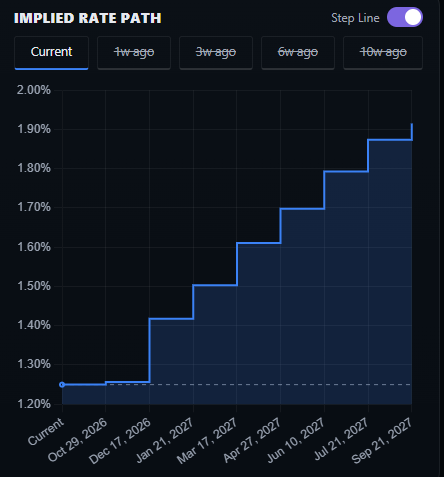
Source: Rate probability
Bond-market flows point to competing forces
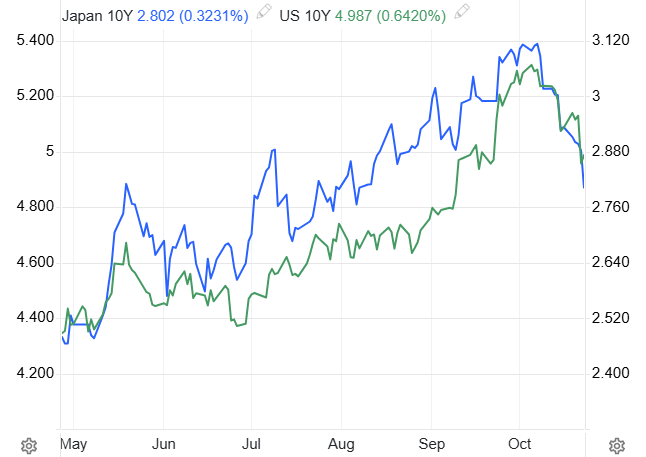
Government bonds offered some protection during the equity decline. The US 10-year Treasury yield fell sharply on Thursday, and Japan’s 10-year government bond yield declined by nine basis points to 2.79% on Friday as investors sought safety.
Source: Trading economics
Japanese investors have sold foreign bonds for five consecutive weeks
Falling yields in both markets do not rule out selling linked to the carry trade. Investors seeking protection from equity volatility buy government bonds, lifting prices and lowering yields. Those closing overseas positions may sell Treasuries to raise dollars before converting the proceeds into yen.
That selling would put upward pressure on Treasury yields, all else equal. The observed decline indicates that buying pressure outweighed any selling during the period, not that liquidation was absent.
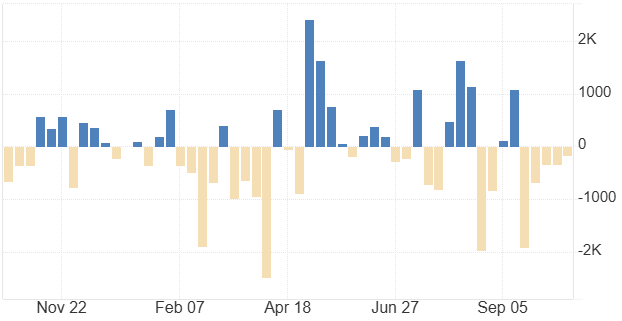
Japanese investors have also been reducing their foreign bond holdings. They recorded net sales of long-term foreign bonds for five consecutive weeks, bringing cumulative disposals over that period to approximately 3.43 trillion yen.
Source: Ministry of Finance, Japan
Two forces affect Treasury yields in opposite directions
Japanese institutions may be moving money towards domestic bonds after a substantial rise in local yields, rather than liquidating leveraged positions to repay yen borrowing. Nor do foreign bond sales automatically translate into yen purchases, since proceeds may remain overseas or be affected by currency hedging.
For the broader market, these are two distinct potential sources of pressure on overseas assets
Leveraged investors may reduce risk because losses have increased, while Japanese institutions may reconsider foreign holdings because domestic alternatives have become more competitive. The weekly figures establish that the bond-selling trend was already under way; they do not show how much Thursday’s technology selloff added to it.
A sharper fall in US yields narrows the gap between the two 10-year benchmarks, short-term policy expectations, actual financing costs, asset returns and currency exposure matter more directly. The Treasury rally may cushion existing bondholders, yet lower yields offer less income to investors considering new positions.
What would trigger another wave of selling?
Renewed technology losses alongside further yen appreciation would put remaining unhedged positions under greater strain. If markets also brought forward expectations of BoJ tightening, investors would have less reason to wait for conditions to improve. Those closing positions would need to buy yen to repay borrowing, potentially reinforcing the currency move and adding pressure to others still exposed.
Bonds demand and concerns about another rate hike in December may also support the yen. The extent of any feedback would depend on how much leveraged exposure remains and whether investors are reducing positions.
Japanese inflation matters because it could influence that decision
A recovery in technology shares accompanied by yen weakness would ease both asset and repayment pressures. If equities recover while the yen stays firm, investors may instead use the rebound to reduce exposure or return with less leverage.
Even if share prices recover, investors may be slower to rebuild the same positions if they expect yen funding to become more expensive. The risk is not simply another round of forced selling, but a weaker source of demand for overseas assets when markets attempt to recover.