
 Support
 Daily discussion thread for August 21, 2026
Oil prices advanced following the announcement of unprecedented US sanctions against Iran, triggering concerns over potential supply disruptions. Concurrently, Japan recorded its highest inflation rate in several months, while Canadian retail sales exhibited signs of deceleration.

Brent crude rose to $94.39 per barrel and WTI to $87.06 as US–Iran geopolitical tensions escalated.
Proposed US sanctions against Iran threaten broader economic integration across Asia and the Middle East.
Japan’s headline inflation accelerated to 1.9% in July, heightening concerns surrounding energy import costs.
Canadian retail sales weakened, contracting by 0.8% in July.
US–Iran tensions intensify as oil prices advance
Oil prices continue to surge amid escalating geopolitical friction between the United States and Iran. The Brent crude futures contract (BRNV6) rose by 0.65% to $94.39 per barrel, while the West Texas Intermediate (WTI) futures contract (CLV6) advanced by 0.26% to $87.06 per barrel. Over the past fortnight, both benchmark contracts have gained approximately 13% as geopolitical risks have mounted.
According to reports from Reuters, the US President announced unprecedented sanctions against Iran aimed at severely weakening its economy. In response, Tehran warned that its reaction to US threats would be devastating. Meanwhile, US Treasury Secretary Scott Bessent stated that detailed information regarding the proposed sanctions will be released on Monday. Iranian officials, however, have yet to outline specific retaliatory measures.
These developments indicate that diplomatic avenues remain largely closed as bilateral tensions escalate. Furthermore, if implemented, economic pressure on Tehran could impact not only the domestic Iranian economy, but also key Asian trading partners—such as China—and Middle Eastern economies that maintain strong economic integration with Iran.
Concurrently, market participants, particularly within fixed-income markets, are exhibiting growing apprehension over US sovereign debt. Sustained energy price pressures continue to support expectations of a prolonged restrictive monetary stance by the Federal Reserve, which threatens to exacerbate the US budget deficit through elevated debt servicing costs.
Japanese inflation rate accelerates to multi-month high
According to data released by Japan’s Ministry of Internal Affairs and Communications, the headline inflation rate accelerated from 1.6% in June to 1.9% in July, marking its highest level since December 2025. Concurrently, core inflation—which excludes volatile fresh food and energy prices—rose from 1.6% to 1.8% over the same period. Although these inflation figures remain slightly beneath the Bank of Japan’s 2% target, market participants express concern that inflationary pressures may persist, driven predominantly by energy costs given Japan’s heavy reliance on oil imports.
In financial markets, the benchmark Nikkei 225 equity index fell by 0.30% to 66,016 points, while the USD/JPY exchange rate declined marginally by 0.10% to ¥158.86.
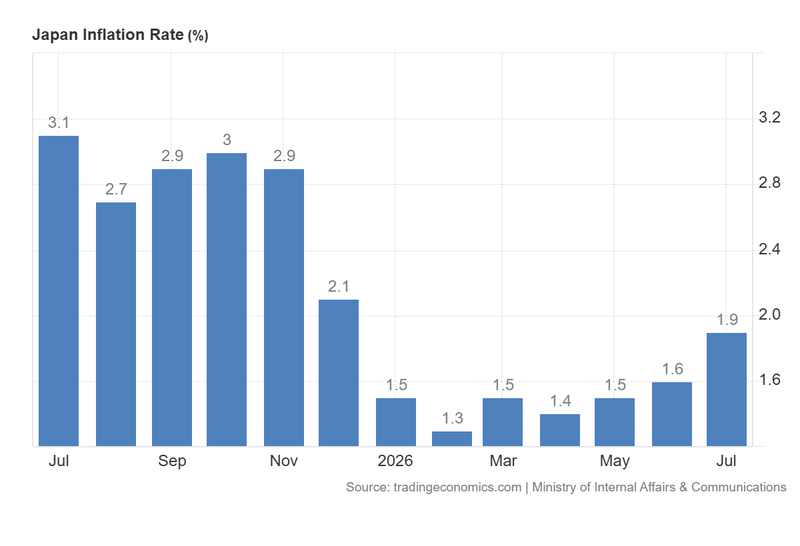
Figure 1. Japan Inflation Rate (2025–2026). Source: Data from the Ministry of Internal Affairs and Communications; figure retrieved from Trading Economics.
Canadian retail sales decelerate
Statistics Canada reported that year-on-year (YoY) retail sales growth decelerated from 6.1% in May to 5.2% in June. On a monthly basis, Canadian retail sales expanded by 0.6% in June. However, preliminary data for July indicates a 0.8% month-on-month contraction, marking the sharpest monthly decline since September 2025.
Following the release of the data, the Canadian dollar appreciated despite the evident weakness in retail sales, with the USD/CAD exchange rate falling by 0.15% to 1.3763. This currency movement occurred amidst growing market concerns regarding US sovereign debt, which recently breached the $40 trillion threshold, alongside US inflation rates that remain well above the Federal Reserve’s 2% target.
