
 Support
 Daily discussion thread for September 11, 2026
US headline inflation held steady at 3.4% as core inflation decelerated to 2.4%, providing initial support to equity markets. However, elevated energy costs, deteriorating consumer sentiment, and rising interest rate hike expectations continue to maintain upward pressure on the broader economic landscape.

US headline inflation held steady at 3.4% year-on-year (YoY), while core inflation decelerated slightly to 2.4%.
Elevated gasoline and fuel oil prices continued to drive energy cost pressures for US consumers.
US stock indices advanced, but an 86.5% market-implied probability of a Federal Reserve rate hike weighed on bond prices.
The University of Michigan Consumer Sentiment Index dropped to 47.8 as inflation expectations ticked higher.
US inflation rate holds steady, supporting US equity indices despite elevated rate hike probabilities
According to data released by the US Bureau of Labour Statistics (BLS), the annual headline inflation rate remained steady at 3.4% in August on a year-on-year (YoY) basis, matching analysts' expectations. Concurrently, core inflation—which excludes volatile energy and unprocessed food components—decelerated from 2.5% in July to 2.4% in August, aligning with the market consensus forecast.
The BLS report indicated that gasoline prices accelerated by 27.4% YoY, while fuel oil prices surged by 52.0% annually, as quoted by CNBC. This price performance demonstrates that while the overall inflation figure remained unchanged, energy costs continue to exert substantial cost pressures on consumers. These energy expenses are particularly significant for US households, as higher baseline costs exacerbate everyday cost-of-living pressures.
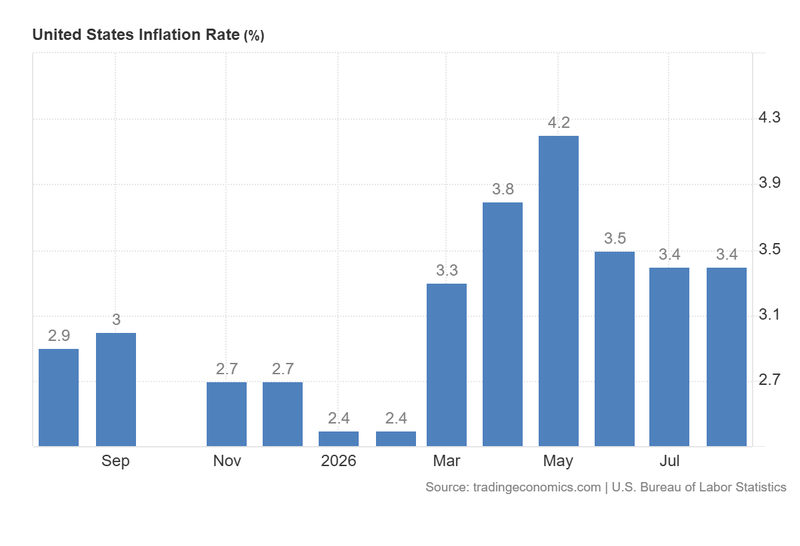
Figure 1. US Inflation Rate (2025–2026). Source: Data from the US Bureau of Labour Statistics; chart obtained from Trading Economics.
Alongside high energy prices, analysts noted that tariffs and artificial intelligence-related expenditures are adding further pressure to headline inflation. These costs are especially notable for producers obliged to absorb higher expenses stemming from imported goods and rising prices across the technology sector. In particular, demand for microprocessors and data centre infrastructure continues to escalate across the technology supply chain.
In this context, current inflation levels remain well above the Federal Reserve's target of 2.0%. Nevertheless, market sentiment reflected an improvement across equity markets, where major US stock benchmarks rose in tandem following the expected inflation reading, which market participants could have interpreted as moderate. The S&P 500 index rose by 0.86% to 7,656 points, the Dow Jones Industrial Average advanced by 0.98% to 52,578 points, and the Nasdaq 100 index increased by 0.91% to 29,368 points.
However, despite positive equity sentiment, the probability of an interest rate hike by the Federal Reserve increased alongside persistent inflation levels. According to the CME's FedWatch Tool, the market-implied probability of a Federal Reserve rate hike at its upcoming meeting rose to 86.5%. This highlights a divergence in market performance, with stock prices advancing while bond prices fell.
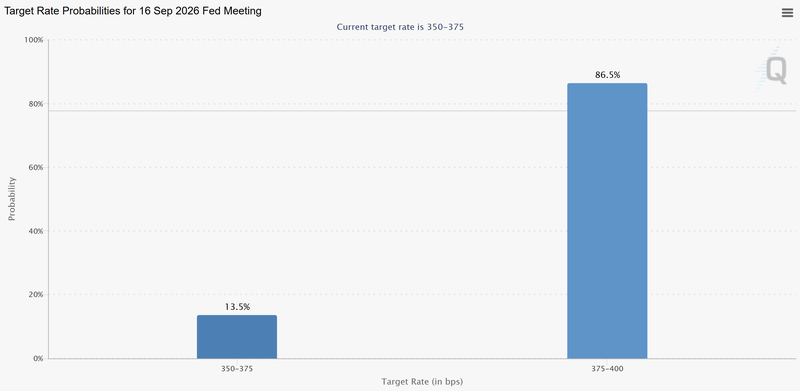
Figure 2. Target Rate Probabilities for 16 September 2026 Fed Meeting (11 September 2026). Source: Figure obtained from the CME Exchange.
University of Michigan data indicates falling US consumer sentiment
The University of Michigan updated its monthly report, revealing a contraction in consumer sentiment alongside rising inflation expectations among consumers. The report indicated that the Consumer Sentiment Index fell from 51.7 in August to 47.8 in September, missing analysts' estimates of 51.0 points. Concurrently, the Current Economic Conditions Index decreased from 51.9 to 50.9, while the Consumer Expectations Index declined from 51.5 to 45.8. These declines were driven by elevated energy prices and rising US-Iran tensions in the Middle East, leading consumers to anticipate deteriorating personal finances and business conditions.
Concurrently, the University of Michigan survey signalled higher one-year-ahead inflation expectations from US consumers, with the metric rising from 4.0% to 4.6%. Furthermore, five-year-ahead inflation expectations advanced from 3.3% to 3.4%.
Japanese PPI deceleration slows less than expected by analysts
The Bank of Japan (BoJ) reported that the domestic Producer Price Index (PPI) decelerated from 7.7% in July to 7.6% in August, signalling a slight moderation in producer prices. However, the reading came in above analysts' forecasts, which had anticipated a deceleration to 7.4%. The BoJ report revealed price accelerations across all sub-components of the indicator, demonstrating that Japanese producers continue to face persistent input cost pressures.
Following the PPI release, the Japanese yen appreciated by 0.53% against the US dollar amid higher probabilities that the BoJ could raise its benchmark interest rate to contain inflation. The USD/JPY pair closed the session at ¥153.54. Conversely, the Nikkei 225 stock index fell by 1.93% to 64,011 points, as prospective rate increases could tighten credit conditions for Japanese firms, potentially affecting corporate growth projects and broader market performance.

