Support
EUR/USD forecast: could French debt risks weigh on the Euro?
Higher borrowing costs should give investors a reason to hold a currency. In France, they are raising questions about the risks investors are being paid to take and how much further the ECB can tighten.

France’s widening spread over Germany adds fiscal risk to the interest-rate story.
Expected October pauses would leave further ECB and Fed hikes in play.
The euro’s outlook depends partly on whether French stress spreads.
Higher yields are offering less reassurance
France’s 10-year borrowing cost reached 5% on October 21, with its spread over German debt around 150 basis points. That gap captures the additional compensation investors demand from France within the same currency union.
For the euro, the distinction matters. Higher yields can attract capital when investors see better returns. Their appeal is less straightforward when the extra income compensates for growing doubts about public finances.
France is testing that boundary. The question is how far investors’ concerns extend beyond French debt, and whether they begin to change expectations for European growth and monetary policy.
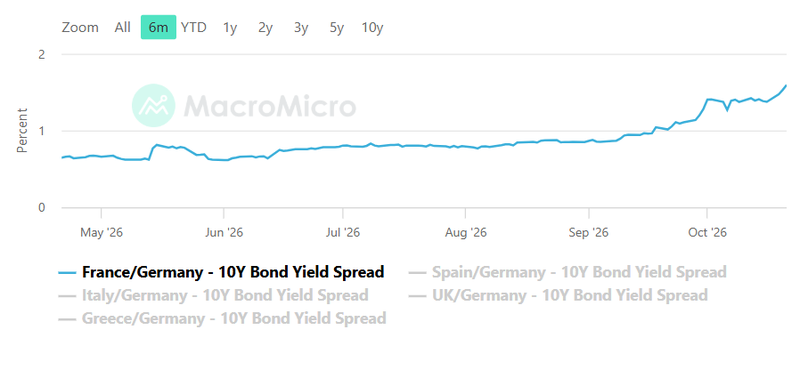
Source: MacroMicro
France’s adjustment gets harder as financing becomes expensive
The pressure builds gradually. Existing fixed-rate debt keeps its original borrowing cost until maturity, but refinancing and new deficits expose the government to prevailing yields. If those yields remain elevated, interest expenses absorb more revenue.
That leaves less room to reconcile competing demands. Spending cuts can improve the budget while weakening activity. Higher taxes can raise revenue while discouraging investment or consumption. If growth disappoints, some of the expected fiscal improvement disappears.
Investors therefore need confidence that budget measures can survive both political opposition and weaker economic conditions. A plan that cannot be implemented offers little reassurance.
The ECB faces the consequences too. More expensive government borrowing can spill into bank funding and private credit, restraining activity before policymakers deliver another hike.
A pause would leave the inflation question open
The ECB raised rates in September and projected inflation averaging 3% in 2026 and 2.5% in 2027. Price pressure remains uncomfortable, even as financial conditions tighten.
Higher energy costs complicate the response: they increase prices while leaving households with less money to spend elsewhere. The ECB must judge how much inflation will persist after that squeeze in demand takes effect.
A 15.2% probability of an October ECB hike and nearly 78% probability of an increase by December. These are dated estimates, not live odds. On the other hand, markets assigned roughly 15% probability to an October Fed hike and 91% to a December increase.
Both banks could pause without ending their tightening cycles. For EUR/USD, what follows matters more: if French stress makes the ECB more cautious while US tightening expectations hold, the expected return gap could move further in the dollar’s favour.
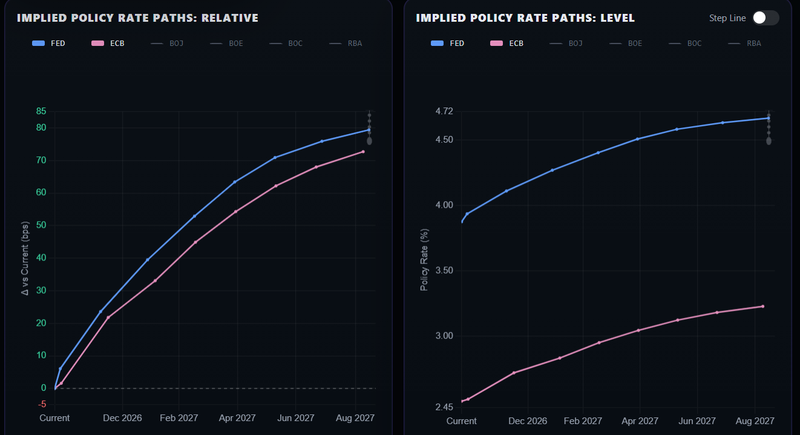
Source: Rate probability
When does France become a euro problem?
The ECB has tools to address disruption separately from its policy-rate decisions. Its Transmission Protection Instrument targets unwarranted, disorderly market conditions that threaten monetary transmission, with assessments covering fiscal sustainability and economic policies.
That does not give France an automatic ceiling on borrowing costs. The ECB must distinguish a reassessment of fiscal risk from dysfunction that threatens its ability to deliver monetary policy across the region.
The same distinction matters for the currency. An investor selling French bonds and buying German debt may never sell a euro. Wider sovereign stress disrupted bank funding or capital moving outside the region would carry greater consequences.
France’s yields therefore deserve attention beyond their headline level. If credible fiscal action steadies' spreads, the euro could retain support from expected ECB tightening. If pressure spreads, higher rates may offer less comfort as investors reconsider the risks attached to those returns.
Technical outlook
EUR/USD is testing whether its broader recovery can withstand the recent selling. The supplied daily chart, captured on October 22, shows the pair around 1.1243 after bouncing from support near 1.1100. The horizontal support zone meets the rising trendline from the 2025 low, giving buyers a clear area to defend.
That defence has produced a rebound, but the recent lower highs remain intact. Resistance at 1.1294 is the first obstacle to a more convincing recovery.
If buyers regain control, a sustained daily close above 1.1294, followed by a successful retest, would strengthen the case for a move toward 1.1484. Clearing that level would bring 1.1687 into view. Narrowing French spreads and ECB guidance that keeps further tightening credible could help, especially if the Fed delivers less restrictive guidance than expected.
If support gives way, the rejection around 1.1294 would leave the pair exposed to another test of the 1.1100 area. A decisive daily close below both the support zone and rising trendline would damage the broader recovery structure, opening the way toward 1.1000 and potentially 1.0745. Spreading bond-market stress or rate expectations shifting toward the dollar could reinforce that scenario. A quick recovery above the broken zone would weaken the breakdown signal.
If neither side follows through, holding support while remaining below 1.1294 would leave the pair consolidating ahead of the central-bank decisions. Buyers have shown interest at an important level; they still need to reclaim resistance before the bounce can be treated as a stronger recovery.
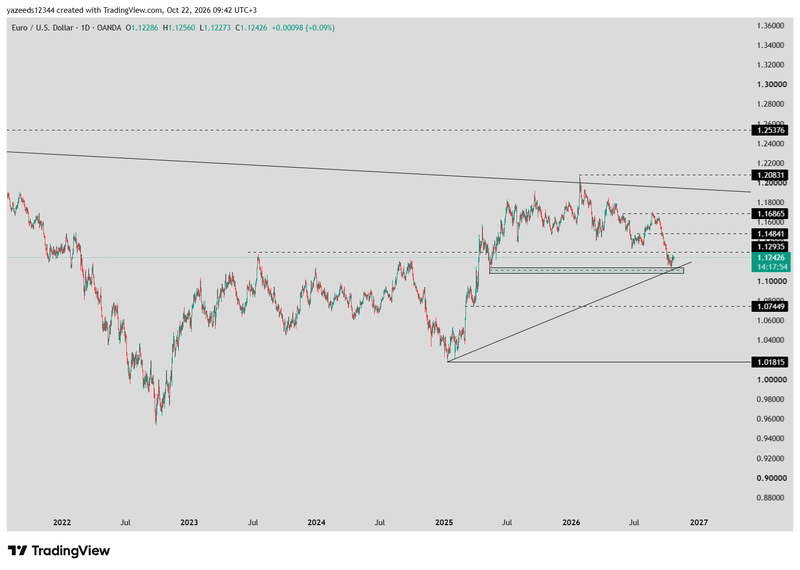
Source: Trading view