
 Support
 Euro falls despite ECB's hawkish policy stance
The European Central Bank (ECB) raised interest rates to 2.65% amid inflationary risks stemming from the Middle East. However, the euro fell against the US dollar as rising US Treasury yields and expectations of Federal Reserve rate hikes favoured the greenback.

The ECB hiked its benchmark interest rate by 25 basis points to 2.65% to combat persistent inflationary pressures, with eurozone inflation currently standing at 3.3%.
The euro dropped to $1.1609 as surging US Treasury yields, driven by bondholders' expectations of further rate hikes, supported the dollar.
Financial markets are pricing in a 72% probability of a Federal Reserve rate hike following renewed oil supply shocks.
Date: 10 September 2026
The ECB decides to increase benchmark interest rates amid rising inflationary pressures
The European Central Bank (ECB) raised its benchmark interest rates by 25 basis points to 2.65%, aligning with analysts' expectations. This marks the second interest rate hike of 2026, prompted by mounting inflationary pressures resulting from the ongoing US–Iran conflict in the Middle East. Alongside its monetary policy decision, the ECB released its revised economic projections for 2026: the annual inflation forecast was revised slightly upwards to around 3.0%, while real economic growth was raised to 0.9% for the year—as quoted by Trading Economics. Currently, the eurozone inflation rate stands at 3.3%.
Although the central bank considers the European economy resilient, it affirmed that future monetary policy decisions will be made on a meeting-by-meeting basis dependent on incoming economic data. Against this backdrop, ECB Governing Council members remain closely focused on geopolitical developments in the Middle East, which are directly tied to ongoing inflationary pressures within the eurozone.
Thus, analysts expect a further interest rate hike, most likely at the December meeting when updated macroeconomic projections are published. In this environment, the ECB is expected to prioritize the containment of inflation pressures, supported by a stable eurozone labour market. Although the central bank did not provide forward guidance on future rate paths, it left the door open to additional rate increases if required.
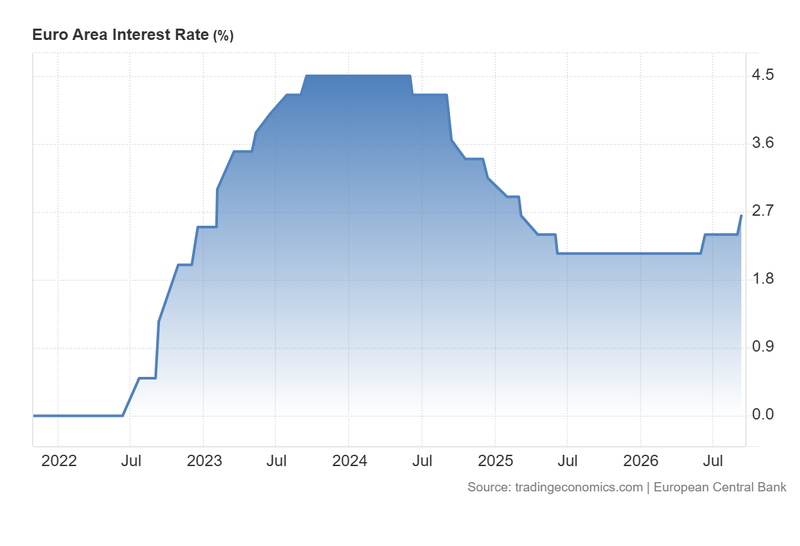
Figure 1. Euro Area Interest Rate (2021–2026). Source: Data from the European Central Bank; chart obtained via Trading Economics.
Why is the Euro falling amid higher ECB interest rates?
Despite the ECB adopting a more restrictive monetary stance, the euro depreciated against the US dollar. The EUR/USD pair declined by 0.22% to trade at $1.1609 at market close. This divergence can primarily be explained by market participants focusing more heavily on the upcoming monetary policy decision from the Federal Reserve.
Earlier today, crude oil prices jumped by approximately 6% amid heightened tensions in the Strait of Hormuz and the Bab-el-Mandeb Strait, renewing concerns over potential energy supply disruptions. Consequently, long-term US Treasury yields advanced sharply to multi-year highs. Additionally, according to the CME FedWatch Tool, the market-implied probability of a Federal Reserve rate hike at its September meeting rose to 72%.
In this environment, the US benchmark interest rate remains significantly higher than that of the eurozone (3.75% versus 2.65%). This makes US government bonds relatively more attractive than their European counterparts. Should this yield spread widen further, the US dollar stands to benefit against the single currency. Consequently, market participants are now shifting their attention to the upcoming US inflation report, set to be published by the US Bureau of Labor Statistics on Friday, 11 September, where analysts expect the Consumer Price Index (CPI) reading to remain unchanged at 3.4%.
Technical analysis of the EUR/USD pair
From a technical perspective, the EUR/USD pair continues to signal market indecision as it oscillates within a defined consolidation range. Key technical observations include:
- Trend Context: Over a longer timeframe, the pair remains bound within a sideways consolidation pattern, trading above its 50-day and 100-day Simple Moving Averages (SMAs) but below its 200-day SMA. This reflects a prolonged period of market indecision that has persisted since July 2025.
- Resistance Levels: Should short-term bullish momentum regain strength, the primary technical ceiling is established at $1.1700. A decisive breach above this level brings the next major resistance into play at $1.1764—a level that converges with the Volume Profile’s Value Area High (VAH). A sustained breakout above these zones would signal potential for further upside movement.
- Support Levels: In the event of a market retracement, key support levels are identified at $1.1571 and $1.1515. A breakdown below these levels would significantly increase the likelihood of a deeper market correction.
- Momentum Indicators: Both the Moving Average Convergence Divergence (MACD) and the Relative Strength Index (RSI) are signalling a downward trajectory, suggesting that short-term bearish pressure could intensify. Nevertheless, macroeconomic and geopolitical factors are expected to remain the primary catalysts for broader price direction.
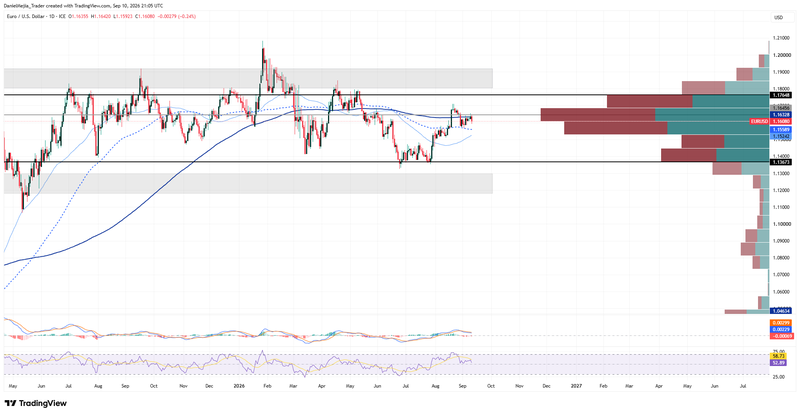
Figure 2. EUR/USD Currency Pair (2025–2026). Source: Data from the Intercontinental Exchange (ICE); author’s analysis conducted via TradingView.


