Support
Week ahead: bond markets took control. Now jobs data gets the final say
The market spent this week chasing a different driver almost every day. Inflation refused to cool enough for the Federal Reserve to relax, Europe moved closer to another rate hike, and oil stopped trading purely on war headlines. By Friday, one thing became clear. Markets have entered a phase where bond markets are setting the pace, while next week's labour-market data could decide whether central banks keep tightening or finally gain room to wait.
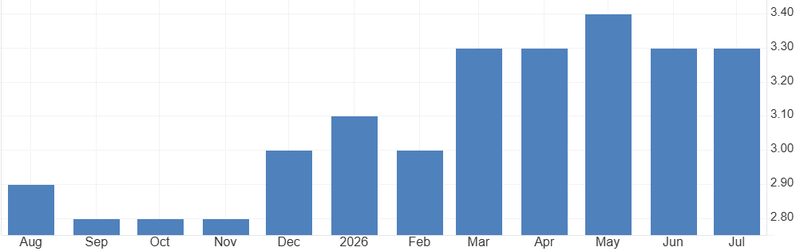
The week's biggest U.S. data release made the Fed's balancing act even harder. Core PCE inflation held around 3.3%.
Kevin Warsh walked into Jackson Hole with a bigger problem than September's rate decision.
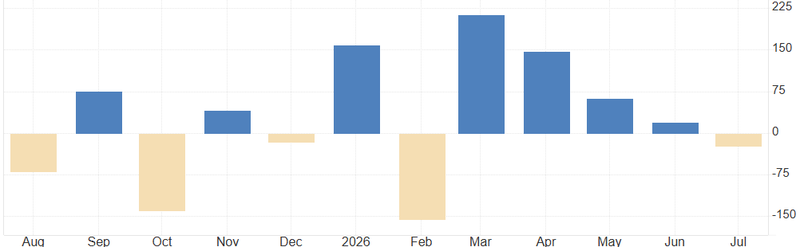
Markets expect roughly 55,000 new jobs after July's unexpected decline of around 23,000
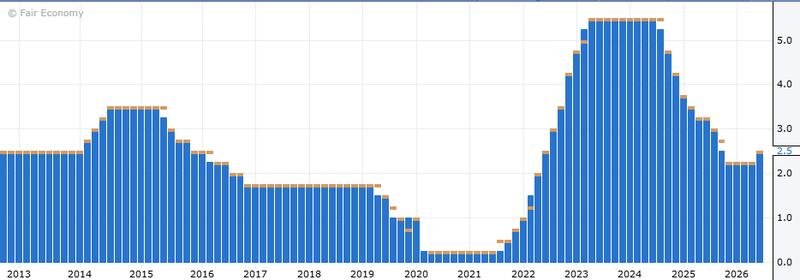
The Reserve Bank of New Zealand is widely expected to raise the Official Cash Rate by 25 basis points to 2.75%.
What shaped markets this week
PCE reminded investors that the Fed's job is not finished
The week's biggest U.S. data release made the Fed's balancing act even harder. Core PCE inflation held around 3.3%, while second-quarter GDP slowed to 1.5% from 2.1%. Growth is losing momentum, but inflation remains well above target, leaving policymakers with little room to sound comfortable.
The bigger message came beneath the headline. Consumer spending stayed resilient through the second quarter before slowing sharply in July, its weakest monthly increase in seven months. Households are becoming more selective rather than pulling back completely, exactly the kind of mixed signal the Fed has been trying to interpret.
Markets trimmed expectations for another immediate rate hike, but they stopped short of declaring the tightening cycle over. Treasury yields stayed elevated, the dollar held firm, and investors became much more cautious about assuming easier policy is around the corner.
Source: U.S. Bureau of Economic Analysis
Treasury yields became the market's biggest driver
Almost every major asset ended up trading through one market this week: bonds. Higher Treasury yields continued tightening financial conditions even without another Fed move, weighing on technology stocks before Treasury buybacks helped ease long-term yields later in the week.
That shift allowed equities to recover while gold attracted fresh buying despite continued geopolitical uncertainty. The message was simple. Investors spent less time debating individual sectors and more time watching the 10-year Treasury.
Jackson Hole became a communication test
Kevin Warsh walked into Jackson Hole with a bigger problem than September's rate decision. Markets wanted to know how the Fed plans to navigate an economy where the signals are starting to conflict.
Inflation is still high enough to justify another hike, while softer GDP, weaker consumer spending and cooling labor data argue for more patience. Investors were no longer looking for a promise about the next meeting. They wanted to understand how the Fed weighs those competing forces.
Warsh argued that policymakers should explain how they interpret inflation, employment and financial conditions without locking themselves into a fixed path. The problem is that the bond market complicates that message.
Warsh sees elevated Treasury yields as doing part of the Fed's tightening. The Treasury Department, meanwhile, is trying to pull those same yields lower through larger bond buybacks as borrowing costs climb on more than $40 trillion of federal debt.
That leaves markets caught between two competing forces. The Fed treats higher yields as part of the policy transmission mechanism. The Treasury increasingly sees them as a financing risk that needs managing.
Hormuz stopped looking like an immediate oil shock
Iran and Oman moved discussions beyond diplomacy by working on a temporary maritime corridor, mine-clearing operations and a revenue-sharing arrangement around the Strait of Hormuz. At the same time, Washington expanded sanctions on Iran while avoiding the kind of secondary sanctions that would have dragged major Chinese banks into the conflict.
Brent gave back roughly 6% as traders removed part of the geopolitical premium built into crude. The conflict has not disappeared, but the market became more willing to believe shipping disruptions could remain manageable instead of turning into a prolonged supply shock.
U.S. inventories gave oil another reason to cool
U.S. crude stocks rose by roughly 4.2 million barrels, comfortably above expectations and making it much harder to argue that the physical market was running out of supply. Coming alongside the Hormuz discussions, the data reduced the urgency to price an immediate supply squeeze and kept pressure on crude without requiring a dramatic improvement in geopolitics.
Europe quietly moved closer to another hike
One of the week's biggest macro stories happened outside the United States. Eurozone corporate lending accelerated to 4.4%, while the latest ECB minutes revealed that several policymakers were already comfortable with tightening again despite voting unanimously to hold rates steady in July.
The bond market made the story even bigger. Germany's 10-year Bund reached a 15-year high, France's borrowing costs climbed to their highest level since 2009, and UK gilt yields rose above 5%, the highest since 2008.
What could move markets next week
U.S. jobs week could decide whether September stays alive
Markets expect roughly 55,000 new jobs after July's unexpected decline of around 23,000, while the unemployment rate is expected to hold near 4.1%. Average hourly earnings may prove even more important because wage growth remains one of the Fed's clearest signals of inflation.
The report arrives at a critical moment. Growth has already slowed, consumer spending has cooled, but inflation remains too high for the Fed to relax comfortably.
A stronger payroll, especially alongside firm wage growth would make another rate hike much harder to dismiss. It would suggest the labor market is still absorbing restrictive borrowing costs, pushing Treasury yields and the dollar higher.
A weaker report changes the policy conversation. Another disappointing payroll number with softer wage growth would strengthen the argument that financial conditions are already doing much of the Fed's work, giving policymakers a stronger case for waiting.
Source: U.S. Bureau of Labor Statistics
JOLTS and ADP will shape the payroll story before Friday
Tuesday's JOLTS report will show whether companies are still trying to hire after months of elevated borrowing costs. Earlier in the cycle, job openings stayed unusually high even as growth slowed. That cushion has narrowed, making every JOLTS release more influential.
Wednesday's ADP report rarely predicts payrolls perfectly, but it has become an important positioning event. Strong hiring could push Treasury yields higher before Friday arrives, while another weak reading would encourage traders to cut rate-hike expectations ahead of payrolls.
Iran sanctions could decide whether oil keeps giving back its war premium
The latest package deliberately increased economic pressure on Iran while avoiding measures that could disrupt China's financial system. That helped Brent surrender part of its recent gains because traders stopped treating every policy announcement as an immediate supply threat.
If sanctions expand toward shipping, banking or oil exports, the market would quickly return to pricing supply disruption instead of diplomacy. If the current approach continues while Hormuz negotiations keep progressing, crude may struggle to rebuild the same geopolitical premium it carried earlier this month.
The RBNZ is expected to hike but the statement could matter more
The Reserve Bank of New Zealand is widely expected to raise the Official Cash Rate by 25 basis points to 2.75%, extending one of the region's more hawkish tightening paths after inflation accelerated during the second quarter.
The debate starts after the decision. If Governor Adrian Orr signals inflation still requires further restraint, markets will likely push expectations for additional tightening higher. A softer tone would suggest policymakers believe restrictive policy has already done enough work, bringing the end of the hiking cycle into view much sooner.
Source: Forex Factory
The Bank of Canada faces a different problem
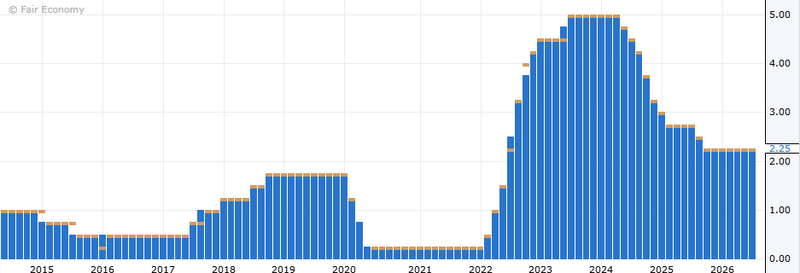
Markets overwhelmingly expect the Bank of Canada to leave rates unchanged at 2.25%, but the statement matters more than the decision. Officials are balancing relatively contained inflation against growing uncertainty around domestic demand, trade and external growth.
If the bank leans toward slowing activity, investors may begin pricing a longer pause. If inflation dominates the statement instead, expectations for restrictive policy could remain in place well into next year.
Source: Forex Factory
Eurozone inflation could lock in the ECB's next move
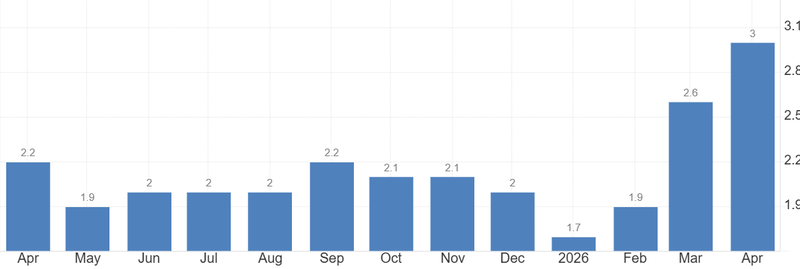
The flash CPI estimate is expected to show headline inflation around 3.2-3.3%, while core inflation remains near 2.5%. Those numbers would keep price growth comfortably above target despite months of gradual improvement.
A hotter reading would reinforce the market's near-certainty around another September hike. A softer surprise probably would not erase those expectations, but it would shift the debate toward whether that move becomes the last hike of the cycle rather than the beginning of another round of tightening.
Source: Forex Factory
Gold – Technical Outlook
Buyers are still defending the key floor
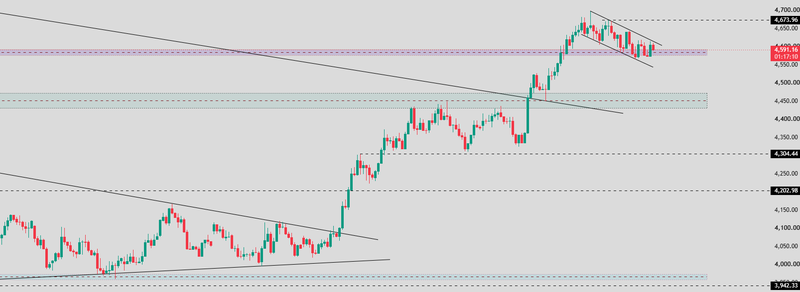
The 4,590-4,565 area has become the level that keeps pulling buyers back into the market. It has already held through several tests, which is why the recent pullback still looks more like a pause than a real change in direction. As long as that floor keeps holding, sellers have not done enough to take control.
The next move is getting closer
The falling channel has squeezed price into a tighter range, and that usually means the next move carries more weight. A push above the upper trendline would bring 4,674 back into focus, while losing 4,565 would shift attention toward the 4,440-4,470 zone, where buyers stepped in during the previous breakout.
Source: Trading view
EUR/USD – Technical Outlook
The recovery still depends on one level
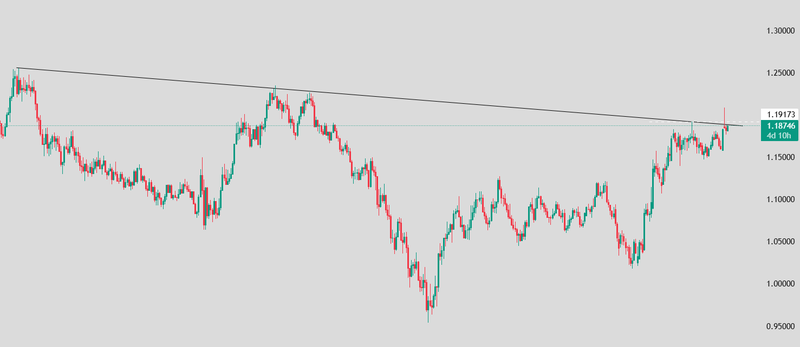
The 1.1610-1.1620 zone has become the first-place buyers need to protect. It was the previous breakout area, and the market has already respected it once during the pullback. Holding above it keeps the recovery alive and suggests buyers are still willing to step in on weakness.
1.1686 is still the hurdle
The next obstacle sits at 1.1686. Clearing that level would put the recent highs around 1.1700 back within reach, while another rejection would leave the pair spending more time moving sideways before choosing its next direction.
Source: Trading view
USD/CAD– Technical Outlook
Buyers need to keep this support intact
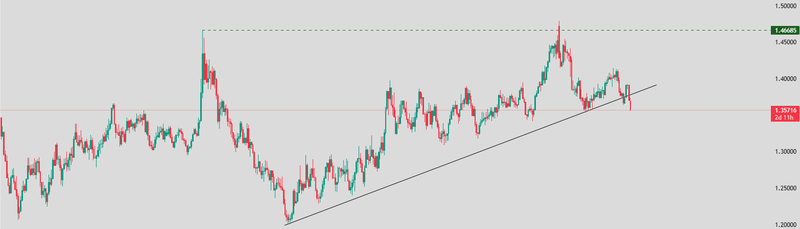
The first line of defense sits at 1.3823. Buyers have already responded there once, making it the level that keeps the recent rebound together. If it holds, the recovery still has room to develop instead of fading back into the broader decline.
The downtrend is still being tested
The next challenge is 1.3912, where earlier selling pressure returned and the longer-term downtrend still hangs over the chart. Getting above that area would make the bearish picture look much less convincing. Until then, sellers still have a chance to slow the recovery.
Source: Trading view
NZD/USD – Technical Outlook
The trendline is keeping buyers in the game
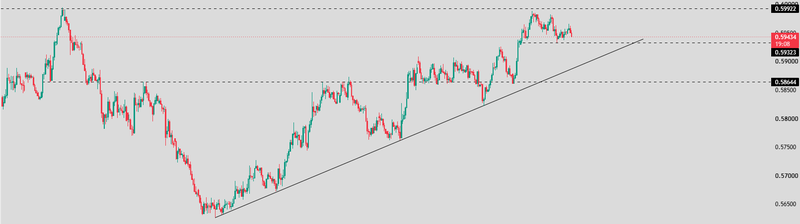
The 0.5932 area has become the market's first checkpoint. It sits on top of the rising trendline that has supported the latest recovery, and buyers have already defended it once. Holding above that level keeps the short-term picture leaning higher, even if the pace has slowed.
The next push depends on 0.5992
The next level worth watching is 0.5992. A move through that resistance would give buyers another reason to build on the recovery, while another rejection would keep the pair trapped inside its recent range until a stronger catalyst arrives.
Source: Trading view