Support
Week ahead: inflation pressures keep central banks on edge
Inflation is making the outlook for interest rates increasingly difficult. Stronger US CPI and PPI readings have raised concerns that price pressures will persist, while higher energy costs are complicating the decisions facing the ECB and Bank of England. Australia’s labour market is also weakening, but that may not be enough to ease the pressure on policymakers. The coming week will show whether inflation forces central banks towards further tightening despite mounting concerns about growth.

Stronger US inflation has increased the risk of higher rates for longer.
Energy costs are complicating the outlook for the ECB and Bank of England.
Canadian and UK inflation data, alongside US jobless claims, will shape expectations for further tightening.
What drove markets this week?
RBA minutes – inflation remains the priority
The RBA minutes maintained a hawkish tone, with policymakers warning that balancing inflation control against full employment has become more difficult as global cost pressures intensify.
Australia’s unemployment rate subsequently rose to 4.7%, above expectations of 4.6%. That complicates the outlook for further tightening, but does not remove the inflation risk. If energy prices and domestic cost pressures remain elevated, the RBA may have little room to relax its stance. The Australian dollar will remain sensitive to whether persistent inflation or weakening employment carries greater weight in the policy outlook.
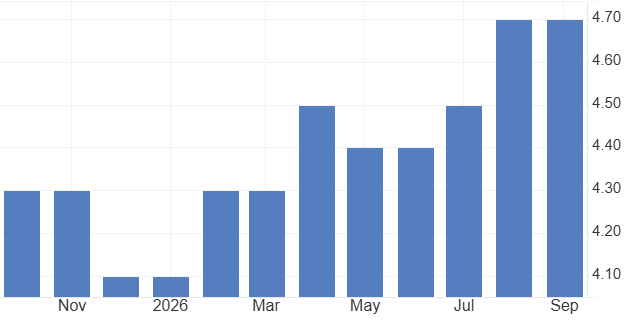
Source: Australian Bureau of Statistics
ECB – energy prices complicate the outlook
Christine Lagarde said eurozone inflation had been driven predominantly, but not exclusively, by rising energy prices linked to the conflict involving Iran. Although clear second-round effects have yet to emerge across the broader economy, the ECB cannot afford to wait until those pressures become entrenched.
Higher interest rates cannot resolve an energy supply shock, but they can restrain demand and limit the spread of higher costs into wages and services. For the euro, the prospect of further tightening could provide support, although weaker consumption and concerns about France’s public finances remain obstacles.
Bank of England – businesses cannot absorb costs indefinitely
Andrew Bailey warned that the longer energy prices remain elevated, the harder it becomes for businesses to shield consumers. Companies have been absorbing costs through lower margins and spending cuts, but that approach has limits.
If higher energy costs begin spreading into broader inflation, the Bank of England could face pressure to raise rates even as hiring and investment weaken. Next week’s UK CPI and unemployment figures will help determine whether markets strengthen their expectations for another rate hike before year-end.
US inflation – further tightening remains a risk
US headline CPI rose to 3.7% annually in September, above the 3.6% forecast, while monthly inflation reached 0.6%. Core CPI increased 2.6% year on year and 0.3% month on month.
Producer prices added to the concern, rising 1.3% during the month and 6.3% annually. Energy accounted for much of the monthly increase, but services prices also advanced, suggesting the pressure was not confined to a single component.
Kevin Warsh reiterated the Federal Reserve’s commitment to price stability without signalling its next move. He also warned that AI investment could increase demand before productivity gains expand supply, adding another potential complication for the inflation outlook.
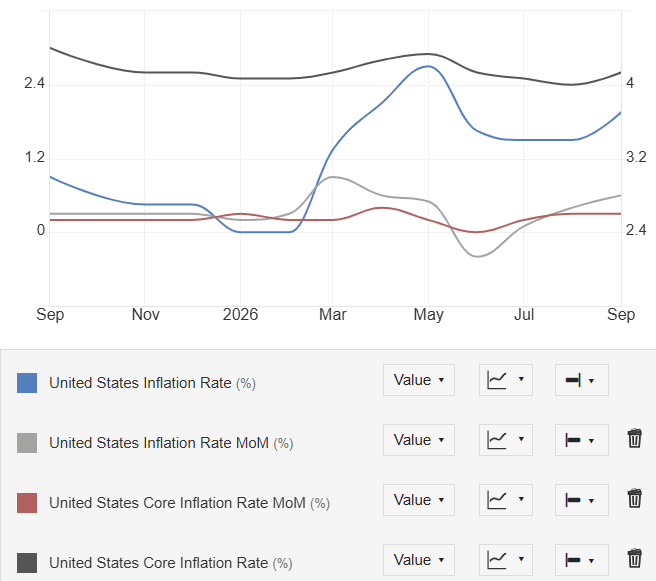
Source: U.S. Bureau of Labor Statistics
What to watch next week
Canada CPI – will inflation strengthen further?
Canadian inflation is expected to rise to 3.2% from 3.0%. A broader increase in underlying prices would strengthen the case for maintaining a restrictive policy stance and could support the Canadian dollar through higher interest-rate expectations. If the increase is concentrated in volatile components, the implications for the Bank of Canada may be more limited.
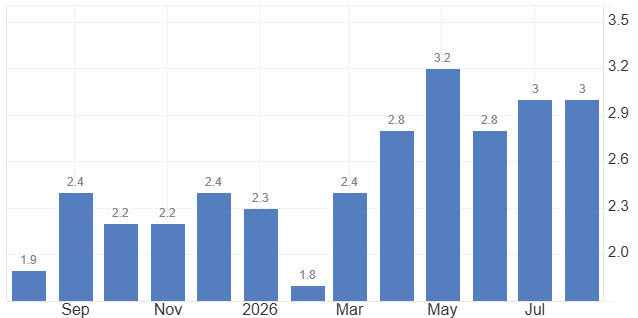
Source: Statistics Canada
UK unemployment and CPI – a difficult policy dilemma
UK unemployment is expected to rise to 5.0% from 4.9%, while inflation is forecast to accelerate to 3.4% from 3.1%. If inflation rises as expected, it could reinforce expectations of a rate hike before the end of the year.
Rising unemployment would complicate that decision but would not necessarily prevent further tightening if policymakers believe inflation is becoming more persistent. Sterling and gilt yields will respond to how markets balance those competing risks.
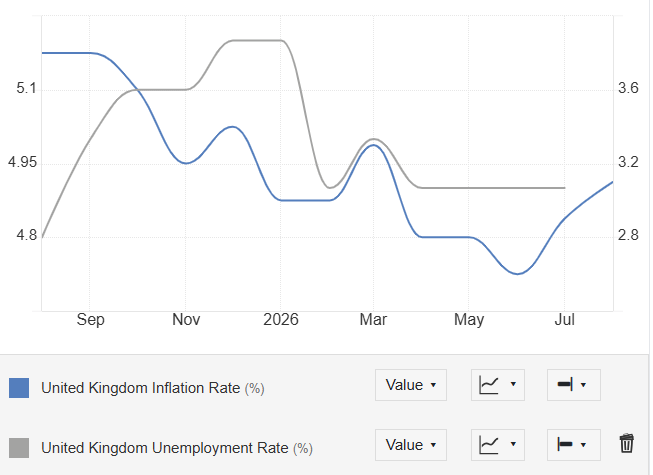
Source: Office for National Statistics
US jobless claims – is employment losing momentum?
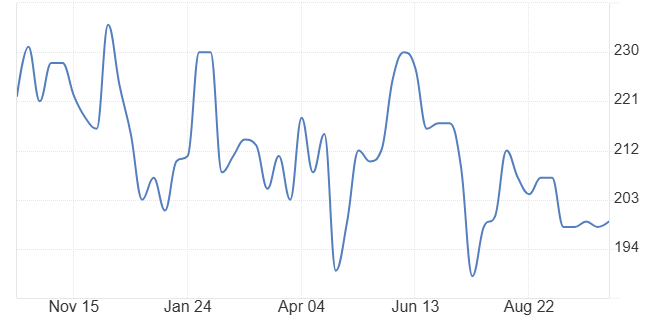
Initial US jobless claims are expected to edge up to 200,000 from 199,000. Such a small increase would provide little evidence of sharp deterioration in the labour market.
If claims remain low while inflation stays elevated, the Fed will have more room to maintain restrictive policy. A larger increase, however, could raise concerns about the economic cost of keeping borrowing costs high.
Source: U.S. Department of Labor
What could markets do next?
Inflation remains the dominant concern. Stronger Canadian and UK price data could reinforce expectations of further tightening, pushing bond yields higher and supporting their currencies. In the United States, persistent inflation would increase the risk that rates remain restrictive for longer, potentially benefiting the dollar.
The central question is whether policymakers can contain inflation without causing a sharper slowdown. Next week’s figures will help determine whether markets need to price in more aggressive tightening or whether weakening employment begins to limit how far central banks can go.
Gold - technical outlook
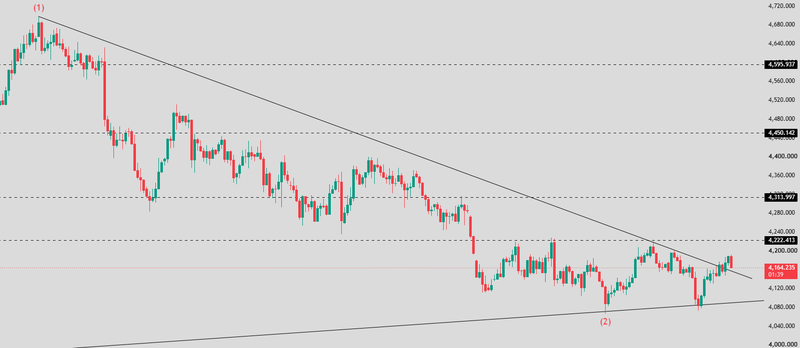
Gold is trading around $4,174, with the recovery still struggling to gain traction beneath descending resistance. Repeated failures to break higher leave the short-term bias tilted to the downside, although buyers continue to defend the rising trendline around $4,080–$4,090.
The market is approaching a decisive point. Resistance continues to push prices lower, while rising support limits the downside, creating a narrowing range that may precede a stronger move.
A sustained break above $4,222 would improve the near-term outlook and open the way towards $4,314. Until then, another rejection could bring $4,120 back into focus, followed by the trendline support around $4,080. A break below that level would weaken the broader structure and expose the $4,000 area.
Source: Trading view
EUR/USD - technical outlook
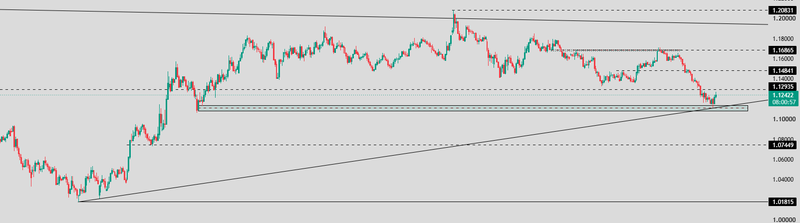
EUR/USD is trading around 1.1257, attempting to recover after its sharp decline from the 1.17–1.18 region. The rebound has offered some relief, but the broader short-term structure remains bearish, with lower highs and lower lows still in place.
The immediate focus is the 1.1100–1.1130 support zone, where horizontal demand converges with the rising long-term trendline. Buyers have defended this area, but the recovery needs to extend further before the broader downside structure begins to weaken.
Holding support and reclaiming 1.12935 could open the way towards 1.1484, followed by 1.1669. A decisive break below 1.1100, however, would put the rising trendline at risk and expose 1.07449. Further weakness would bring 1.01815 into view as major structural support.
Source: Trading view
GBP/USD - technical outlook
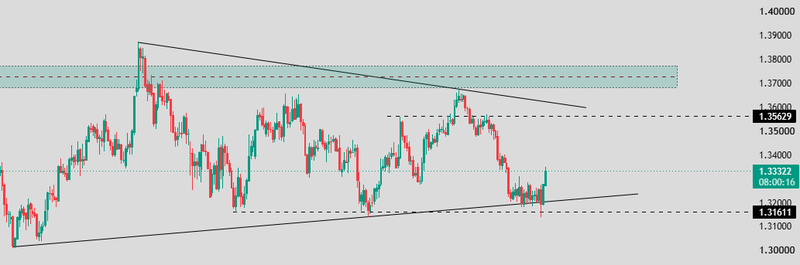
GBP/USD is trading around 1.3336 after rebounding from the 1.3161 support zone. The recovery has improved the immediate picture, but the pair remains caught between descending resistance from the 1.3860 peak and rising support originating around 1.3000.
The next test is whether buyers can sustain the rebound above 1.3330 and challenge resistance at 1.3563. A break above that level, while holding above 1.3161, would strengthen the recovery and open the way towards 1.3670–1.3770, where descending resistance and the supply zone converge.
Failure to clear 1.3563 would leave the broader range intact and expose the pair to renewed selling pressure. A break below 1.3161 would weaken the recovery, bringing 1.3100 into focus before the stronger support around 1.3000.
Source: Trading view