
 Support
Trading Ideas
Get the edge with potential investments and opportunities
Liquidity, liquidity voids and liquidity runs explained
Liquidity is one of the most important concepts in financial markets. It helps explain why prices can move smoothly through some areas, accelerate sharply through others, and sometimes return to previously traded zones.

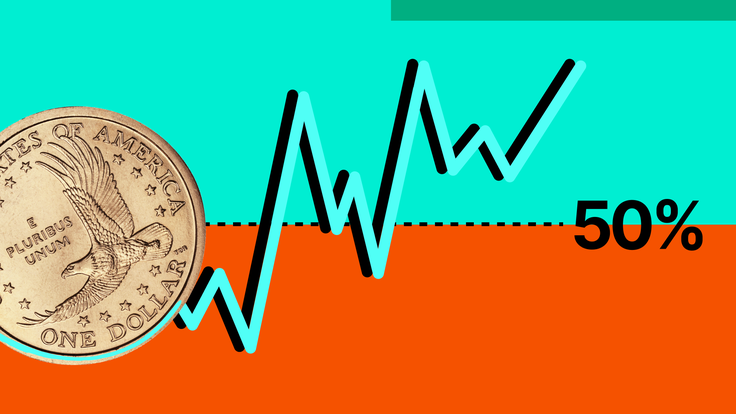
ICT 50% Rule explained in trading
The 50% Rule is one of the simplest ideas in ICT trading, yet it filters out some of the worst trades traders take. Many beginners see a bullish pattern and buy immediately, or spot a bearish setup and sell without asking a more important question: Is price expensive or cheap relative to the current dealing range?
How opportunity cost shapes financial decisions
Making one choice often means giving up another. Opportunity cost helps put that trade-off into perspective by considering the value of the best alternative not chosen, whether the decision involves money, investing, time or business resources.
28 Sep 2026, 11:30
Black Swan event: meaning, examples and trading impact
A Black Swan is an atypical event characterized by extreme volatility and unpredictability that triggers severe downturns across financial markets. By causing asset correlations to spike rapidly, it significantly diminishes the effectiveness of traditional portfolio diversification.

What causes a recession and how do markets respond?
Recessions can affect everything from employment and consumer spending to company earnings and financial markets. Understanding why they happen and how they develop can help investors and traders interpret changing market conditions.
25 Sep 2026, 13:04
Globalisation explained: how it works and affects markets
Globalisation has made economies increasingly interconnected, with trade, investment and technology linking countries and markets around the world. These relationships can shape business activity, supply chains and the way financial markets respond to developments across regions.
25 Sep 2026, 12:12
What are fiscal policy tools and how do they work?
Fiscal policy covers the decisions governments make about spending, taxes and financial support to households. These choices can increase or reduce demand across the economy, with potential effects on growth, inflation, borrowing and government debt.
25 Sep 2026, 11:56
What is the difference between OTE vs Fibonacci
Optimal Trade Entry (OTE) is a specialized subset of the classic Fibonacci retracement tool, focusing strictly on a deep 61.8% to 79% pullback zone. While a standard Fibonacci tool monitors multiple generic levels (such as 23.6%, 38.2%, 50%, and 61.8%) across random price swings, OTE represents a rigid institutional trading model. Popularized by ICT, OTE requires a strict market structure context rather than raw technical speculation.
Judas Swing explained: how ICT traders identify the false move before the real trend
A Judas Swing is a false price move or engineered breakout at the start of a major trading session that traps retail traders before the market reverses into its true daily direction.

Trading false breakouts with the Turtle Soup strategy
The Turtle Soup strategy focuses on failed moves beyond support or resistance. This article explains how traders look for liquidity sweeps, rejection and confirmation before considering a reversal setup.
