Support
How CPI is used in fundamental analysis
Consumer Price Index (CPI) is one of the most followed economic indicators in forex trading. It reflects inflation trends and can influence expectations for interest rates and currency moves.

CPI shows changes in the prices paid by consumers and is widely used as a gauge of inflation.
CPI readings can move currencies by shifting expectations around interest rates, real yields, risk appetite and central bank decisions.
CPI releases can create sharp market movement, making risk management important as spreads and slippage may widen.
What does CPI mean for forex traders?
CPI matters for forex traders because inflation is directly tied to central bank decisions.
When inflation rises too quickly, a central bank may have to keep interest rates high for longer, delay rate cuts or even consider raising rates again. That can support a currency if traders believe higher rates will make local assets more attractive.
When inflation cools, the opposite can happen. The central bank may have more room to ease policy, and the currency can weaken if markets begin pricing lower future rates.
This is why CPI releases can create sharp moves in major currency pairs. Traders are not only reacting to the headline number. They are reacting to what the number may mean for the next central bank meeting, the future path of interest rates and the relative appeal of one currency compared with another.
That distinction matters.
A CPI print does not move markets simply because it is high or low. It moves markets when it changes the policy story.
What does CPI measure?
CPI measures the change in prices paid by consumers for a basket of goods and services.
That basket usually includes food, energy, housing, transport, medical care, clothing and other everyday expenses. When CPI rises, the average cost of living is increasing. When CPI slows, prices may still be rising, but at a slower pace. When CPI falls, the overall price level has declined over that period.
For traders, the key point is not only whether CPI is high or low. The market wants to know whether inflation is moving faster or slower than expected.
A 3% inflation reading can be positive or negative depending on the country, the central bank target, the recent trend and what traders had already priced in before the release.
That is why the forecast matters.
Currencies often move on the surprise, not the number alone.
Why does CPI matter for inflation expectations?
That basket usually includes food, energy, housing, transport, medical care, clothing and other everyday expenses. When CPI rises, it means the average cost of living is increasing. When CPI slows, prices may still be rising, but at a slower pace. When CPI falls, the overall price level has declined over that period.
For traders, the important question is not only whether CPI is high or low.
The market wants to know whether inflation is moving faster or slower than expected. A 3% inflation rate can be good or bad depending on the country, the central bank target, the recent trend and what traders had already priced in before the release.
How does CPI influence central bank policy?
If inflation is above target and not falling quickly enough, policymakers may keep policy tight. That can mean higher interest rates, delayed cuts or more cautious language. If inflation falls toward target, the same central bank may have more room to support growth.
But central banks usually do not react to one CPI number in isolation.
They look at the trend, core inflation, wage growth, labour-market strength, services prices and inflation expectations. A small monthly surprise may not change policy. A broad inflation shock can. That is what traders need to understand.
The question is not simply: was CPI hot or cold? The better question is: does this number change what the central bank can do next?
How does CPI data move exchange rates?
If U.S. inflation comes in hotter than expected and markets believe the Federal Reserve will keep rates higher for longer, the dollar may strengthen against currencies where central banks are closer to cutting.
The reason is simple. Higher expected returns can make dollar assets more attractive.
If eurozone inflation surprises higher while U.S. inflation cools, the euro may gain support because traders may expect the European Central Bank to stay tighter than the Fed.
This is why CPI should never be read in isolation. The currency does not trade against itself. It trades against another currency, another central bank and another policy path.
How can traders approach forex around CPI releases?
Before the release, traders should know the forecast, the previous reading, the central bank backdrop and the key technical levels on the chart.
The forecast matters because markets react to the surprise. If inflation is expected to rise and it rises exactly as expected, the reaction may be limited. If it rises much more than expected, traders may reprice rates quickly.
Is the pair near support? Is it testing resistance? Is positioning crowded? Has the central bank recently warned about inflation?
These questions help frame the release before volatility begins. The goal is not to guess every CPI print correctly. The goal is to know what would actually change the story.
What can past inflation regimes teach traders?
Past inflation regimes show that markets behave differently depending on whether inflation is rising, falling, or becoming entrenched.
Inflation does not affect every asset the same way in every cycle. The market reaction depends on growth, central bank credibility, wage pressure, commodity prices, fiscal policy, and investor positioning. That is why CPI should be read as part of a regime, not as a single isolated data point.
The lesson from history is not that one asset always wins or loses during inflation. The lesson is that the inflation environment changes the rules of valuation, risk appetite, and policy expectations.
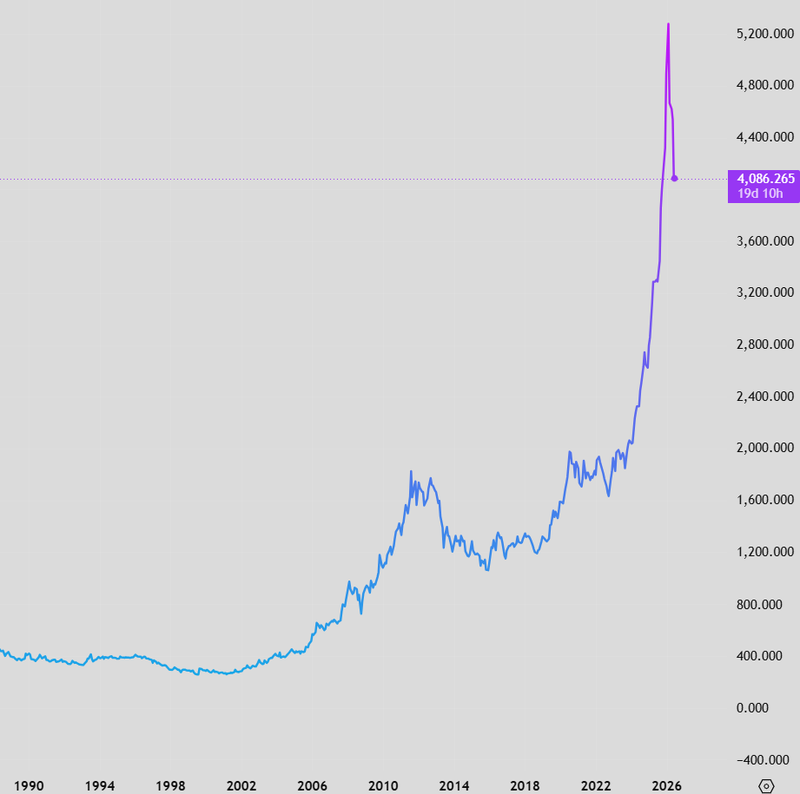
Why did gold matter during the 2000s inflation cycle?
Gold mattered during the 2000s because investors increasingly treated it as a hedge against inflation, currency debasement, and financial uncertainty.
Gold does not pay interest, so it does not always perform well when real yields are rising. But when investors worry that inflation is eroding purchasing power, or that paper currencies are losing value, gold often moves higher on the watchlist. It becomes less about income and more about protection.
For currency markets, this matters because gold often interacts with the U.S. dollar and real yields. A weaker dollar and falling real yields can support gold, while a stronger dollar and rising real yields can pressure it. CPI can therefore influence not only forex pairs, but also the broader inflation-hedge conversation.
Source: Trading view
Why should CPI be combined with other high-impact data?
Labour market reports, wage growth, retail sales, GDP, producer prices, consumer confidence, and central bank speeches can all change how CPI is interpreted. For example, hot CPI with strong job growth may support a hawkish central bank view. Hot CPI with weakening growth may raise stagflation concerns instead.
That distinction matters. The same inflation number can produce different market reactions depending on the rest of the data. Traders who only look at CPI may miss the broader story the market is pricing.
Should traders focus on core CPI or headline CPI?
Headline CPI includes volatile items such as food and energy. That makes it important for households, because people feel those prices directly. But central banks often focus more on core CPI because it removes the most volatile components and can give a cleaner view of underlying inflation pressure.
That does not mean headline CPI should be ignored. A sharp move in energy or food prices can still affect expectations, consumer sentiment, and political pressure. The key is to understand what moved the number. A broad rise in core services inflation is usually more worrying for central banks than a temporary jump in fuel prices.

Source: Forex factory
What mistakes should traders avoid when using CPI?
The biggest mistake is treating CPI as a simple buy-or-sell signal. CPI is powerful, but it is not mechanical. A hotter reading does not always mean the currency will rise. A softer reading does not always mean the currency will fall. Positioning, expectations, central bank guidance, risk sentiment, and technical levels all matter.
Another mistake is ignoring execution risk. CPI releases can look clean on a chart after the event, but in real time the move can be messy. Spreads widen, prices jump, and reversals can happen quickly. Traders who overleverage into the release often learn that being right on direction is not enough.
The practical takeaway is to use CPI as part of a wider framework. Watch the surprise, study the details, compare it with other data, and ask whether it changes the policy path. CPI can move forex markets sharply, but the best traders treat it as a signal to interpret, not a number to chase.
FAQs
How does CPI affect forex?
CPI affects forex by changing expectations for inflation, interest rates, and central bank policy. A higher-than-expected CPI reading can support a currency if traders think rates will stay higher for longer. A softer reading can weaken it if markets price in rate cuts. The reaction depends on expectations, real yields, growth, and risk sentiment.
How do you use CPI in forex trading?
Traders use CPI by comparing the actual reading with the forecast and asking whether it changes the interest rate outlook. They also watch core CPI, headline CPI, bond yields, and central bank guidance. CPI works best as part of a wider plan, not as a simple buy-or-sell signal on its own.
Is high CPI good or bad for a currency?
High CPI can be good or bad for a currency. It may support the currency if traders expect the central bank to raise rates or delay cuts. But if inflation looks too high and damaging for growth, it can hurt confidence. The market reaction depends on whether inflation is seen as policy-supportive or economically dangerous.
Is low CPI good or bad for forex?
Low CPI can be positive or negative depending on the reason behind it. If inflation cools while growth stays healthy, markets may welcome it. But if low CPI increases expectations for rate cuts, the currency may weaken. Forex traders usually ask whether lower CPI reflects healthy disinflation or weaker demand in the economy.
Is core CPI more important than headline CPI in forex?
Core CPI is often more important for central bank expectations because it removes volatile food and energy prices. It can give a cleaner view of underlying inflation pressure. Headline CPI still matters because households feel those prices directly. For forex traders, the best approach is to watch both and understand what caused the move.