Support
 What are fiscal policy tools and how do they work?
Fiscal policy covers the decisions governments make about spending, taxes and financial support to households. These choices can increase or reduce demand across the economy, with potential effects on growth, inflation, borrowing and government debt.
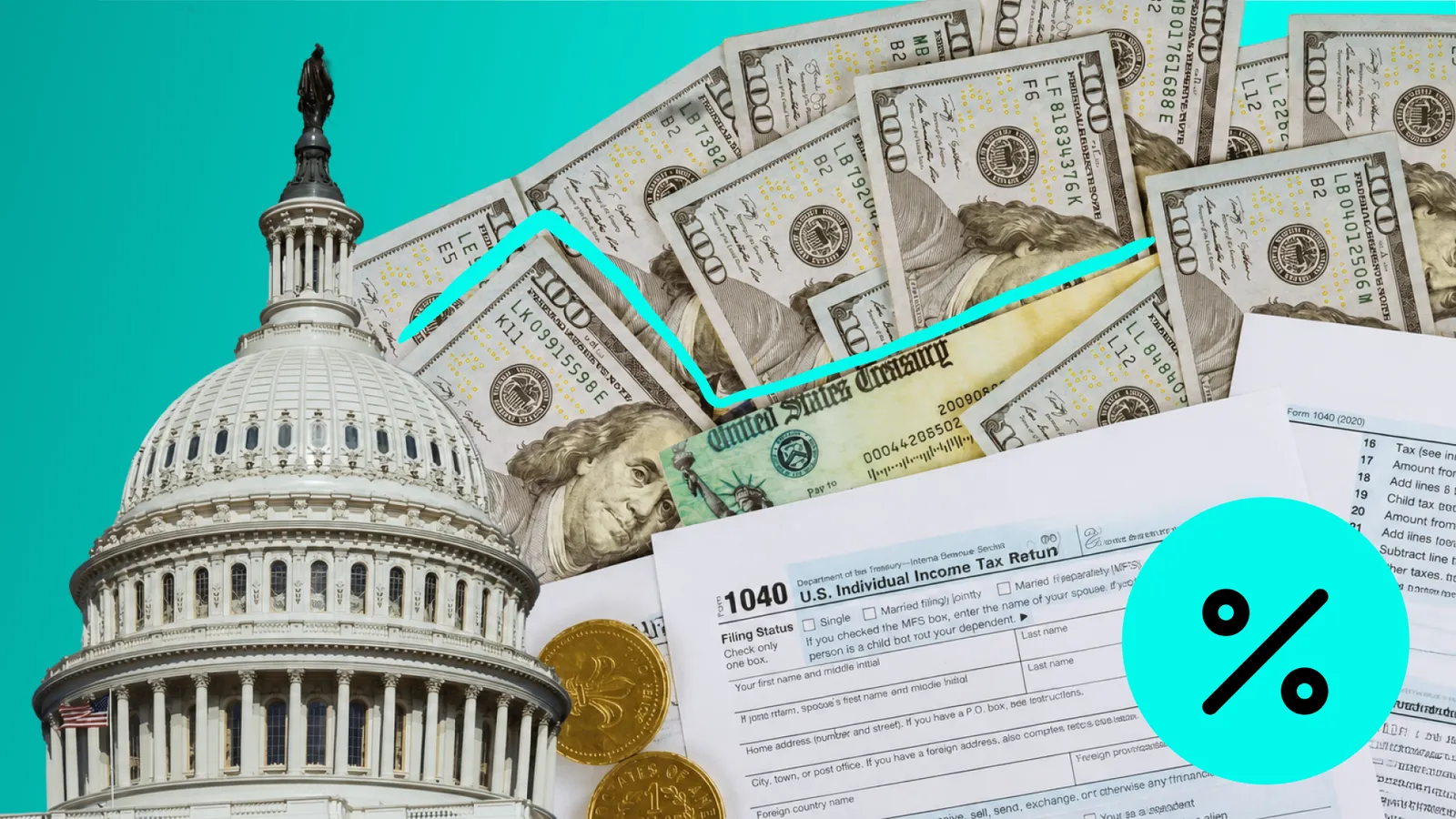
Spending increases, tax cuts and higher transfer payments can be used to support demand, while measures in the opposite direction can help reduce it.
Fiscal policy can work through several channels, including household income, consumer spending, business investment and direct government expenditure.
Policy announcements may affect economic expectations before measures are approved or fully implemented.
The economic impact of fiscal measures can vary depending on their timing, wider economic conditions and the size of the fiscal multiplier.
Government fiscal decisions and central bank monetary policy can work together or pull in different directions.
What are fiscal policy tools?
Fiscal policy refers to how governments use spending and taxation to influence the economy. The main fiscal policy tools are government spending, taxes and transfer payments, such as unemployment benefits or other forms of financial support.
Changes to these tools can affect how much households spend, how businesses invest and how much demand there is across the economy. For example, higher government spending or lower taxes can support economic activity, while spending cuts or higher taxes can reduce demand.
Fiscal policy is sometimes described as having two main tools: government spending and taxation. In other explanations, transfer payments are treated as a third tool because they can change household disposable income without the government directly purchasing goods or services.
Governments can use these tools in different directions depending on economic conditions. Expansionary fiscal policy generally involves measures designed to support demand, such as higher spending or lower taxes. Contractionary fiscal policy aims to reduce demand, often through lower spending or higher taxes.
For traders, fiscal policy matters because changes in government budgets can influence expectations for economic growth, inflation, interest rates and public borrowing. These expectations can, in turn, affect markets such as stocks, bonds, currencies and commodities.
How governments use fiscal policy to manage demand
Governments can use fiscal policy to increase or reduce demand across the economy. Higher government spending, lower taxes or increased transfer payments can support demand, while spending cuts, higher taxes or lower transfers can have the opposite effect.
These changes can influence economic growth, employment and inflation. However, the size and timing of the effect depend on factors such as how quickly measures are introduced and how households and businesses respond.
For traders, fiscal policy can also affect expectations before its full economic impact is visible. A major spending programme, for example, may change forecasts for growth, inflation or government borrowing as soon as it is announced. Markets may therefore react to fiscal plans as well as measures that have already taken effect.
Government spending as a fiscal policy tool
Government spending adds directly to economic demand when the public sector purchases goods and services. This can include infrastructure, public services, defence, equipment and other government programmes.
Different types of spending can affect the economy over different time frames:
- Direct purchases can increase demand relatively quickly once funding is approved and spent.
- Infrastructure projects can support construction, employment and procurement, but often take longer to reach the economy because of planning and approval.
- Defence spending can create demand for equipment, technology, personnel and services, often through multi-year programmes.
- Public services involve ongoing spending on areas such as healthcare, education and public-sector operations.
The timing matters because an announced spending programme does not necessarily translate into immediate economic activity. Traders may therefore look at when funding is approved and when spending is expected to reach the economy, rather than focusing only on the headline amount.
How fiscal policy affects aggregate demand
Aggregate demand represents total spending on goods and services in an economy. It is commonly expressed as:
AD = C + I + G + NX
where:
- C = consumer spending
- I = business investment
- G = government spending
- NX = net exports, or exports minus imports
Fiscal policy can affect several parts of this equation. Government purchases contribute directly to G, while tax changes can influence household consumption (C) and business investment (I). Transfer payments can affect C indirectly by changing household disposable income.
For example, a tax cut may leave households with more income to spend, while an infrastructure programme increases government spending directly. However, the final effect depends on how people and businesses respond. Households may save some additional income, for example, while businesses may delay investment.
Looking at these channels can help traders understand how a fiscal policy measure may affect economic growth and inflation, rather than judging its impact from the headline size alone.
How tax changes influence the economy
Governments can raise or lower taxes to influence household spending, business activity and demand across the economy. Tax changes can also affect expectations for economic growth, inflation and government borrowing.
Unlike government spending, taxation usually affects demand indirectly. Lower taxes can leave households with more disposable income or businesses with more after-tax profits, while higher taxes can reduce the amount available to spend or invest.
The impact depends on the type of tax, who is affected and when the change takes effect. Income taxes directly affect earnings, consumption taxes influence the cost of spending and corporate taxes can affect company profits and investment decisions.
Marginal tax rates
A marginal tax rate is the rate applied to the next portion of income earned, rather than the average rate paid across all income.
Changes in marginal rates can affect disposable income and incentives to work, save or invest. For businesses, changes in tax rates can also influence profits and investment decisions.
Tax rule
Governments can change the amount of tax households and businesses pay without changing headline tax rates. Adjustments to allowances, deductions, credits or exemptions can increase or reduce the effective tax burden.
For businesses, changes to rules around investment expenses or depreciation can also influence the cost of investing in equipment and other assets.
Tax cuts
Tax cuts leave households or businesses with more after-tax income. This can support consumer spending or business investment, although the effect depends on how the additional money is used.
For example, households may choose to spend or save the extra income. The wider economic effect can also depend on conditions at the time. If demand is already strong, additional spending may contribute to inflationary pressure.
Tax increases
Tax increases reduce the amount of income available to households or businesses after tax. They can be used to reduce demand or increase government revenue, but may also weigh on consumer spending, investment or company profits.
For traders, the market reaction can depend on the wider purpose of the tax increase. Measures designed to reduce government borrowing, for example, may be viewed differently from tax increases introduced when economic growth is already weak.
How transfer payments support household income
Transfer payments are payments made by governments to eligible individuals or households without receiving goods or services in return. Examples can include public pensions, unemployment benefits and income support.
Unlike direct government purchases, transfer payments affect demand through household income. Higher transfers give eligible households more disposable income, which they may spend or save. Lower transfers can have the opposite effect.
The economic impact depends on factors such as who receives the payments, their size and how quickly they are distributed. Transfers can be particularly important during periods of weaker economic activity, when governments may use them to support household incomes.
How automatic stabilisers work
Some fiscal measures respond automatically to changes in the economy without requiring new government decisions. These are known as automatic stabilisers and are built into existing tax and benefit systems.
For example, unemployment benefit payments may rise when more people lose their jobs, helping support household income during a downturn. At the same time, tax revenues may fall as incomes and company profits decline. As the economy recovers, these effects can gradually reverse.
Automatic stabilisers differ from discretionary fiscal policy, where governments actively introduce new measures such as tax changes, spending programmes or financial support. Because automatic stabilisers operate under existing rules, they can respond to changing economic conditions without waiting for new policies to be approved.
Expansionary fiscal policy during a recession
Expansionary fiscal policy is used to support economic activity when demand is weak. Governments may increase spending, raise transfer payments or cut taxes to put more money into the economy and support household spending, business activity and employment.
Different measures can take effect at different speeds. Transfer payments and existing automatic stabilisers may support household incomes relatively quickly, while infrastructure projects can take longer because they require planning, approval and construction. Tax cuts can also support spending or investment, although their impact depends on how households and businesses use the additional income.
Expansionary measures can increase government budget deficits if spending rises or tax revenue falls. For traders, the scale and timing of fiscal support can influence expectations for economic growth, inflation, government borrowing and interest rates, which may affect bonds, currencies and stock markets.
Contractionary fiscal policy when demand is too strong
Contractionary fiscal policy aims to reduce demand, particularly when an economy is growing too quickly or experiencing demand-driven inflation. Governments can reduce spending or transfer payments, increase taxes or use a combination of these measures.
These policies can slow household spending and business activity, potentially easing some inflationary pressure. However, they can also weaken economic growth and employment if the measures are too large or introduced when the economy is already slowing.
Fiscal tightening may be less effective against inflation caused mainly by supply disruptions, such as shortages or rising production costs, because reducing demand does not address the original cause of higher prices.
For traders, contractionary fiscal policy can change expectations for growth, inflation and interest rates. The market impact depends on the scale of the measures, economic conditions and how fiscal policy interacts with monetary policy.
The role of budget deficits in fiscal policy
A budget deficit occurs when a government spends more than it receives in revenue over a given period. Deficits are not a fiscal policy tool themselves, but they can increase when governments raise spending, increase transfers or cut taxes without equivalent increases in revenue.
During a recession, governments may borrow to finance expansionary measures while tax revenues are also under pressure. This can help support demand in the short term, but it also increases government borrowing requirements.
Traders may therefore consider both sides of a larger deficit: its potential effect on economic growth and the additional borrowing needed to finance it. Expectations for government debt, inflation and future interest costs can influence government bond yields and currency markets.
How budget surpluses can reduce government debt
A budget surplus occurs when government revenue exceeds spending. This can allow a government to repay existing debt or reduce how much it needs to borrow in the future.
However, the reason behind the surplus matters. A surplus created by stronger tax revenues during economic growth may have different implications from one achieved through large tax increases or spending cuts, which can reduce demand.
Changes in the budget balance can therefore influence expectations for government borrowing, growth and interest rates.
What makes government debt sustainable?
Debt sustainability refers to a government's ability to manage its debt over time without creating increasing financial pressure or requiring major policy adjustments.
One commonly watched measure is the debt-to-GDP ratio, which compares government debt with the size of the economy. Other factors include borrowing costs, economic growth, the budget balance and how much government revenue is needed to service existing debt.
Debt levels can rise during recessions as tax revenues fall and government support increases, then improve as the economy recovers. Concerns may grow when debt and interest costs continue to rise faster than the government's ability to finance them.
Why fiscal policy can take time to implement
Fiscal policy does not always affect the economy immediately. New spending programmes or tax changes may require political approval, administrative preparation and funding before they take effect.
The process varies by country and policy. A proposal may need to pass through parliament or another legislative process, while infrastructure projects can require further planning and procurement even after funding has been approved.
Financial markets can react before implementation based on expectations about whether a policy will be approved, how large the final measure will be and when it is likely to take effect.
When government borrowing can affect private investment
Higher government borrowing can sometimes contribute to higher interest rates. If borrowing costs rise as a result, businesses may find it more expensive to finance investment. This effect is known as crowding out.
The effect is more likely when economic activity is already strong and borrowing costs are under upward pressure. During periods of weak demand, the impact may be smaller.
Public spending can also have the opposite effect. Investment in areas such as infrastructure may encourage private investment if it reduces business costs, improves productivity or supports future demand. This is sometimes described as crowding in.
How fiscal and monetary policy work together
Fiscal and monetary policy both influence economic activity and inflation, but they are controlled by different institutions and use different tools.
Fiscal policy is set by governments through decisions on spending, taxation and transfer payments. These measures can directly affect public spending and the income available to households and businesses.
Monetary policy is set by central banks and primarily works by influencing borrowing costs and financial conditions. Interest rates are one of the main tools, although central banks may also use measures such as asset purchases or lending facilities.
The two policies can reinforce or offset each other. For example, expansionary fiscal policy may support demand while a central bank raises interest rates to control inflation. Conversely, tighter fiscal policy may reduce demand while lower interest rates provide some support to economic activity.
This interaction is often referred to as the policy mix. Its effect depends on the direction and scale of both policies, as well as wider economic conditions. Looking at fiscal and monetary policy together can therefore provide a more complete picture of how policymakers are responding to changes in growth and inflation.
FAQs
Why do some sources say fiscal policy has two tools and others say three?
It depends on how transfer payments are classified. Some explanations group fiscal policy into two main tools: government spending and taxation. Others treat transfer payments, such as unemployment benefits and other forms of income support, as a third tool.
Both approaches describe the same basic ways governments can influence economic activity. The difference is simply whether transfer payments are grouped with spending or treated separately.
Where does government spending fit into AD = C + I + G + NX?
Government spending is the G in AD = C + I + G + NX, so public purchases feed directly into aggregate demand. Infrastructure, defense and public services can lift demand through contracts, wages and procurement, although the final impact depends on timing, capacity and how quickly funds are spent.
Why might tax cuts not boost the economy straight away?
Tax cuts raise disposable income, but households may save the extra money if confidence is weak or debt worries are high. Businesses may also delay investment if demand is uncertain, credit is expensive or they expect the tax change to be temporary.
Can expansionary fiscal policy cause inflation?
Expansionary fiscal policy can add inflation pressure if higher spending, larger transfer payments or lower taxation push demand beyond the economy’s supply capacity. It is most inflation-sensitive when labour markets are tight, supply chains are constrained or monetary policy is already trying to cool price growth.
How do policymakers choose the right fiscal tool?
Policymakers compare the problem, speed required, target group, inflation risk, fiscal space, administrative capacity and likely multiplier before choosing spending, taxes, transfers or automatic stabilizers.
What can make a fiscal package less effective than expected?
A fiscal package can lose impact through implementation delays, political approval constraints, weak multipliers, crowding out or poor coordination with monetary policy. Large deficits can also raise debt sustainability concerns, affecting bond yields, currencies and confidence before the policy reaches households or businesses.
Who sets fiscal policy compared with monetary policy?
Fiscal policy is set by governments through decisions on spending, taxation and transfer payments. Monetary policy is set by central banks, which use interest rates and other tools to influence borrowing costs, credit and economic activity.
The two are set separately, but they can work in the same or opposite directions depending on economic conditions.