Support
 An essential guide to automated trading strategies
Automated trading can reduce emonual decision-making, but it still requires testing and oversight. This guide introduces the main steps behind trading strategy automation.
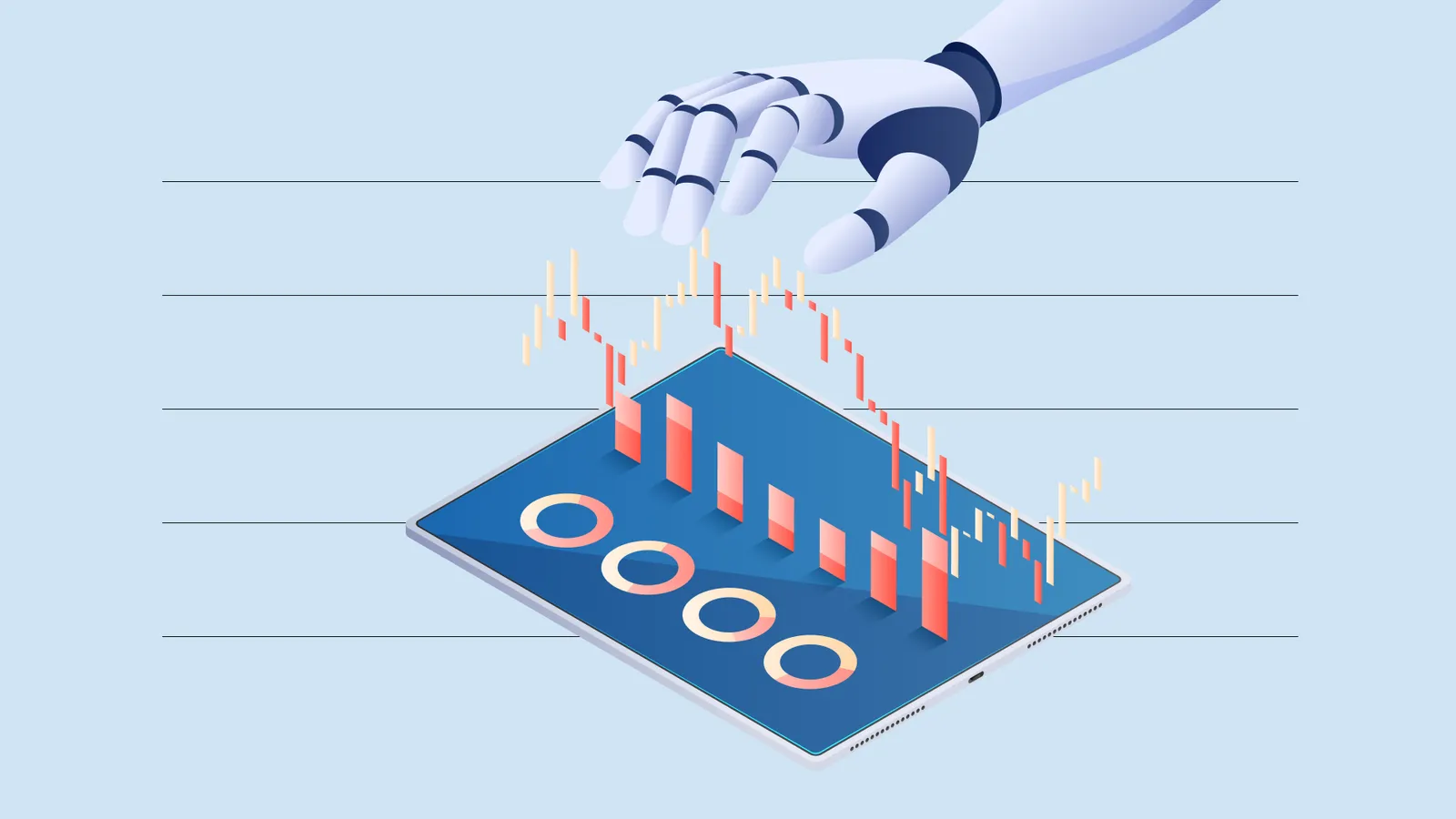
Automated trading turns a trader’s strategy into clear rules that software can use to scan the market and place trades consistently.
Developing an automated strategy usually involves gathering market data, creating trade signals, testing the rules, running the system on a demo account, deploying it live and reviewing performance over time.
Reliable data and realistic testing assumptions, such as spreads, commissions and slippage, can make strategy testing more accurate.
Automated systems often use platforms such as MetaTrader, alongside coding languages, backtesting tools and broker APIs, to analyse markets and manage trade execution.
Strong risk management is still needed when trading is automated, including position size limits, stop-loss rules, drawdown controls and other built-in safeguards.
How trading strategy automation works
Before building or coding a system, it is important to understand what trading strategy automation involves and how it works in practice. Automated trading relies on predefined rules that allow software to analyse markets and execute decisions without manual intervention.
What is an automated trading strategy?
Automating a trading strategy means turning a set of trading rules into a system that can analyse markets and execute trades automatically. Before a strategy can be automated, every part of the process needs to be clearly defined. This includes when to enter and exit trades, how much capital to risk, how positions will be managed and the conditions that trigger trading decisions.
Turning manual trading rules into code
Many automated strategies begin as manual trading approaches. Traders may identify patterns or opportunities through technical analysis, fundamental analysis or a combination of both. These observations are then converted into clear, objective rules that a computer can follow without interpretation or emotion.
Once the strategy rules are established, they can be translated into code. The development process typically involves sourcing reliable market data, programming the strategy logic and risk management rules, and testing the system using historical data. Many traders then use paper trading or demo accounts to evaluate how the strategy performs in live market conditions before deploying it with real capital.
Testing, execution and risk controls
Backtesting plays an important role in the development process, but it should reflect real-world trading conditions as closely as possible. This means accounting for factors such as spreads, commissions and slippage, while avoiding over-optimisation that could produce unrealistic results. A strategy that performs well in historical testing may not necessarily achieve the same results in live markets.
Automated strategies also require clear decisions about the markets being traded, trading frequency and position sizing. Whether a strategy is designed for scalping, intraday trading, swing trading or longer-term position trading, the rules must specify how trades are identified, executed and managed. Trade signals may be generated using technical indicators, price patterns or other predefined market conditions. Risk controls such as stop-loss levels, leverage limits, risk–reward ratios and maximum drawdown thresholds are also essential components.
A well-defined strategy helps reduce ambiguity, improves consistency and makes it easier to test, refine and automate the trading process.
Define strategy scope: markets, timeframes and trade frequency
Before coding a trading strategy, traders should define where and how the system will operate. This includes the asset class, specific instruments, timeframe, trade frequency and market conditions in which the strategy should be active.
The same rules may behave differently across FX, indices, commodities, shares or when these markets are traded through CFDs because each market has different liquidity, spreads, trading hours, volatility and execution conditions.
Strategy style should also match realistic execution requirements. Scalping systems are highly sensitive to latency, spreads and slippage, while swing strategies are usually less latency-sensitive but more exposed to overnight costs and gap risk.
Trading sessions and liquidity conditions should be specified before automation. The strategy may need to avoid low-liquidity periods, rollover, market open or close or major news releases when spreads can widen and execution may become less predictable.
Step-by-step process to automate a trading strategy
Moving from a manual trading idea to an automated system requires each part of the strategy to be defined in clear, rule-based terms. The objective is to remove ambiguity so the strategy can be tested, coded, monitored and improved in a structured way.
- Define the strategy rules. Specify the exact entry and exit triggers, stop-loss and take-profit conditions, position size, assets, trading session and any market filters.
- Turn subjective trading decisions into clear, rule-based instructions. For example, replace “buy when the trend looks strong” with “Buy when the 20-period moving average crosses above the 50-period moving average and RSI is above 50.”
- Backtest and validate the strategy. Test the rules on historical data, then use out-of-sample data to check whether the strategy still performs on unseen market conditions.
- Run the strategy on a demo account. Use paper trading to compare expected results with real-time execution, including spreads, slippage, latency and order fills.
- Move to live trading gradually. Start with reduced position sizes and monitor whether execution, risk controls and system behaviour match the tested strategy.
- Review and refine regularly. Set predefined limits for drawdown, execution errors, and performance deviations so the strategy can be paused, reviewed, or adjusted when needed.
By following this process, traders can move from a manual idea to an automated trading system in a controlled and measurable way. Each stage acts as a checkpoint, helping to reduce technical errors, avoid premature live deployment, and improve the long-term reliability of the strategy.
Data collection for your strategy
High-quality data is essential of any automated trading strategy. If the data is inaccurate, incomplete or inconsistent with the instrument being traded, testing results may be misleading and live performance may differ from expectations.
Most automated strategies use historical market data such as open and close prices, highs and lows, bid and ask prices, and trading volume. Depending on the strategy, traders may also incorporate additional datasets, such as economic indicators, news events or measures of market volatility.
A common approach is to obtain data directly from their broker, as this reflects the tradable history of the target instrument. For example, in MetaTrader 5, historical data for any broker-listed asset can be downloaded directly or accessed via integration between MQL5 (MetaQuotes Language) and Python.
Using high-quality data can help improve the accuracy of analysis, backtesting and strategy development.
What market data do you need to automate a trading strategy?
The data required for automation depends on the strategy type, timeframe and execution model. Basic strategies may use OHLC data, which includes the open, high, low and close price for each period. More execution-sensitive systems may also require tick data, bid and ask prices, volume, spread history and order execution details.
Scalping and intraday strategies often need tick-level or bid/ask data because small changes in spread, slippage or execution speed can materially affect results. Swing or position-trading strategies may be tested using bar data, provided the timeframe is appropriate and the data reflects realistic trading conditions.
For forex and CFD strategies, spread history, rollover or swap costs, margin requirements and contract specifications should be included where relevant. These factors can change the expected profitability of a system, especially when trades are held overnight or executed frequently.
Some strategies may also require additional inputs, such as economic calendar events, sentiment data, news feeds, corporate actions, trading session times and instrument-specific liquidity patterns. Where possible, traders should use broker-relevant data so that backtesting and paper trading better reflect the conditions available in live execution.
Core technology stack for automated trading
Automated trading strategies rely on a combination of software, programming tools and market data. Together, these components allow traders to analyse markets, generate signals, test strategies and execute trades automatically.
Programming languages (MQL5, Python and others):
Programming languages are used to define the rules of an automated trading strategy and translate them into executable code. MetaTrader supports automated data requests, order execution and account monitoring using MQL5, with extended capabilities available through Python integration.
Trading platforms:
A trading platform provides the environment where automated strategies are developed, tested and executed. MetaTrader 5 supports automated trading through Expert Advisors (EAs) and includes tools for strategy development, execution and monitoring.
Backtesting engines:
Backtesting engines allow traders to evaluate how a strategy would have performed using historical market data. MetaTrader 5's Strategy Tester can be used to analyse, test and optimise EA performance while accounting for factors such as commissions, slippage and other execution parameters.
Trading APIs:
Application Programming Interfaces (APIs) allow software applications to communicate with brokers and trading platforms. They can be used to retrieve market data, monitor accounts and automate trade execution as part of a broader trading workflow.
How to backtest an automated strategy realistically
Backtesting involves applying a trading strategy to historical market data to evaluate how it might have performed in the past. While backtesting can be a valuable tool for strategy development, the results are only as reliable as the assumptions used.
A meaningful backtest should aim to replicate real-world trading conditions as closely as possible. This includes accounting for factors such as commissions, spreads, slippage and execution delays, all of which can affect trading results. Position sizing rules, market hours and liquidity constraints should also be considered where relevant.
Backtest results should be viewed as an estimate rather than a prediction of future performance. Market conditions change over time, and strategies that performed well historically may not achieve the same results in live trading.
Avoiding overfitting
When developing an automated strategy, avoiding overfitting is critical. Overfitting occurs when a strategy is excessively optimised to historical data, allowing it to produce strong backtest results without capturing a genuine market edge.
Overfitted strategies often perform well during testing but struggle when deployed in live markets because they have adapted to historical noise rather than repeatable patterns. To reduce this risk, traders often test strategies across different market conditions, use out-of-sample data and validate results through paper trading before committing real capital.
Validate strategy robustness: out-of-sample testing, walk-forward analysis and stress tests
A profitable backtest alone is not enough to show that an automated trading strategy is reliable. Before deploying real capital, traders should validate whether the strategy can perform consistently across different market conditions and under realistic trading constraints.
A common validation workflow separates historical data into in-sample and out-of-sample periods. The in-sample data is used to develop and optimise the strategy, while the out-of-sample data is used to test whether it continues to perform on unseen market conditions. This helps reduce the risk of overfitting and provides a more realistic assessment of the strategy's potential performance.
Walk-forward analysis can provide an additional layer of validation. This involves optimising the strategy on one historical period, testing it on the next and repeating the process across multiple market environments. Consistent results across different periods may indicate that the strategy is more robust and less dependent on specific market conditions.
Once the basic validation process is complete, traders can stress-test the strategy by challenging the assumptions used in the backtest. This may include modelling wider spreads, higher slippage, delayed order execution, market gaps, missing data and periods of extreme volatility. These tests help assess whether the strategy can tolerate realistic trading conditions without a significant deterioration in performance.
Monte Carlo analysis and trade randomisation techniques can also be used to estimate potential drawdown ranges and evaluate how different sequences of wins and losses may affect results. Rather than focusing on the best historical outcome, these methods help traders understand possible worst-case scenarios and set more realistic expectations before going live.
Deploying to a live account: execution setup, order handling and risk management
Once a strategy has been developed, tested and refined, the next step is deploying it to a live trading account. This involves connecting the strategy to a trading platform, configuring how orders will be executed and ensuring that appropriate risk controls are in place. Even after deployment, automated strategies should be monitored regularly to confirm they continue to operate as intended under changing market conditions.
Broker connection and order execution:
In MetaTrader, live execution is handled through MetaEditor using MQL5, often in conjunction with Python for extended control and data handling.
Order types and trade conditions:
Execution logic can be fully automated, with trades placed only when all predefined conditions are satisfied, as specified in the trading algorithm.
Risk and capital management:
Risk controls can be embedded within the bot, such as maximum drawdowns, time-based exits and position-sizing limits.
Reduction of cognitive biases:
Automation reduces the impact of human emotions and cognitive biases, which often impair discretionary decision-making.
Technical and operational risks in automated trading
Automated trading systems can fail even when the strategy logic is sound. Common operational risks include internet outages, VPS or server downtime, platform disconnections, API failures, broker-side execution issues and coding errors. These problems can lead to missed trades, duplicate orders, delayed execution or unmanaged open positions.
Before running a bot live, traders should build in safeguards such as kill switches, maximum daily loss limits, maximum open position limits and automatic shutdown rules after repeated errors. These controls help limit damage if the system behaves unexpectedly or market conditions change quickly.
Detailed logging is also essential. Every signal, order, order modification, rejection, fill and execution event should be recorded so that issues can be investigated and corrected.
The strategy should be tested in the same environment intended for live trading, including the broker, platform, server setup and market session. This is especially important for latency-sensitive strategies, where even small delays in execution can materially affect results.
Production readiness: risk controls, fail-safes and operational guardrails
The bot should also define “no-trade” rules for abnormal conditions, such as widened spreads, low liquidity, missing market data, restricted news events or rollover periods.
A production-ready system should handle platform disconnections, API failures, requotes, partial fills, rejected orders and delayed execution. In each case, the bot should know whether to retry, cancel the order, reduce exposure or stop trading until the issue is reviewed.
To prevent runaway trading, traders can use duplicate-signal protection, cooldown timers, maximum trade frequency rules and parameter checks for position size, stop-loss distance, leverage and order volume. These guardrails help reduce the risk that a technical issue or abnormal market condition causes losses beyond the intended strategy design.
Monitoring an automated trading strategy
Once a strategy is automated, performance should be monitored across backtesting, demo trading and live execution to check whether the system is behaving as expected.
Core metrics include net profit, win rate, average win versus average loss, profit factor, and expectancy. Risk metrics should also be tracked, including maximum drawdown, return volatility, consecutive losing trades, and margin usage.
Execution metrics are equally important. Average slippage, rejected orders, latency and spread sensitivity can explain why live results differ from backtested or demo performance.
Traders should compare results across all testing and live phases to detect strategy drift or execution issues. Hard thresholds, such as maximum drawdown, rejected order limits or slippage deviations, should trigger a review, adjustment or temporary suspension.
Performance metrics that matter for automated strategies
Net profit alone does not show whether an automated strategy is reliable. A system may appear profitable while carrying excessive drawdown, unstable returns or poor execution quality.
Traders should monitor core KPIs such as maximum drawdown, profit factor, Sharpe ratio, Sortino ratio, win rate, payoff ratio, exposure time, average trade and tail risk. These metrics help assess whether returns are consistent, losses are controlled and performance depends too heavily on a few large trades.
The balance between win rate and payoff ratio is especially important. A high win rate can still be unprofitable if average losses are larger than average wins, while a lower win rate may work if winning trades are significantly larger than losing trades.
Equity-curve quality and risk-adjusted returns are often more useful than choosing the backtest with the highest profit. Results should also be compared with a relevant benchmark and live performance should be monitored against backtest and demo results to identify strategy drift, execution issues or changing market conditions.
Common mistakes in trading strategy automation
Building an automated trading strategy involves more than writing code and running backtests. Poor data quality, unrealistic assumptions and insufficient testing can all affect performance once a strategy is deployed. Some of the most common mistakes include:
- Using “clean” data without verifying its accuracy
- Backtesting without accounting for costs or slippage
- Ignoring overfitting when designing models
- Skipping paper trading and encountering issues only in live environments
- Failing to monitor results and missing opportunities for improvement
FAQs
Can I automate a trading strategy?
Yes. A trading strategy can be automated if its rules can be clearly defined and translated into code. This means the entry and exit conditions, stop-loss and take-profit rules, position sizing, market filters and risk limits must be measurable rather than discretionary. For example, “buy when momentum improves” would need to become a specific rule, such as buying when a defined indicator crosses a set threshold.
Is automated trading right for me?
Automated trading may be suitable for traders who have a tested strategy, understand risk management and are comfortable using trading platforms, data and technical tools. It is not a shortcut to guaranteed returns. Automated systems still require backtesting, validation, live monitoring and regular review. Traders should also be prepared for technical issues, changing market conditions and periods of underperformance.
What automated trading systems could I use?
Common options include MetaTrader 5 Expert Advisors, strategies coded in MQL5, Python-based trading systems, broker APIs and third-party backtesting or execution platforms. The right choice depends on the trader’s market, coding ability, broker access, execution needs and whether the strategy requires simple rule-based automation or a more advanced data and execution architecture.
What do I need to run an automated trading strategy?
To run an automated strategy reliably during market hours, traders typically need a suitable trading platform, a stable broker connection, reliable market data and hosting such as a VPS or dedicated server. The strategy should first be coded, backtested, validated on out-of-sample data, tested on a demo account and then deployed live with reduced size.
Minimum operational requirements include stable internet or VPS hosting, platform access, a broker account, a relevant data feed, risk controls, logging, alerts and a process for monitoring errors. For 24/5 operation, the system should also include fail-safes such as maximum daily loss limits, maximum position limits, automatic shutdown rules and alerts for disconnections or rejected orders.
How do I validate an automated strategy beyond a basic backtest?
A basic backtest should be treated as only the first stage of validation. Traders should separate in-sample data, used to develop and optimise the strategy, from out-of-sample data, used to test whether the rules still work on unseen market conditions.
Walk-forward analysis can add further validation by optimising the strategy on one period, testing it on the next and repeating this across different market regimes. Stress testing should also be used to check how the strategy performs with wider spreads, higher slippage, delayed fills, data gaps and extreme volatility. If the strategy only works after repeated parameter changes, it may be overfitted and should be revised before live trading.
Which live-trading frictions should I model or guard against?
Automated strategies should account for live-trading frictions such as latency, partial fills, requotes, rejected orders, spread widening, slippage, market gaps, and platform or API disconnections. These factors can cause live results to differ from backtest results, particularly for short-term trading strategies.
During testing, traders should model realistic execution conditions, including spreads, commissions and delays. In live trading, safeguards such as position limits, cooldown periods and automatic shutdown rules can help reduce operational risk.