Support
 Propulsion block in ICT and SMC: how to identify and trade it
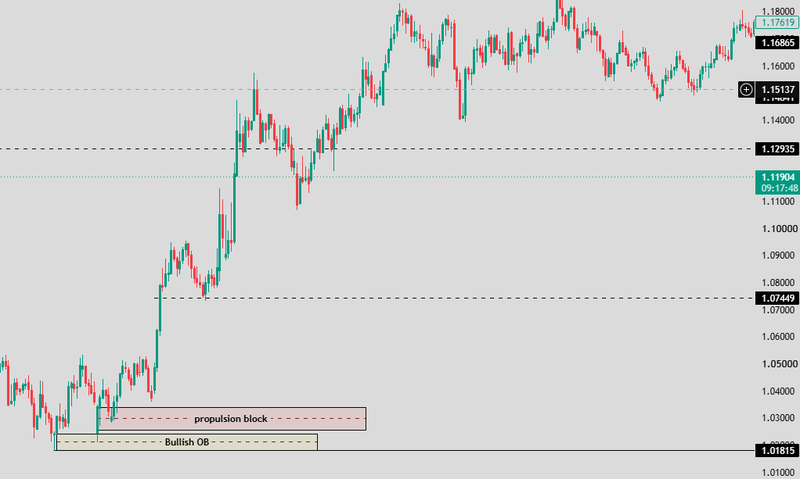
A propulsion block is a continuation setup in SMC and ICT trading methodologies. It develops when price retraces into an existing order block, respects the relevant price levels and then resumes its previous direction with strong momentum.

The key idea is that the original order block continues to act as support or resistance.
The formation begins with an established order block and a directional move.
50% threshold should not be treated as a universal rule across every ICT or SMC model.
What is a propulsion block?
A propulsion block is an order-block-based continuation pattern. It forms when price returns to a previously established bullish or bearish order block and reacts without invalidating the setup's relevant structure.
The key idea is that the original order block continues to act as support or resistance. Instead of breaking through the zone, price respects it and moves away with renewed momentum.
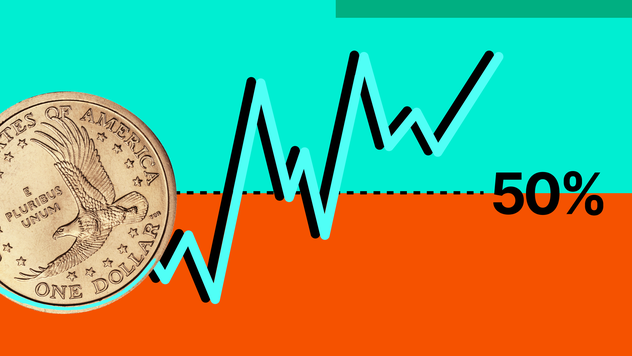
The mean threshold, or 50% level, is an important reference in many propulsion-block interpretations. Traders monitor whether price respects this level, although the precise rules can differ between ICT educators and SMC trading models.
Source: Trading view
How does a propulsion block form?
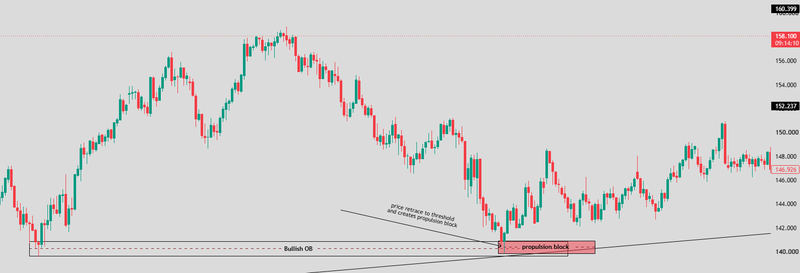
The formation begins with an established order block and a directional move. Price subsequently retraces into the order block, creating an opportunity to assess whether the zone continues to hold.
If price respects the relevant threshold and moves away with strong momentum, traders may identify a propulsion block. A breakthrough of the zone or its defining threshold can weaken or invalidate the setup, depending on the model being used.
The strongest setups often include additional evidence, such as a liquidity sweep, a market structure shift or a Fair Value Gap (FVG) created during the move away from the block.
Source: Trading view
Bullish propulsion block
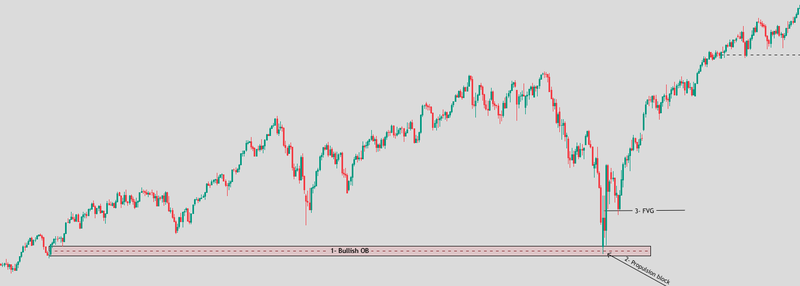
A bullish propulsion block develops within a bullish market context. Price moves higher, then retraces into an existing bullish order block. A down-closing candle may form during this pullback, trading into the earlier zone before buyers regain control.
If the order block holds and price subsequently moves higher with convincing bullish momentum, traders may interpret the reaction as a continuation signal.
A trader may watch for a subsequent retracement into the propulsion zone rather than entering after the initial rally. The setup is stronger if the move higher produces displacement or breaks a nearby swing high.
Source: Trading view
Bearish propulsion block
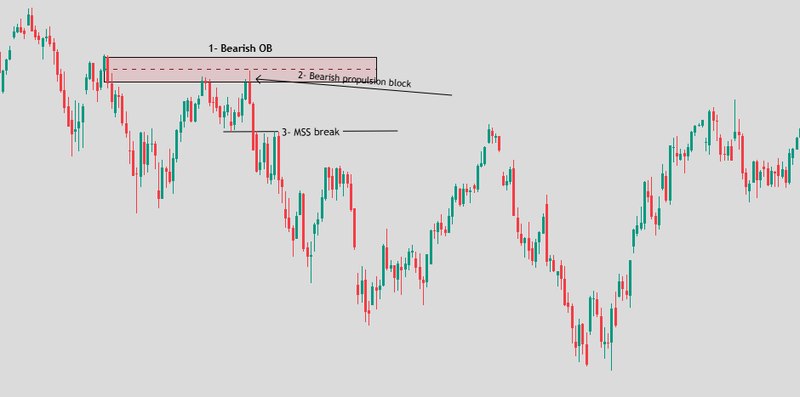
A bearish propulsion block follows the opposite logic. Price moves lower before retracing into an established bearish order block. An up-closing candle may form during the pullback, trading into the earlier zone before sellers regain control.
If the bearish order block holds and price drives lower with strong momentum, traders may interpret the reaction as a continuation of the downtrend.
A trader may wait for price to retest the propulsion zone before considering a short position. A bearish market structure break or an FVG created during the decline can provide additional confirmation.
Source: Trading view
What is the mean threshold in a propulsion block?
The mean threshold is the 50% level of a selected candle's high-to-low range. It provides a reference for judging whether a retracement remains within the boundaries of a particular propulsion-block model.
In models that require price to respect this level, a clean break or close beyond the threshold may weaken the setup. However, the exact invalidation rule depends on how the trader defines the block. Some models focus on the candle's opening price, while others use the midpoint or the boundaries of the original order block.
How to trade a propulsion block
A bullish propulsion block is generally more relevant when the higher-timeframe structure is bullish, while a bearish propulsion block is more relevant in a bearish environment.
Next, identify a valid order block and wait for price to be retraced into it. The reaction matters more than the mere presence of a candle inside the zone. Traders look for evidence that the area is being held, followed by a clear move away from it.
An entry may be considered on a subsequent retest of the propulsion candle or the relevant threshold. Some traders use the candle's opening price, while others prefer the 50% level. Neither level guarantees a reaction.
Confirmation can improve the quality of the setup
A liquidity sweep followed by a market structure shift, displacement or an FVG may indicate that price is resuming its intended direction. These signals provide context, but they do not eliminate the risk of failure.
Propulsion block vs. breaker block
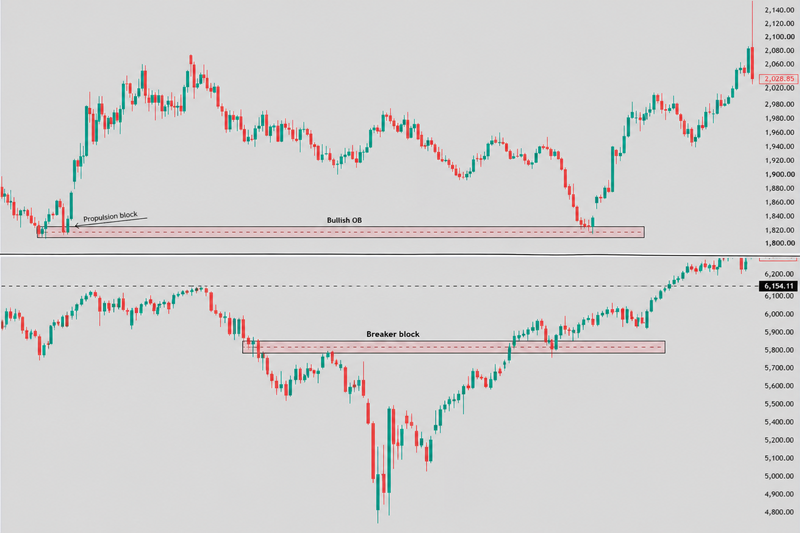
A propulsion block is a continuation concept. The relevant order block holds, price respects the defining levels and the prevailing move resumes.
A breaker block develops when an order block fails. Price breaks through the original zone, and that area may subsequently act as resistance after a bullish block fails or support after a bearish block fails.
Source: Trading view
Common mistakes when trading propulsion blocks
One common mistake is labelling every retracement into an order block as a propulsion block. A valid setup requires a clearly defined zone, a relevant threshold and evidence of a directional reaction.
Another mistake is ignoring the broader market structure. A bullish propulsion pattern within a strong bearish trend may fail if the wider market continues to favour lower prices.
Traders can also enter too early, before price demonstrates that the zone is holding. Waiting for displacement or a market structure shift may provide additional confirmation, although it can mean entering at a less favourable price.
Finally, the 50% threshold should not be treated as a universal rule across every ICT or SMC model. Definitions vary, so consistent identification and predefined invalidation criteria are more useful than switching between interpretations from trade to trade.
FAQs
What is a propulsion block in ICT?
A propulsion block is a continuation setup in ICT trading that forms when price retraces into an existing order block, respects the relevant price levels and resumes its previous direction.
How do you identify a propulsion block?
Identify an established order block, wait for price to retrace into the zone, and look for a reaction that respects the model's defining levels. A strong move away from the zone, supported by displacement or a market structure shift, can strengthen the setup.
How do you enter a propulsion block trade?
Traders typically wait for price to retrace into the identified zone and look for confirmation from market structure, displacement, liquidity or a Fair Value Gap. Entries may be considered around the propulsion candle's opening price or mean threshold, depending on the trading model.
What is the mean threshold in a propulsion block?
The mean threshold is the 50% level of a selected candle's high-to-low range. Traders use it to assess whether price is respecting the propulsion setup, although the precise rule depends on the model being followed.