Support
What buy the dip means in trading
“Buy the dip” means purchasing an asset after its price falls, with the expectation that the wider trend remains intact. This article explains why market context, fundamentals and liquidity conditions matter.
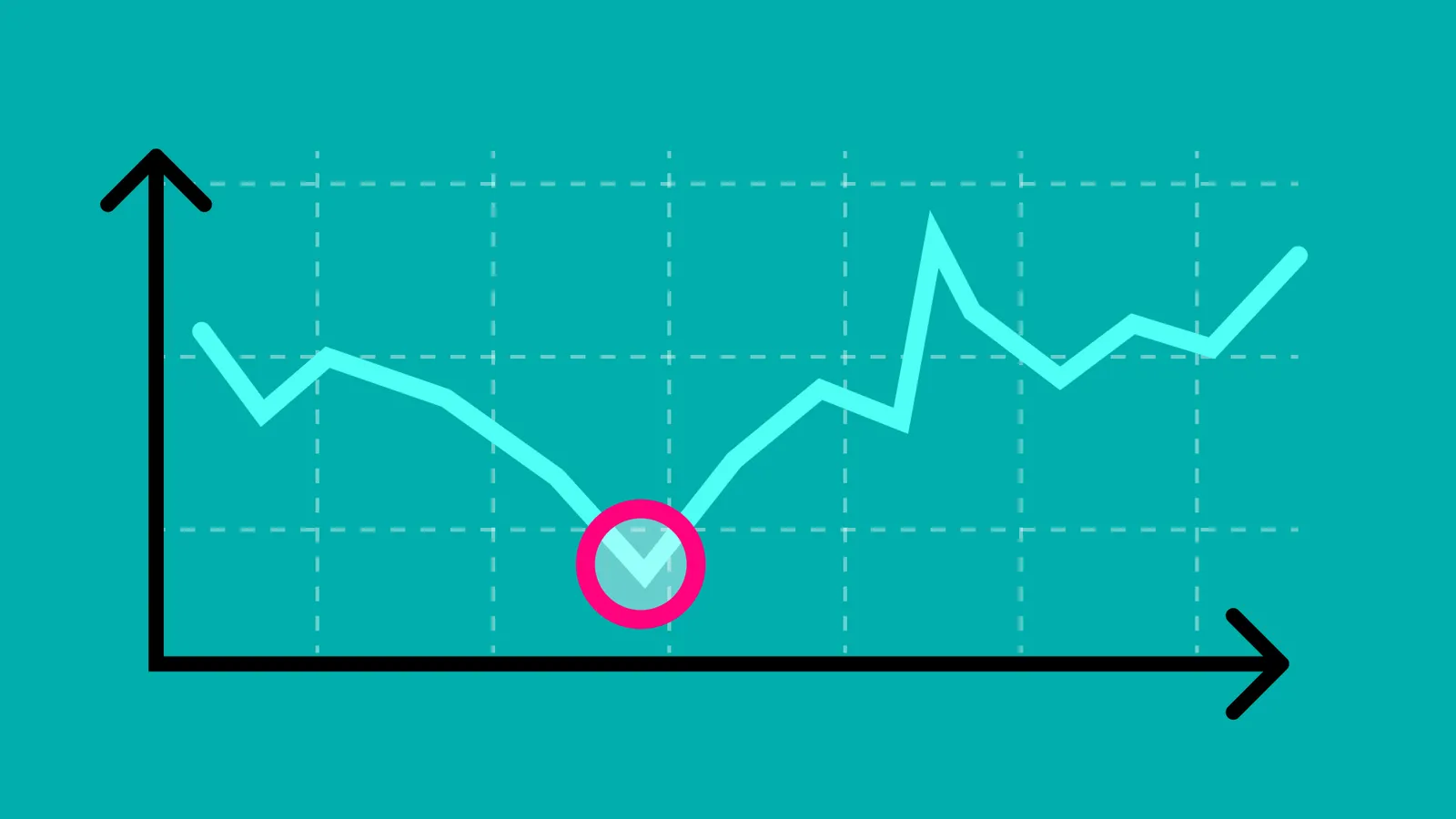
Buying the dip is based on the idea that a price fall may be temporary within a wider upward trend.
A broad index pullback, such as the S&P 500, should be judged differently from a decline in a single sector like semiconductors.
Macro conditions such as inflation, interest rates, liquidity and investor sentiment can help shape the decision.
Stronger dip-buying opportunities often appear when the underlying story remains positive and financial conditions are becoming more supportive.
What does “buy the dip” mean?
When a market is in a healthy uptrend, it rarely moves in a straight line. Prices rise, pause, pull back, and then sometimes continue higher. Long-term investors often use these pullbacks to add to existing positions, while shorter-term traders may look for a rebound from an important support level.
The mistake many people make is defining a dip by the size of the decline alone. A 5% drop can be dangerous if the underlying trend has already broken, while a 15% decline can still be attractive if earnings, liquidity, and the longer-term structure remain strong.
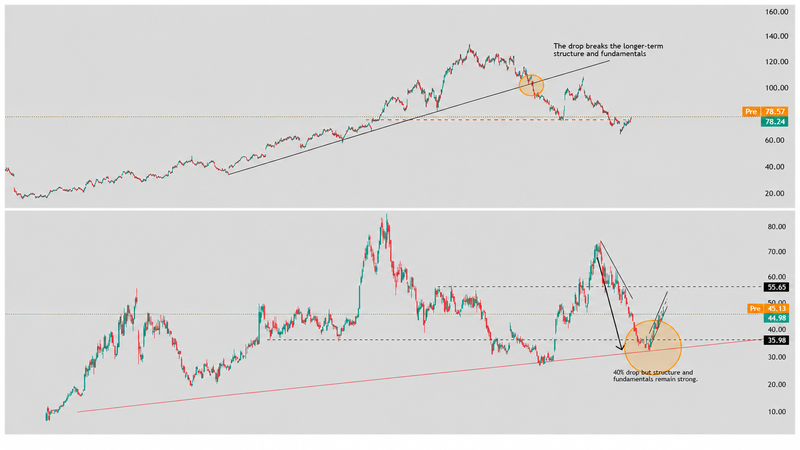
Source: Trading view
Why buying dip is different from one market to another
A broad index such as the S&P 500 has historically been supported by economic growth, corporate earnings, innovation, and long-term capital inflows. Many individual sectors do not have those same advantages.
A semiconductor stock may fall because investors expect weaker future demand. A biotech company can collapse because a drug trial fails. Other smaller stocks can decline because global liquidity tightens and speculative capital leaves the market.
The same percentage decline can therefore mean very different things
In a broad equity index, a dip is often a pause within a longer-term growth trend. In a sector stock, it may reflect a genuine deterioration in future earnings. In much higher risk assets, it may be driven more by liquidity and risk appetite than by traditional fundamentals. Professional investors usually ask a different question: Is this decline cyclical, sector-specific, or structural?
The current equity backdrop
The present U.S. equity environment is not a straightforward risk-off market. Major indices remain relatively close to record highs, supported by resilient earnings, strong balance sheets among large companies, and continued enthusiasm around artificial intelligence and productivity themes.
The weakness has been more concentrated in parts of high-growth technology and semiconductors. Those pullbacks have often reflected concerns about AI-related capital spending, stretched valuations after a powerful rally, and rotation into sectors that had previously lagged.
When is a dip attractive?
A dip becomes interesting when the decline is driven more by positioning, sentiment, or short-term uncertainty than by a lasting deterioration in fundamentals.
In practice, the best opportunities usually appear when the longer-term trend is still intact, earnings expectations have not collapsed, liquidity conditions are stable or improving, and selling pressure begins to lose momentum.
For example, if a strong company falls because investors temporarily reduce exposure to the sector, the pullback may offer an opportunity. If the same company falls because revenue guidance is cut sharply and margins are deteriorating, the market may be signaling a deeper problem. The difference is whether the market is repricing fear or repricing reality.
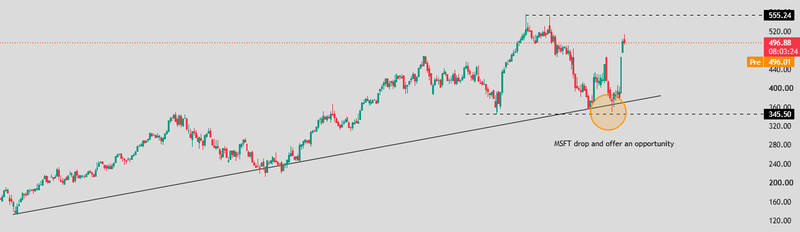
Source: Trading view
Macro factors that create dips
When inflation comes in higher than expected, investors may fear that interest rates will stay elevated for longer. This often pressures growth stocks and other long-duration assets.
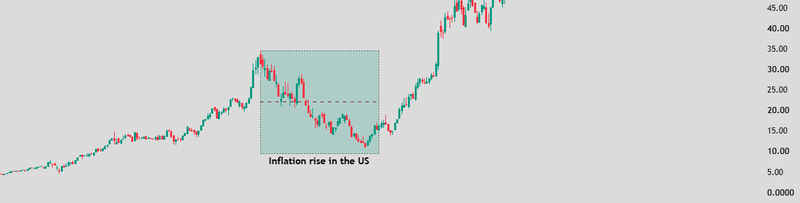
Source: Trading view
Interest-rate expectations
Markets react not only to current rates but also to expectations for future rates. A shift from expecting several rate cuts to expecting fewer cuts can create a meaningful pullback.
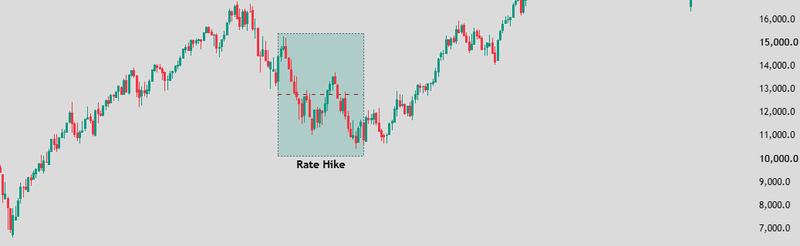
Source: Trading view
Rising bond yields
Higher Treasury yields increase the discount rate used to value future cash flows, which can weigh on technology and other high-growth sectors. Economic slowdown fears, weak manufacturing data, softer employment numbers, or declining consumer spending can raise concerns about future earnings growth.
Liquidity tightening
When central banks reduce balance sheets or financial conditions tighten, speculative assets often come under pressure first. These factors create the dip, but they do not automatically tell you whether the dip is worth buying.
Macro factors that make buying the dip more attractive
When money is flowing into equities, credit markets are functioning normally and financial conditions are easing, pullbacks are more likely to attract buyers. The opposite environment is much harder. Buying dips during periods of tightening liquidity, rising real yields and growing economic uncertainty often carries significantly more risk.
The biggest risks of buying the dip
The largest risk is confusing a downtrend with a dip. Markets often look cheapest after they have already fallen significantly, but many major bear markets included multiple sharp rebounds that attracted buyers before the decline resumed.
Another risk is buying too early. A stock or index can fall 10%, then 20%, then 30%. Valuation alone does not stop a decline. Sector concentration is also dangerous. Buying every dip in the same high-growth theme can create hidden portfolio risk if that theme loses leadership.
Emotional averaging down is another common mistake. Adding repeatedly to a losing position without reassessing the original thesis can turn a manageable loss into a large one.
FAQs
What does “buy the dip” mean in investing?
Buying the dip means purchasing an asset after its price has fallen from a recent high because the investor believes the decline is temporary and that the broader uptrend will continue. The goal is to enter at a lower price rather than buying after an extended rally.
Is buying the dip a good strategy?
It can be a good strategy when the longer-term trend remains intact and the fundamental outlook has not deteriorated. It becomes risky when the decline is caused by weakening earnings, tighter liquidity, or a structural change in the market.
How do you know if a dip is worth buying?
A dip is often more attractive when price remains above major long-term support, earnings expectations are stable, liquidity conditions are improving, and selling pressure begins to weaken. The key is to determine whether the decline is temporary or part of a larger downtrend.
What is the difference between a dip and a bear market?
A dip is usually a short-term pullback within a broader uptrend, while a bear market is a sustained decline marked by lower highs, lower lows, and weakening market fundamentals. Not every dip becomes a bear market, but every bear market begins with a decline that initially looks like a dip.