Support
Fed’s Lisa Cook signals rate hike unless inflation improves soon
Federal Reserve Governor Lisa Cook has warned that interest rates may need to rise unless inflation shows clearer signs of cooling. After voting to keep rates unchanged last week, Cook said price stability now poses a greater risk than the labor market and that the Fed cannot afford to wait indefinitely.
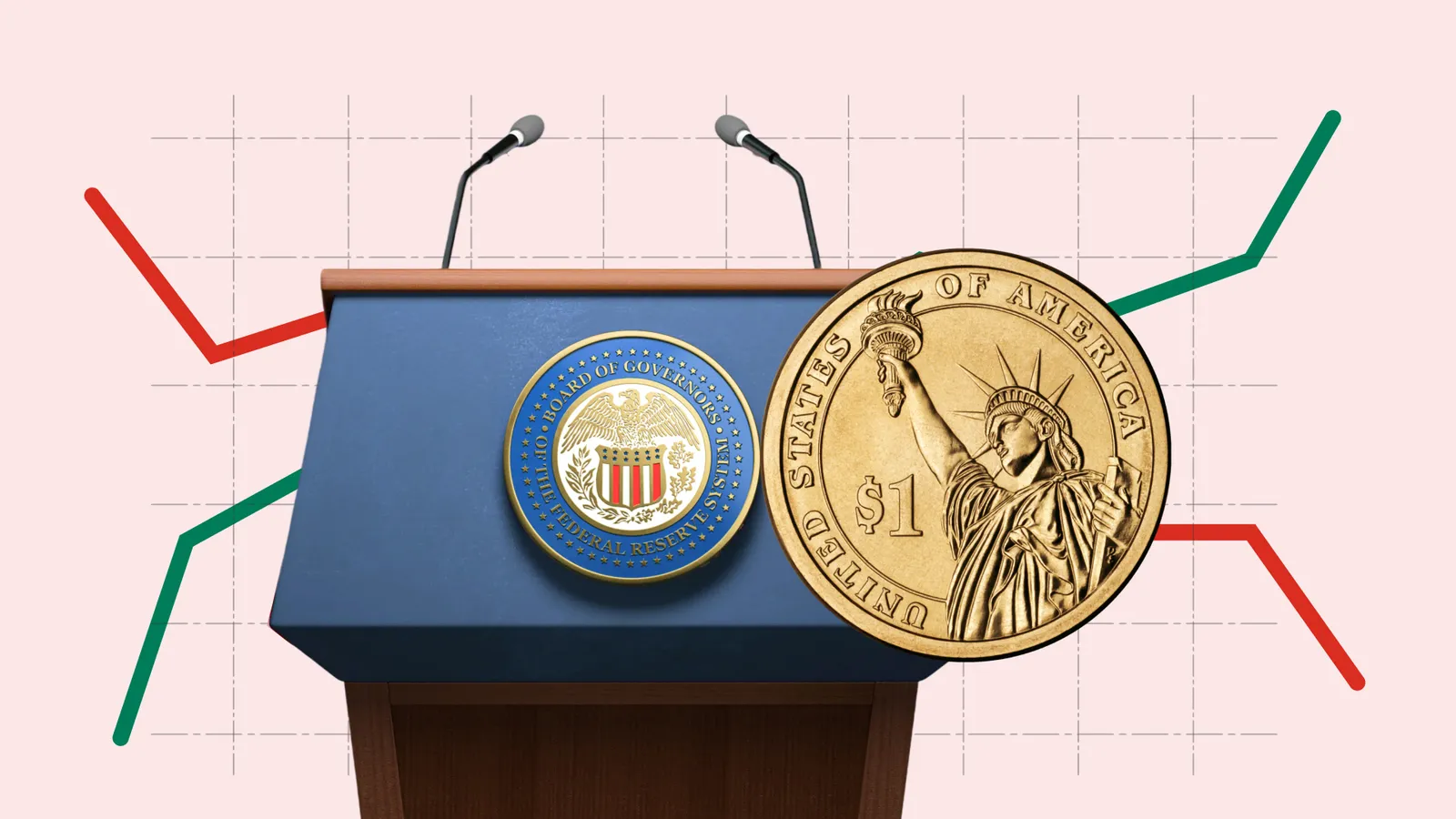
Cook said she is prepared to raise rates if inflation does not improve soon.
The Fed kept its benchmark rate at 3.5%–3.75% in a 9-3 vote last week.
Cook sees inflation risks as greater than employment risks.
Markets see September as possible, with higher odds currently attached to an October hike.
Cook moves closer to supporting a rate hike
Federal Reserve Governor Lisa Cook has delivered one of her clearest warnings yet that another interest-rate increase may be necessary.
Cook said inflation remains too high and that risks to price stability currently outweigh risks to employment.
“As such, I am prepared to act by raising rates, if necessary,” she said during a speech in Anchorage, Alaska.
The remarks are significant because Cook voted with the majority only last week to keep interest rates unchanged. Her latest comments suggest that support for the pause could weaken quickly unless upcoming inflation data confirm that price pressures are continuing to ease.
Fed held rates in a divided vote
The Federal Open Market Committee voted 9-3 last week to maintain the federal funds target range at 3.5% to 3.75%.
Cook supported the decision to hold, arguing that policymakers needed more time to assess several competing forces affecting inflation.
Those included the diminishing impact of tariffs, the energy supply shock linked to the Iran conflict and rising demand associated with the artificial-intelligence investment boom.
The unusually divided vote already showed that pressure for tighter policy was building within the Fed.
Cook’s comments indicate that the group prepared to consider higher rates may now be expanding beyond the three officials who dissented at the meeting.
One soft inflation report may not be enough
June inflation data showed a meaningful slowdown, driven largely by a sharp decline in energy prices.
Cook cautioned against placing too much weight on a single report.
Energy prices can change rapidly, particularly during periods of geopolitical instability. A decline in gasoline or oil can pull headline inflation lower temporarily without proving that broader price pressures have returned to the Fed’s 2% target.
The central bank will therefore be watching whether the improvement continues across several months and spreads into more persistent categories such as services, housing and wages.
Without that evidence, the June decline may be treated as temporary relief rather than the beginning of a durable disinflation trend.
Five years above target raise entrenchment risk
Cook’s main concern is that inflation has remained above the Fed’s target for too long.
The longer businesses and workers experience elevated inflation, the greater the risk that it becomes embedded in price-setting and wage negotiations.
Companies may begin raising prices in anticipation of higher future costs, while employees demand larger wage increases to protect their purchasing power.
That behavior can make inflation more persistent even after the original shocks fade.
Cook warned that five years of above-target inflation increase the chance that these patterns become entrenched and much harder for the Fed to reverse.
This is why she believes policymakers may have less room to wait than they would under more normal conditions.
Inflation now outweighs employment concerns
The Federal Reserve operates under a dual mandate to maintain price stability and support maximum employment.
Cook said the balance of risks has shifted toward inflation.
The labor market has shown signs of gradual cooling, but it has not weakened enough to become the Fed’s dominant concern. As long as employment conditions remain relatively stable, policymakers have greater freedom to use higher rates to restrain demand.
This calculation could change if unemployment rises sharply or job creation deteriorates.
For now, Cook’s assessment suggests that the central bank’s priority is preventing another inflation rebound rather than providing additional support to economic activity.
Tariffs remain an uncertain inflation force
Tariffs are one of the factors complicating the outlook.
Import taxes can raise costs for businesses, which may respond by increasing consumer prices. But their impact can fade over time if companies adjust supply chains, absorb part of the cost or find alternative suppliers.
Cook voted to hold partly because she wanted to determine whether tariff-related inflation was beginning to weaken.
If the effect proves temporary, the Fed may be able to remain patient.
If tariffs continue to raise prices across a broad range of goods, they would strengthen the case for tighter monetary policy.
Iran conflict keeps energy risk elevated
The energy outlook is another major uncertainty.
The June inflation slowdown benefited from lower energy prices, but the Iran conflict continues to create risks for oil supply and global shipping.
A renewed rise in crude prices would affect gasoline, transportation and production costs. If sustained, those increases could eventually spread into broader consumer inflation.
The Fed generally avoids reacting aggressively to temporary energy shocks. But the calculation becomes more difficult when inflation is already above target and policymakers fear that expectations may be drifting higher.
Cook’s warning suggests that another sustained oil-price surge could help trigger a rate increase.
AI investment is supporting demand
The rapid expansion of artificial-intelligence infrastructure is also affecting the Fed’s assessment.
Technology companies are spending heavily on data centers, semiconductors, electricity generation and computing capacity.
That investment supports economic growth, but it also increases demand for construction, equipment, energy and specialized workers.
AI may eventually improve productivity and reduce costs. During the investment phase, however, it can create additional inflation pressure by intensifying competition for limited resources.
Cook wants more evidence on whether this demand boom is keeping the economy too strong for inflation to fall sustainably.
September or October could become the next window
Markets believe the Fed could begin tightening again as soon as September, although current pricing points to a higher probability of a move in October.
The difference will depend on the inflation and employment data released before those meetings.
Several consecutive soft inflation reports could allow policymakers to extend the pause.
Sticky core inflation, stronger energy prices or continued resilience in employment would increase the likelihood of a hike.
The Fed will also want to avoid appearing to delay a necessary decision for political reasons as the November midterm elections approach.
More officials are supporting higher rates
Cook is not alone in warning that monetary policy may need to become more restrictive.
Minneapolis Fed President Neel Kashkari, one of the three officials who voted for higher rates last week, has maintained that additional tightening is necessary.
Other policymakers have also argued that inflation remains the greater risk and that the current rate level may not be restrictive enough.
The growing number of hawkish comments suggests that the debate inside the Fed is shifting.
The question is no longer whether any officials support a hike. It is whether enough members will join them at the next meeting to change the majority decision.
What investors should watch next
Upcoming inflation data will be the most important factor.
Markets will focus on whether core and services inflation continue to ease, rather than relying only on changes in gasoline prices.
Wage growth and inflation expectations will also matter because they can indicate whether elevated price pressures are becoming embedded.
The labor market remains another critical signal. A significant rise in unemployment would make a hike more difficult, while continued low layoffs would give the Fed more freedom to tighten.
Oil prices, tariffs and AI-related investment will help determine whether June’s softer inflation reading was durable or temporary.