Support
 Fiscal pressure leaves the UK caught between inflation and growth
The UK enters Q4 with fiscal credibility as a key challenge for both the government and the Bank of England. The government is expected to focus on stabilising debt through higher taxes and tighter spending, while the BoE keeps monetary policy restrictive. The key question is whether the Budget can restore confidence in the UK’s debt outlook without causing a deeper economic slowdown.

A credible Budget could ease concerns around UK debt and reduce pressure on longer-term yields.
The base case is for one further hike in Q4, with another move in December becoming more likely if wage growth and inflation expectations remain high.
The challenge in Q4 is whether the government can improve confidence in the UK’s debt outlook without worsening the economic slowdown.
Fiscal credibility becomes the main test
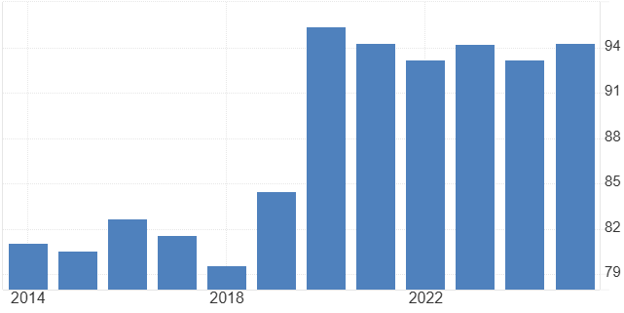
The Budget will be judged less on individual measures and more on whether it can put debt-to-GDP on a more credible path. Higher borrowing costs are already pushing up interest payments, making further increases in debt harder to manage.
A gradual improvement in the debt ratio is more likely than a sharp reduction. Cutting too quickly could weaken demand and be difficult to sustain while growth remains slow. The government therefore needs to show fiscal discipline without putting too much pressure on the economy.
This balance will be important for gilts. A credible Budget could ease concerns around UK debt and reduce pressure on longer-term yields. A weaker plan could lead investors to demand a higher risk premium, keeping long-term yields elevated.
Source: Office for Budget Responsibility, UK
Sticky inflation limits the BoE’s room to respond
The challenge is made harder by inflation, which remains well above target. Inflation is expected to average around 3.6% in 2026, even as economic growth slows. Wage growth and inflation expectations will therefore remain important factors in the BoE’s next moves.
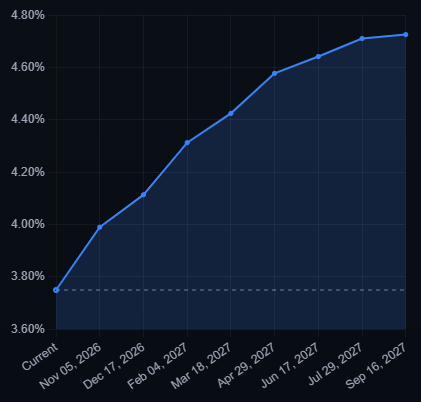
The BoE faces a difficult balance. Cutting rates could support the economy but keep inflation higher for longer, while further rate hikes would add pressure on households, businesses and the government. The base case is for one further hike in Q4, with another move in December becoming more likely if wage growth and inflation expectations remain high.
Fiscal policy could make that decision easier or harder. Tighter spending could help bring inflation down over time but would also weaken growth. More government spending could support the economy but may keep inflation higher for longer and give the BoE less room to cut rates.
Source: Rate probability
Gilts will show where the pressure is coming from
Long-term gilt yields are already showing that investors are looking beyond Bank Rate. The 30-year yield has moved above 6%, while the 10-year yield has reached its highest level since 2007. Heavy government borrowing, fiscal uncertainty and the extra return investors demand for holding longer-term debt are becoming increasingly important alongside interest rate expectations.
This will be important in Q4. Short-term yields should remain closely tied to expectations for Bank Rate, while 10- and 30-year yields are likely to react more directly to the Budget and the government’s borrowing plans.
If long-term yields continue to rise faster than short-term yields, it could signal growing concerns around the UK’s fiscal outlook rather than simply tighter monetary policy. A credible Budget could help stabilise longer-term yields, while a weaker package could keep them under pressure as quantitative tightening continues and government borrowing remains high.
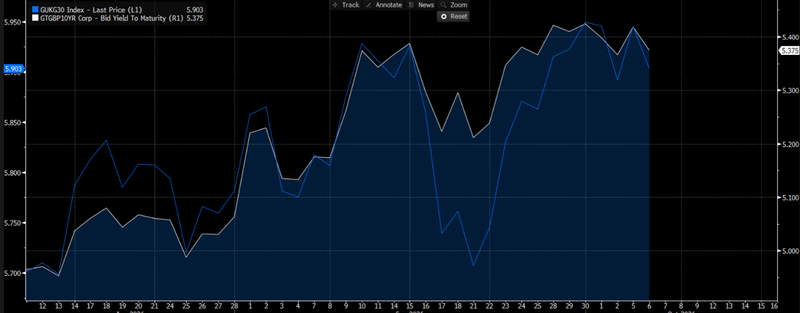
Source: Bloomberg
Sterling faces the same credibility test
Gilt yields will also influence sterling. Higher UK rates can support the pound when they reflect tighter monetary policy and greater confidence in the UK’s fiscal position. A credible Budget could therefore strengthen confidence in UK assets and support sterling.
But higher yields are not always positive for the currency. If they rise because investors are demanding greater compensation for fiscal risk, gilts and sterling could weaken together. What matters is why yields are rising; not simply how high they go. A credible Budget could help stabilise gilts, support sterling and give the BoE more room to focus on inflation. A weaker package could push long-term yields higher and increase the risk premium on UK assets.
The challenge in Q4 is whether the government can improve confidence in the UK’s debt outlook without worsening the economic slowdown, while the BoE works to bring inflation down without putting further pressure on growth.