Support
Hormuz reopening floods oil market with supply as brent erases war gains
Oil markets have quickly shifted from fear of shortage to signs of oversupply after the reopening of the Strait of Hormuz. A wave of crude cargoes from the Persian Gulf is pressuring prices across Asia and Europe, while Brent futures have erased all gains made since the Iran war began.

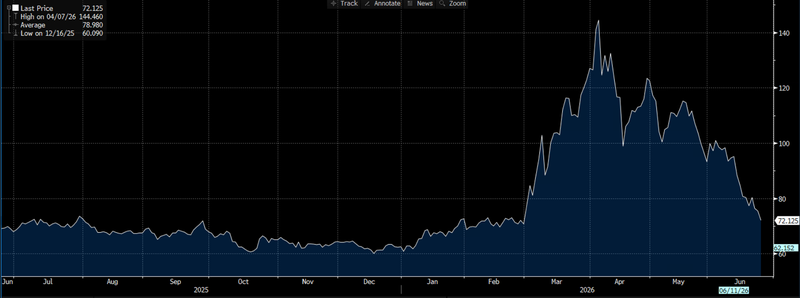
Brent has wiped out all gains recorded since the start of the Iran war.
Angolan crude has traded at discounts near $10 a barrel to Dated Brent.
Iran shipped 30 million barrels to Asia before receiving a 60-day sales license.
The UAE recently sold about 60 million barrels of Persian Gulf crude through tenders.
Oil market shifts from shortage fears to oversupply
The reopening of the Strait of Hormuz has quickly changed the tone of the global oil market.
Only weeks ago, traders were focused on supply disruption, tanker risk and the possibility that the Iran war could choke one of the world’s most important energy routes. Now, the opposite problem is emerging. Key parts of the physical crude market are suddenly facing too much supply as cargoes trapped in the Persian Gulf begin moving back into global trade.
The result is visible across Europe and Asia. Buyers are being offered more cargoes than they need, some grades are trading at steep discounts, and major benchmarks are showing bearish signals. Brent futures have already wiped out all the gains recorded since the war began, a sharp reversal from the panic buying that drove prices higher earlier in the conflict.
Source: Bloomberg
Hormuz reopening releases a wave of crude
The supply pressure did not appear from nowhere.
Even before the US-Iran agreement to reopen the waterway, several forces had already started to loosen the market. Strategic inventory releases, weaker demand from China and a flow of tankers moving quietly out of the Persian Gulf had all helped reduce the earlier shortage.
The reopening has accelerated that process.
Millions of barrels that had been delayed, rerouted or held back are now moving into the market. Iran shipped 30 million barrels to Asia in the days before the US issued a 60-day license allowing Iranian oil sales on the international market. At the same time, companies that had avoided transiting the waterway are now working to move trapped barrels out.
The UAE has also been a major part of the supply wave. In recent weeks, it sold about 60 million barrels of crude produced inside the Persian Gulf through a series of tenders for the coming months. Each sale added more pressure to Middle Eastern crude prices.
Angolan crude shows the scale of the weakness
One of the clearest signs of oversupply is coming from Angola.
Angolan crude, which is often bought by Chinese refiners, has been selling at some of the deepest discounts in more than a decade. At times, some grades changed hands at nearly $10 a barrel below the Dated Brent benchmark.
That matters because Angolan crude is medium-density oil, similar in some ways to the barrels now flooding out of the Persian Gulf. When Asian buyers are already well supplied, extra Middle Eastern cargoes put direct pressure on competing grades.
The weakness also signals a major reversal in trade flows. Some Chinese refiners have reportedly been offering oil cargoes for sale, a sharp break from the usual pattern where China absorbs large volumes from the global market.
This suggests that China’s demand has weakened enough to turn what was once a tight market into a visible overhang.
Brent and Middle Eastern crude flash bearish signals
The structure of the oil market has also changed.
Middle Eastern crude has been trading in contango since mid-month, a bearish market structure where oil for immediate delivery is cheaper than oil for future delivery. That typically signals weak near-term demand or excessive prompt supply.
The global Brent benchmark also flipped into a weaker structure on Wednesday. A day later, benchmark futures prices erased all gains made since the start of the Iran war.
This is a dramatic shift from early April, when Dated Brent surged above $140 a barrel to a record high as refiners rushed to secure supply during the war. Since then, the benchmark has roughly halved and is now close to where it stood before the conflict began.
The speed of the reversal shows how quickly geopolitical risk premiums can disappear when physical supply starts moving again.
Asia is already well supplied
Asia is the main pressure point.
Asian refiners went on a buying spree during the height of the Hormuz disruption, building supply coverage in case the conflict worsened. Now that the strait is reopening and cargoes are moving again, those same buyers are no longer rushing to secure more barrels.
Several Asian refiners are already well supplied through August. That leaves fewer buyers for the prompt cargoes now being released from the Persian Gulf.
The weakness is not limited to one region. Millions of barrels that would normally go to Asia are now being redirected toward Europe. At least six supertankers carrying a combined 12 million barrels of crude from the UAE and Oman are expected to arrive in Europe next month.
Nigeria’s Dangote refinery also bought UAE crude for the first time, showing that Gulf suppliers are looking for new outlets as traditional Asian demand softens.
The oversupply story was building before the peace deal
The US-Iran agreement accelerated the weakness, but it was not the only cause.
Strategic inventory releases helped cover shortages during the disruption. Tankers also moved quietly through the Persian Gulf during the war, including cargoes from the UAE and Kuwait. The UAE’s exports had already recovered to almost 85% of prewar levels by early June, before the strait was more formally reopened.
That means the market was solving the supply disruption before the official agreement. The reopening simply made the surplus more visible.
By the time the deal was signed, some traders involved in complex and expensive “dark” shipments had already started pulling back because the oil was no longer needed.
Low inventories limit the downside risk
Despite the sudden supply wave, the oil market is not completely safe from another shock.
Inventories remain low in some important areas. US crude inventories, including strategic reserves, are at their lowest level since 1984. Stockpiles at Cushing, the key US pricing hub, are also close to operational minimum levels.
That has kept US crude prices stronger relative to other parts of the world and has reduced demand for US exports. It also means the market would remain vulnerable if there is another disruption, whether from geopolitics, hurricanes, shipping constraints or unexpected refinery demand.
There is another important point: much of the recent stability came from drawing down inventories. Those barrels will eventually need to be replaced. Refilling stockpiles could absorb part of the oversupply later, especially if prices fall far enough to encourage strategic buying.
IEA surplus warning returns to focus
The latest price weakness brings back a concern that existed before the Iran war: the possibility of a significant oil surplus.
The International Energy Agency has already forecast a large surplus in 2027. That outlook had been pushed into the background when the market was focused on Hormuz disruption and war risk. But with supply routes reopening and prices falling, the surplus narrative is returning.
If China demand remains weak, Middle Eastern supply continues to normalize and inventories do not absorb enough barrels, oil markets could stay under pressure.
The key question is whether the current oversupply is temporary, caused by trapped barrels suddenly moving at once, or whether it marks the beginning of a deeper demand-supply imbalance.