Support
Can Kevin Warsh shrink the Fed’s $6.75 trillion balance sheet?
Federal Reserve Chair Kevin Warsh has long argued that the central bank’s enormous balance sheet distorts financial markets and blurs the boundary between monetary and fiscal policy. Yet after years of quantitative tightening, the Fed has started buying Treasury bills again to maintain ample reserves.
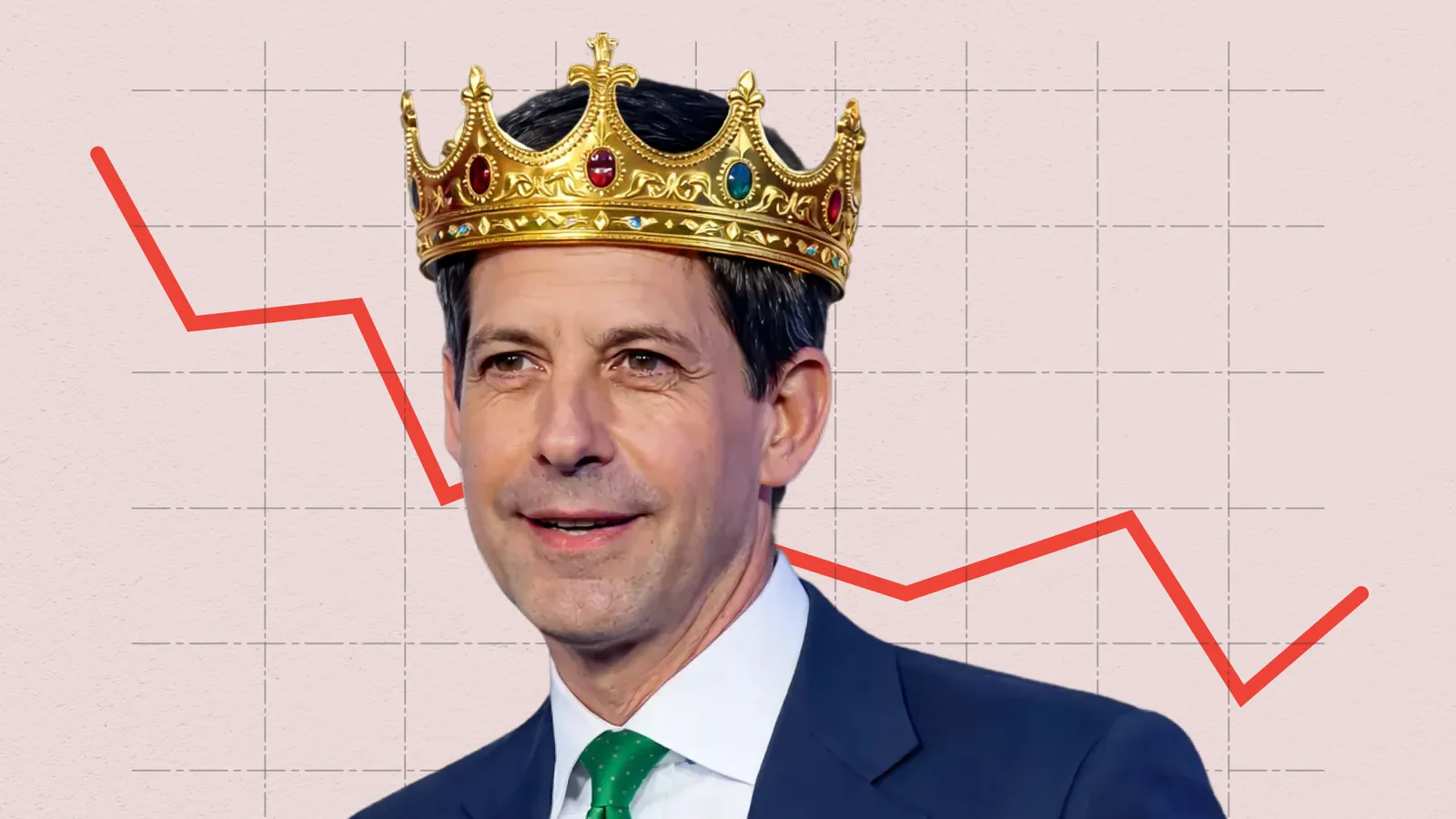
The Fed’s balance sheet peaked near $9 trillion in 2022 before quantitative tightening reduced it by roughly $2.4 trillion.
Total assets have since climbed back to around $6.75 trillion after the Fed began buying approximately $40 billion of Treasury bills per month.
Bank reserves now exceed $3 trillion, compared with roughly $30 billion to $50 billion for decades before the 2008 Financial Crisis.
Reserves equal roughly 30% of M2 today, versus around 10% before the crisis.
Warsh may need changes to bank liquidity regulation before the Fed can sustainably operate with a materially smaller balance sheet.
Warsh wants a smaller Fed, but the system has changed
Kevin Warsh arrives at the Federal Reserve with a view he has expressed for years: the central bank has become too large, too influential and too deeply embedded in financial markets.
The numbers make his concern easy to understand. Before the 2008 Financial Crisis, the Federal Reserve operated with a comparatively small balance sheet and managed short-term interest rates through relatively modest changes in the supply of bank reserves. After successive rounds of quantitative easing, pandemic support and other liquidity programs, the Fed’s assets eventually approached $9 trillion in 2022.
Quantitative tightening reversed part of that expansion. By the end of 2025, the Fed had reduced its assets by roughly $2.4 trillion to about $6.5 trillion. Yet even after one of the largest balance-sheet reductions in central-bank history, the Fed remained more than 50% larger than it had been before COVID and more than seven times its size before the Financial Crisis.
More importantly, the direction has recently changed again.
The Fed has started adding assets, leaving Warsh with a central question that goes well beyond ideology: how small can the Federal Reserve actually become without destabilizing the monetary system that has evolved around its enormous balance sheet?
Quantitative tightening stopped before the balance sheet became small
The end of QT illustrates the problem.
After allowing trillions of dollars of Treasury securities and mortgage-backed securities to mature without reinvestment, the Fed eventually concluded that reserves were approaching levels where further reductions could begin threatening its definition of an “ample reserves” environment.
That prompted a new policy.
In late 2025, the central bank began what it calls reserve management purchases, buying approximately $40 billion of Treasury bills every month. The purchases are not officially described as quantitative easing because their purpose is not to push long-term interest rates lower or stimulate the economy. Instead, the Fed says they are necessary to accommodate the banking system’s growing demand for reserves and ensure that short-term money markets continue functioning smoothly.
The distinction matters conceptually, but the balance-sheet arithmetic is straightforward: the Fed is buying securities again.
As a result, total Federal Reserve assets have climbed back to around $6.75 trillion, even as mortgage-backed securities continue running off and have declined to roughly $1.93 trillion.
For Warsh, this creates an immediate contradiction. He wants the central bank to reduce its footprint, but the operating framework inherited from his predecessors is already demanding additional assets simply to keep reserves sufficiently abundant.
Before 2008, the Fed needed remarkably few reserves
To understand why shrinking the balance sheet is difficult, it helps to remember how different monetary policy looked before the Financial Crisis.
For decades, the Federal Reserve operated under what is usually called a scarce-reserves framework.
Banks held relatively small reserve balances at the Fed. Total reserves were typically only around $30 billion to $50 billion, and reserves amounted to roughly 10% of M2, a broad measure of the money supply that includes currency, checking accounts, savings deposits and other highly liquid assets.
Because reserves were genuinely scarce, relatively small Federal Reserve transactions could affect their market price.
If the Fed purchased Treasury securities, it injected reserves into the banking system and pushed short-term interest rates lower. If it sold securities and drained reserves, money-market rates moved higher.
The system therefore allowed the central bank to steer monetary policy with a relatively small balance sheet.
That framework effectively disappeared after 2008.
QE changed the plumbing of the financial system
When the Financial Crisis erupted, the Fed bought enormous quantities of Treasury and mortgage-backed securities through quantitative easing.
Those purchases were funded by creating reserves.
Instead of reserves being scarce, banks suddenly held dramatically more liquidity than they needed for ordinary settlement purposes. Subsequent rounds of QE, followed by the extraordinary asset purchases during the pandemic, pushed reserve balances even higher.
Today, reserves stand at just over $3 trillion.
That is roughly twice their pre-pandemic level and more than 60 times the amount typically held before the Financial Crisis.
Measured relative to M2, reserves have increased from roughly 10% before 2008 to around 30% today.
Once reserves became abundant, the old monetary-policy mechanism stopped working in the same way. Adding or subtracting a few billion dollars no longer meaningfully changed the market price of reserves because banks already held enormous quantities.
The Fed therefore needed a different way to control interest rates.
The Fed now controls rates by paying banks interest
Under the current abundant-reserves framework, the Federal Reserve relies heavily on the interest it pays banks on their reserve balances.
The logic is straightforward. If a bank can earn a certain interest rate simply by leaving cash at the Fed, it has little reason to lend that money overnight at a substantially lower rate elsewhere.
The interest rate on reserve balances therefore acts as an anchor for the federal funds rate and other short-term borrowing costs.
This arrangement gives the Fed effective control over monetary policy even when trillions of dollars of reserves remain in the banking system.
But it also creates exactly the institutional footprint Warsh has criticized.
A central bank with trillions of dollars of assets is permanently interacting with markets on a huge scale. It pays significant amounts of interest to banks, influences demand for government securities and must continuously manage liquidity conditions across a financial system that has learned to operate with abundant central-bank money.
Moving back toward a smaller system is consequently not as easy as selling bonds.
The Fed would be changing the plumbing of monetary policy itself.
The most difficult question is surprisingly simple: how much is “ample”?
The Federal Reserve says it needs enough reserves to keep the system operating in an ample-reserves environment.
The problem is that there is no precise number.
That uncertainty is critical.
Before 2008, decades of experience suggested the banking system could function with tens of billions of dollars in reserves. Today, the system appears to require trillions.
No policymaker can identify a precise point at which reserves stop being abundant and become scarce enough to cause stress.
The Fed learned how dangerous that uncertainty can be in previous episodes when money-market rates suddenly became volatile as reserves declined more quickly than banks were comfortable with.
This creates an asymmetric problem for policymakers.
Keeping slightly too many reserves may leave the balance sheet larger than necessary. Allowing reserves to fall too far could produce funding-market stress, forcing emergency Fed intervention and potentially reversing QT altogether.
For a central bank whose credibility depends on orderly financial markets, the incentive is naturally to err on the side of too much liquidity.
That makes Warsh’s shrinking project much harder.
Why do banks suddenly need $3 trillion?
This is perhaps the most important question in the entire debate.
The economy has grown since 2008, but not enough to explain why bank reserves rose from roughly $30–$50 billion to more than $3 trillion.
Part of the increase reflects the mechanics of QE. Once the Fed creates reserves to purchase bonds, those reserves remain somewhere in the banking system until the central bank removes them.
But another major factor is regulation.
After the Financial Crisis, regulators understandably wanted banks to become safer. New liquidity requirements encouraged institutions to maintain much larger holdings of high-quality liquid assets that could be accessed quickly during periods of stress.
Central-bank reserves are among the safest and most liquid assets available.
Banks therefore have much stronger incentives to hold them today than they did before 2008.
This creates a circular relationship: regulations increase bank demand for reserves, higher reserve demand forces the Federal Reserve to supply more reserves, and supplying those reserves requires the Fed to maintain a larger balance sheet.
That is the structural obstacle Warsh faces.
“Regulatory dominance” may be the real constraint
Fed Governor Stephen Miran has described this problem as regulatory dominance.
The idea is that banking regulation has become sufficiently important in determining reserve demand that it effectively constrains monetary policy.
If regulators require banks to hold enormous amounts of liquid assets, the Federal Reserve cannot simply decide that its balance sheet should be dramatically smaller. Reducing reserves without adjusting those requirements could create scarcity inside the banking system even if, from a historical perspective, reserve balances still look enormous.
That shifts the debate in an important direction.
The question is no longer merely whether Warsh should restart QT.
It becomes whether the regulatory framework established after 2008 needs to change before substantial balance-sheet reduction is possible.
If that interpretation is correct, the path toward a smaller Fed may run through bank regulation before it runs through Treasury sales.
Warsh may have to choose between two different objectives
A smaller balance sheet sounds straightforward until the trade-offs become visible.
Warsh wants to reduce the Fed’s financial-market footprint. But he will also want stable funding markets, reliable control over the federal funds rate and a banking system capable of absorbing financial shocks.
Those objectives can conflict.
Aggressively draining reserves could reduce the Fed’s footprint, but it would also increase the probability of money-market volatility. Maintaining trillions of dollars of reserves avoids that problem but preserves the system Warsh has spent years criticizing.
There may therefore be no realistic route back to the pre-2008 Federal Reserve.
Instead, the actual objective may be to find a smaller version of the current abundant-reserves framework: fewer assets, fewer reserves and less market involvement, but still considerably more than existed before the Financial Crisis.
Even that could require substantial institutional changes.
Treasury bills may become increasingly important
The composition of the balance sheet could matter almost as much as its absolute size.
The Fed continues allowing mortgage-backed securities to run off, reducing its holdings toward $1.93 trillion, while reserve management purchases are concentrated in shorter-duration Treasury bills.
That creates a potential path toward a different type of balance sheet.
Rather than holding large quantities of long-term Treasuries and mortgages accumulated through QE, the central bank could eventually maintain reserves using a portfolio more heavily concentrated in short-term government securities.
That would reduce some of the concerns about the Fed affecting long-term borrowing rates, mortgage markets and capital allocation.
In other words, Warsh may have more success changing what the Fed owns before materially changing how much it owns.
Such a shift would still leave the central bank much larger than it was before 2008, but it could reduce some of the market distortions critics associate with QE.
Why financial markets should care
The balance-sheet debate can appear technical, but the consequences reach nearly every major asset class.
Quantitative easing increased liquidity, removed duration risk from private markets and helped depress longer-term yields. QT worked gradually in the opposite direction by allowing bonds to return to private investors.
A renewed effort to shrink the balance sheet would therefore increase the amount of Treasury supply that markets must absorb, all else equal.
That matters at a time when government financing needs are already large.
If Warsh combines tighter reserve management with greater private-sector absorption of government debt, Treasury yields could become more sensitive to fiscal deficits and investor demand.
The banking sector would also feel the effects. Lower reserve balances could make institutions more selective about lending and liquidity management, while money-market rates could become more volatile as reserves approach their minimum comfortable level.
Equities would experience the consequences indirectly through financial conditions.
This is why the Fed balance sheet cannot be separated completely from asset prices, even if officials insist reserve management is distinct from conventional monetary stimulus.
A smaller balance sheet does not necessarily mean tighter policy
One important distinction is that balance-sheet policy and interest-rate policy do not have to move in the same direction.
The Fed could theoretically cut the federal funds rate while allowing securities to run off, or keep rates unchanged while reducing its asset holdings.
Likewise, the current Treasury-bill purchases are intended to maintain reserve levels rather than stimulate economic demand.
But markets do not always treat these distinctions as cleanly as policymakers do.
Changes in the Fed’s balance sheet influence liquidity, collateral availability and the supply of securities investors must hold. Those factors can affect yields and risk appetite even when the policy rate is unchanged.
Warsh will therefore need to communicate carefully if he attempts another round of balance-sheet reduction.
If investors interpret shrinking assets as an additional form of monetary tightening, financial conditions could tighten more than the Fed intends.
The pre-2008 Fed may be impossible to recreate
This may ultimately be the most important conclusion.
The Federal Reserve operated with a tiny balance sheet before 2008 because the entire financial system was designed around scarce reserves.
Today's system is different.
Banks face different liquidity regulations. Payment systems are larger. Financial markets have become accustomed to enormous reserve balances. Monetary policy itself is implemented through administered interest rates rather than active management of scarce reserves.
Reversing the size of the balance sheet without reversing those structural changes would therefore be extremely difficult.
That does not mean the Fed cannot become smaller.
It means the destination is unlikely to resemble 2007.
Warsh may be able to reduce reserve balances from above $3 trillion, continue allowing mortgage-backed securities to mature, shorten the maturity profile of Fed assets and reduce the central bank’s influence over selected markets.
Returning reserves to $30 billion or $50 billion is an entirely different proposition.
What to watch under Warsh
The first indicator will be the pace of reserve management purchases. If the Fed can gradually reduce or stop the current $40 billion-per-month Treasury-bill buying program without creating funding stress, it would suggest reserve demand is stabilizing.
The second is the level of bank reserves. A sustainable decline below $3 trillion without volatility in short-term rates would give Warsh more confidence that the balance sheet can shrink further.
The third is mortgage-backed securities. Continued runoff would steadily reduce one of the most controversial parts of the Fed’s post-2008 portfolio.
But perhaps the most important signal will come from regulation rather than monetary policy. Any attempt to modify liquidity rules or reduce the incentives that cause banks to hold massive reserve balances could indicate that Warsh is serious about addressing the underlying constraint rather than simply restarting QT.
Without such changes, the central bank may repeatedly discover that every attempt to shrink eventually reaches the same barrier: banks want more reserves than the Fed expected.