Support
Is the market underestimating the Iran risk again?
US equities are trading near record highs while the Strait of Hormuz remains uncertain and America’s Strategic Petroleum Reserve has fallen to levels last seen in 1983. The apparent contradiction raises an important question: is Wall Street underestimating the Iran risk, or has the market correctly concluded that geopolitics matters only when it begins damaging earnings, inflation and interest rates?
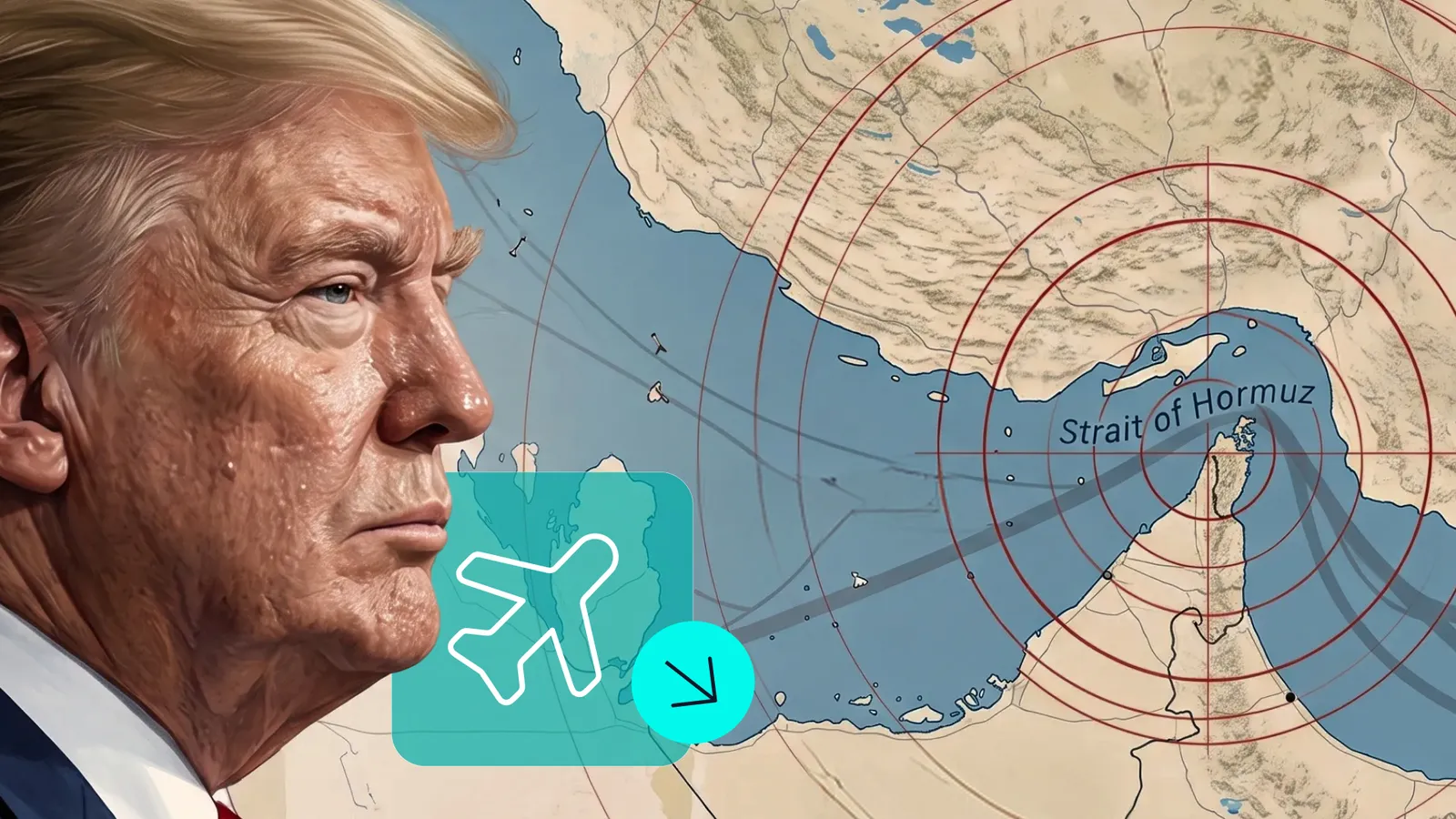
The S&P 500 finished at a record high on Friday even as uncertainty around Hormuz persisted.
Brent is currently around $83–$84 a barrel, well below its April peak despite continuing shipping uncertainty.
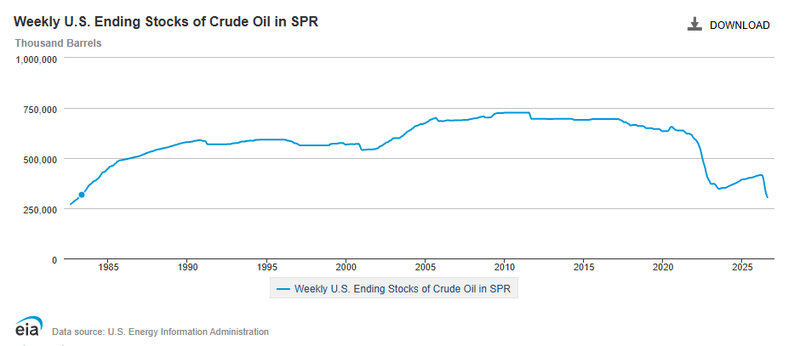
The US Strategic Petroleum Reserve fell to 304.8 million barrels by July 31, down about 111 million barrels since March.
The real market risk may emerge if higher oil begins hitting corporate margins, inflation and Federal Reserve policy simultaneously.
The strange calm in US stocks
Something unusual is happening across global markets.
The geopolitical backdrop remains unstable, negotiations over shipping through the Strait of Hormuz are unfinished, and emergency oil inventories have been drawn down heavily.
Yet US equities continue trading near record levels.
Wall Street ended last week with the S&P 500 at a record high, while Monday’s futures pointed higher again. Nearly 90% of S&P 500 companies have already reported quarterly results, with aggregate earnings growth running around 30% from a year earlier.
That matters.
The market currently has a powerful reason to look past geopolitical risk: corporate America is still producing strong profits.
This helps explain one of the most interesting arguments running through the current market debate. Investors may not be assuming that the Iran situation is harmless. They may simply be concluding that it has not yet damaged the variables that ultimately determine stock prices.
For equities, the important questions are revenue, earnings, margins, interest rates and economic growth.
Until the conflict materially changes those numbers, markets have shown a willingness to move on.
Investors may simply have become numb to the headlines
Repeated cycles of escalation, ceasefire hopes, failed negotiations and renewed tension have changed investor behavior.
Several participants in the market debate described a form of geopolitical fatigue: developments that would have produced a sharp risk-off move months ago now generate smaller reactions. Oil and energy stocks themselves appear less sensitive to individual headlines than earlier in the conflict.
That does not necessarily mean markets are irrational.
Financial markets are discounting mechanisms. Once investors have seen the same category of risk repeatedly without a catastrophic economic outcome, the risk premium attached to each new headline naturally declines.
The danger is that this process can eventually create complacency.
Markets may become highly efficient at ignoring noise while simultaneously becoming vulnerable to the one development that is not noise.
In the current situation, that development is probably oil.
Oil is the bridge between geopolitics and Wall Street
For investors, the Strait of Hormuz matters because of what flows through it.
Before the current disruption, roughly 20.9 million barrels per day of crude oil and petroleum liquids passed through Hormuz, equivalent to about 20% of global petroleum consumption and roughly one-quarter of maritime oil trade. Existing pipelines through Saudi Arabia and the UAE can bypass only part of those volumes.
This makes oil the main transmission mechanism between the Middle East and the US stock market.
An unresolved geopolitical dispute by itself does not necessarily reduce Microsoft’s software sales, Visa’s transaction volumes or a retailer’s earnings.
A sustained oil shock can.
Higher crude prices raise gasoline, diesel and jet-fuel costs. Transportation becomes more expensive. Airlines and logistics companies face pressure. Manufacturers pay more to move goods. Consumers spend more filling their cars and have less money available elsewhere.
Margins begin to narrow.
Inflation rises.
Bond yields respond.
And suddenly an event thousands of miles away appears directly in S&P 500 earnings models.
That is the point at which Wall Street would have much more difficulty looking away.
The SPR is falling faster than the headline suggests
One of the strongest concerns raised in the discussion involves the US Strategic Petroleum Reserve.
The data deserve attention.
At the beginning of 2026, the SPR contained roughly 413 million barrels. It was still above 415 million barrels through much of March.
By July 31, inventories had fallen to just 304.8 million barrels.
That represents a decline of roughly 111 million barrels, or almost 27%, from the March peak.
The latest inventory level is comparable with levels last seen in early 1983.
But the bearish interpretation requires an important correction.
The United States is not about to “run out of oil.”
The significance of the SPR is different.
It functions as insurance. And insurance becomes more valuable when uncertainty rises.
The real problem is not reaching zero
A useful counterargument from the debate is that emergency reserves do not need to be anywhere close to zero for the world to continue functioning.
That is correct.
The US remains a major petroleum producer and exporter, while governments across Asia also maintain strategic and commercial inventories. Supply chains have adapted, alternative crude sources have become more important and high prices themselves have reduced demand.
The problem is therefore not some dramatic moment when the SPR reaches zero.
Markets would likely react much earlier.
A shrinking reserve changes the credibility of future intervention.
If another major disruption occurs when emergency inventories are already substantially lower, traders may become less confident that government releases can suppress the price shock for long.
Oil could therefore begin repricing the loss of the buffer before the reserve is remotely exhausted.
That distinction is crucial.
The risk is not running out of barrels.
The risk is running out of confidence that enough barrels can be released to control the next shock.
Being a net oil exporter does not isolate America
Another argument in the discussion is that the United States has enough domestic energy production to avoid the worst consequences of a Hormuz disruption.
There is truth in that.
The US is a major net energy exporter, and American petroleum exports remain near historic highs.
But that does not isolate US consumers from global prices.
Oil trades in a global market.
If buyers in Europe and Asia suddenly need more American crude, diesel or jet fuel, they compete for the same barrels available to domestic buyers.
The EIA has already documented this process during the current Hormuz disruption. Foreign buyers increased demand for US petroleum products, while higher crude prices pushed US wholesale gasoline, diesel and jet-fuel prices higher.
In other words, America does not need to experience an actual physical shortage for the economy to suffer.
A global price shock is enough.
Then why is Brent only around $84?
This may be the strongest bullish argument.
If the situation is genuinely dangerous, why is Brent trading around $83–$84 rather than $120 or $150?
Part of the answer is adaptation.
Brent already demonstrated how sensitive it could become, trading as high as $118 in April before falling to $72 by late June.
High prices encouraged consumers to use less fuel. Supply chains shifted. US exports increased. Governments released inventories. Countries sought alternative suppliers.
Global demand itself weakened.
The EIA estimated that high fuel prices, shortages and government measures reduced worldwide oil consumption by around 1 million barrels per day compared with the previous year.
This is one reason oil did not simply continue rising indefinitely.
The global economy responded to the shock.
And that means today’s oil price is not necessarily evidence that investors are ignoring the problem. It may instead show that the market believes the system has adapted enough to live with a partially impaired Hormuz.
That creates a dangerous assumption
There is a big difference between saying:
“The problem has been solved.”
and saying:
“The economy has learned to operate with the problem.”
Markets currently appear closer to the second assumption.
That distinction matters because adaptation has limits.
Emergency inventories can be released.
Consumers can reduce demand.
Alternative shipping routes can be used.
American exporters can send additional petroleum overseas.
But each adjustment has a cost.
The longer the disruption persists, the harder it becomes to determine whether today's apparent stability is permanent or simply being purchased by drawing down inventories and suppressing demand.
That is where the bearish case becomes more interesting.
The market probably does not care about Iran directly
One of the simplest comments in the discussion may also be one of the most useful:
The stock market may not respond meaningfully until energy costs begin showing up in bad earnings.
That is a much better framework than trying to predict every geopolitical headline.
Consider what investors currently see.
Corporate earnings are strong.
AI investment continues.
The S&P 500 is around record territory.
Oil is elevated but far below its April peak.
Economic growth has not collapsed.
Under those conditions, selling stocks purely because the geopolitical situation feels dangerous has repeatedly been the wrong trade.
But that logic changes quickly if energy begins damaging earnings.
$100 oil matters differently from $80 oil
The absolute oil price is less important than how long it stays elevated and what companies can absorb.
A brief spike above $100 can disappear before most companies adjust prices or consumers significantly change behavior.
Several months of elevated energy prices are different.
Businesses eventually have to absorb higher transportation and production costs or pass them on.
If they absorb them, margins suffer.
If they pass them on, inflation rises.
Neither outcome is particularly friendly to equity valuations.
The current debate therefore should not focus solely on whether Brent briefly reaches $100 or $120.
Duration matters.
The more persistent the shock, the greater the probability that it moves from commodity screens into earnings statements.
The Federal Reserve could become the real problem
There is another layer that could make the oil shock much more dangerous.
Inflation.
Higher energy prices can push headline inflation higher directly and eventually influence a much broader range of goods and services.
That matters because the Federal Reserve is already operating in an environment where inflation remains a concern.
An energy-driven inflation rebound would reduce the central bank’s ability to support the economy if growth slows.
That creates the classic policy problem markets dislike most:
Weakening growth with persistent inflation.
The Fed might want to cushion the slowdown but be unable to cut rates aggressively. In a more severe scenario, persistent inflation could even force policymakers to maintain or increase restrictive rates.
That would hit equities through two channels simultaneously: weaker earnings and higher discount rates.
For expensive growth stocks, that combination matters far more than another geopolitical headline.
The bond market may react before stocks
This is another useful point emerging from the broader discussion.
Equities can remain optimistic for surprisingly long periods.
The Treasury market is often less forgiving.
If investors begin believing higher oil prices will produce persistent inflation, longer-term bond yields could respond before earnings estimates deteriorate.
Higher yields would raise financing costs for companies, pressure housing and borrowing, and reduce the relative attractiveness of expensive equities.
That means investors looking only at the S&P 500 may miss the first signs that the market’s view of the conflict is changing.
The more useful dashboard includes oil, Treasury yields, credit spreads, inflation expectations and earnings revisions.
Strong earnings are the biggest argument against the bearish case
There is also a mistake in assuming that high stock prices must mean investors have forgotten about risk.
They may simply be overwhelmed by another force: earnings.
One participant in the discussion challenged the entire premise by suggesting that investors were underestimating earnings rather than underestimating geopolitical risk.
Current results make that argument difficult to dismiss.
With close to 90% of S&P 500 companies having reported, earnings are running roughly 30% above year-earlier levels.
That is a powerful cushion.
If profits keep growing at anything close to that pace, investors can tolerate considerable uncertainty elsewhere.
The bearish Iran thesis therefore requires something more than geopolitical deterioration.
It requires deterioration strong enough to change the earnings story.
This is why the risk could be nonlinear
Market complacency does not necessarily result in a gradual decline.
Often, nothing happens until one assumption breaks.
Today the key assumptions appear to be:
Oil supplies will remain sufficient.
Brent will stay manageable.
Emergency reserves can cushion disruptions.
The Fed will not be forced into significantly tighter policy.
Corporate earnings will remain strong.
If all five hold, equities can remain near record highs regardless of how uncomfortable the headlines look.
If one or two break simultaneously, repricing could become much faster.
That is probably the most compelling concern in the entire debate.
The market may not be dramatically mispricing the situation today.
It may simply be pricing a very narrow range of outcomes.
What would tell us the market is wrong?
The first warning would be oil refusing to retreat even after positive diplomatic or shipping headlines.
Brent around $80–$85 suggests the market still believes supply problems can be managed. A sustained move back above $100 would send a very different signal.
The second would be continued rapid SPR withdrawals.
The latest 304.8-million-barrel level is already significantly below where the reserve stood only a few months ago.
The third would be renewed acceleration in US inflation.
The fourth would be rising Treasury yields alongside weaker economic data.
And perhaps most importantly, investors should watch earnings guidance from transportation, airlines, industrial companies, retailers and consumer businesses.
Once management teams start consistently identifying energy as a margin problem, the geopolitical story has crossed into the stock market.
What would prove Wall Street right?
There is also a clear path where current market optimism proves justified.
Oil needs to remain contained.
Shipping through Hormuz does not have to return immediately to its old normal, but markets need evidence that flows can operate reliably enough to avoid another major supply shock.
Emergency-reserve withdrawals need to slow.
And corporate earnings need to remain resilient.
If Brent falls back toward pre-conflict levels while global supply improves, the economy may absorb the entire disruption without the recession or inflation shock that bears fear.
That would explain why stocks remained near records throughout the uncertainty.
The market would have looked through the headlines correctly.