
 Support
Apple Sues OpenAI Over Hardware Trade Secret Theft
Apple has filed a major lawsuit against OpenAI and former Apple employees, accusing them of misusing trade secrets to accelerate OpenAI’s push into consumer hardware. The complaint alleges that sensitive information was extracted through different stages of recruitment and used to support OpenAI’s hardware ambitions.
Apple has filed a trade-secret lawsuit against OpenAI and former Apple employees.
Apple is seeking to stop OpenAI from releasing a rival hardware device.
Apple’s new six-year Broadcom commitment could top $30 billion.
Apple is protecting the device layer
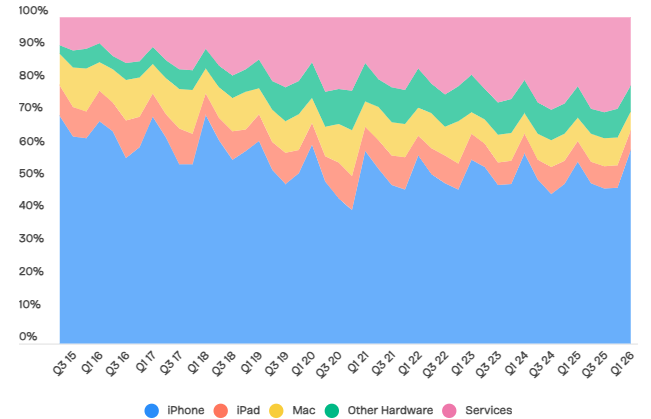
The iPhone is not just another Apple product. It is the center of the company’s ecosystem and still represents roughly 60% of Apple’s revenue. That makes it more than a hardware line. It is the gateway through which Apple controls distribution, payments, services, privacy settings, app behaviour, user data and daily consumer habits.
This is why OpenAI’s hardware push matters
A ChatGPT-powered device would not need to replace the iPhone immediately to become a threat. It only needs to change where users begin their digital behaviour. If people start asking for AI device to search, message, book, plan, buy or control other services, the traditional app screen becomes less central. That is the strategic risk Apple is trying to stop early.
Apple’s lawsuit should therefore not be seen only as a defensive legal move. It is also a fight over who owns the next interface. Apple built its power by controlling the device. OpenAI built its power by controlling the AI assistant. If those two worlds start colliding, the fight becomes much bigger than one product launch.
Source: Company data
OpenAI wants more than software
OpenAI’s move into hardware makes sense from its side as well.
Software alone can be powerful, but distribution still matters. Today, OpenAI depends heavily on other platforms to reach users. Its products run through phones, browsers, operating systems and cloud partners that it does not fully control. A dedicated hardware device could reduce that dependence and give OpenAI a more direct relationship with consumers.
The company that controls the hardware often controls the user experience. It decides what feels simple, what becomes default and what gets pushed into the background. If OpenAI can build a device around voice, vision and real-time AI interaction, it could create a new entry point into daily computing.
That is why Apple is taking the threat seriously. It is not because OpenAI already has a proven hardware franchise. It is because OpenAI has the software layer that could make a new device category feel useful from day one.
The Broadcom deal shows Apple’s answer
At the same time, Apple is not only fighting through the courts. It is also strengthening its hardware supply chain.
Apple has announced a new six-year commitment with Broadcom to design and produce custom silicon components and wireless connectivity technologies. The agreement is expected to top $30 billion and support the production of billions of custom chips in the United States.
Apple’s answer to AI competition is not to build another chatbot
Apple’s advantage is vertical integration. It controls the chip, the device, the operating system, the layer of services and the customer relationship. The Broadcom deal reinforces that strategy.
Custom silicon and wireless components matter because future AI devices will need faster processing, better connectivity, lower power consumption and tighter integration between hardware and software. Apple is trying to make sure that the next generation of devices still runs through its own architecture, not through a rival AI platform.
In other words, Apple is defending the moat from two sides. The lawsuit targets what it sees as a threat to its intellectual property. The Broadcom deal strengthens the infrastructure that keeps Apple’s hardware ecosystem difficult to copy.
The market question
Apple still has the most powerful consumer device ecosystem in the world. But OpenAI has moved faster in generative AI and has shaped how consumers think about AI assistants. That creates an uncomfortable gap. Apple controls the devices. OpenAI controls much of the excitement.
The lawsuit shows that Apple knows the gap cannot be ignored. If OpenAI succeeds in hardware, it could weaken Apple’s grip on the consumer interface. If Apple uses its chip strategy, privacy advantage and installed base properly, it can keep AI inside its own ecosystem rather than allowing a new device layer to form outside it.


