Support
ECB expected to hold rates in July as September hike bets grow
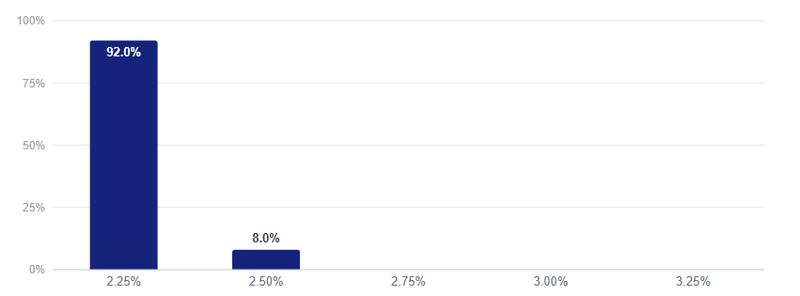
The European Central Bank is widely expected to leave its deposit rate unchanged at 2.25% at its upcoming meeting, but policymakers are unlikely to signal that the tightening cycle has ended. Markets currently assign a 92% probability to a hawkish hold, while expectations for another rate hike in September have climbed to around 78% as renewed energy pressures threaten to slow the euro area's disinflation process.

Market price a 92% probability that the ECB will keep the deposit rate at 2.25%.
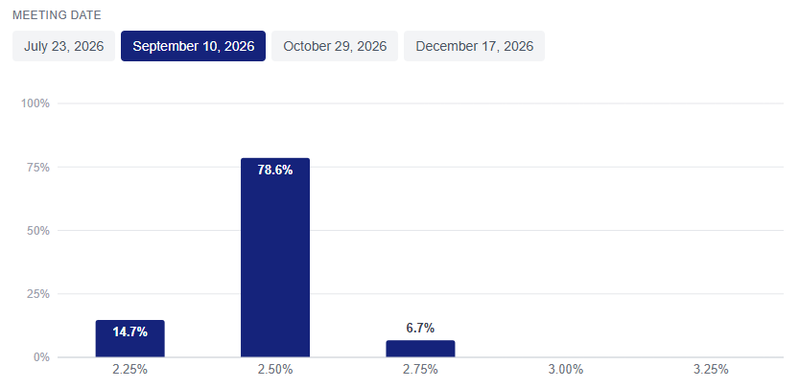
Investors see a 78% chance of another rate hike at the September meeting.
Rising energy prices and persistent inflation risks are expected to keep the ECB's tone cautious.
Christine Lagarde continues to reject calls for lower interest rates to support green investment.
A pause does not mean the ECB is finished tightening
After policy tightening earlier this year, policymakers now have room to assess how higher borrowing costs are feeding through to the economy. Credit conditions have tightened, growth has slowed and inflation has eased from its peak, but that does not automatically mean the job is finished.
That is why the market is paying far more attention to Christine Lagarde's press conference than to the rate decision itself.
If she repeats that inflation risks remain tilted to the upside and avoids pushing back against current market pricing, investors are likely to conclude that September remains a genuine possibility rather than a meeting that has already been ruled out.
The ECB has consistently argued that policy decisions should remain data dependent, giving it the flexibility to respond if inflation proves more persistent than expected.
Source: ECB watch
Inflation is easing, but the ECB is not ready to declare victory
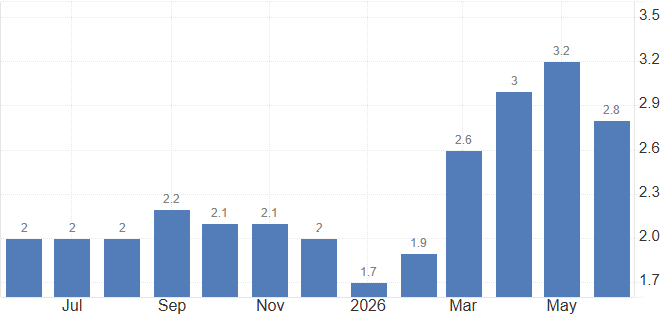
Inflation has moved much closer to the ECB's target than it was a year ago. Headline consumer prices slowed to 2.8% in June, a welcome improvement after the sharp inflation surge of recent years.
The question facing policymakers is no longer whether inflation has fallen. It is whether it can stay there.
Recent progress has been made partly by easing supply pressures and lower energy costs compared with previous peaks. If those supportive factors begin to reverse, inflation could become more difficult to control again.
That explains why Lagarde has repeatedly stressed that the ECB cannot base policy on a single encouraging inflation report. The Governing Council remains focused on underlying price pressures, wage growth and any signs that inflation could become more persistent.
From the ECB's perspective, the final stretch back to 2% may prove more challenging than the first stage of the decline.
Source: EUROSTAT
Rising oil prices are reviving fears of a second inflation wave
Brent crude climbed above $86 per barrel, reversing much of its earlier decline and raising fresh concerns about imported inflation across Europe.
The ECB does not respond to every move in commodity markets, but sustained increases in oil prices are difficult to ignore. Higher energy costs eventually work their way through transport, manufacturing, logistics and household utility bills, making it harder for inflation to continue slowing.
That does not guarantee another rate hike. It does, however, reduce the margin for policymakers to become more comfortable with the inflation outlook.
The concern is not today's oil price. It is what several months of elevated energy costs could mean for inflation later this year.
September rate hike expectations continue to build
Current pricing suggests investors believe this week's pause is more about timing than the end of the tightening cycle. A 78% probability of another rate increase reflects expectations that inflation risks remain skewed to the upside.
That outlook could still change
A meaningful slowdown in inflation, weaker wage growth or a softer economy would reduce the need for additional tightening. On the other hand, stronger inflation data or further increases in energy prices would make it much harder for the ECB to justify standing still.
For now, policymakers appear comfortable keeping every option available rather than committing to a fixed path.
Source: ECB watch
The ECB rejects call for a separate green interest rate
The debate over Europe's green transition has increasingly found its way into monetary policy discussions. Some policymakers and environmental groups have argued that climate-related investment should benefit from lower borrowing costs, particularly as Europe faces more frequent heatwaves and rising spending needs linked to the energy transition.
Supporters of the proposal argue that offering a lower interest rate for green projects could encourage new investment, accelerate the transition to cleaner energy and provide a modest boost to economic growth by making it cheaper for businesses to finance long-term projects.
Lagarde has consistently rejected that idea
The ECB argues that monetary policy is most effective when it operates through a single policy rate applied across the entire economy. Introducing different borrowing costs for specific sectors could weaken the clarity of the central bank's policy signal and undermine its credibility at a time when inflation expectations still need to remain firmly anchored.
From the ECB's perspective, supporting green investment should primarily come through government spending, tax incentives and targeted fiscal policies, while monetary policy remains focused on its core objective of maintaining price stability.