Support
Fed minutes show rate hikes are still possible, but September odds are fading
The July Fed minutes were hawkish, but the data released since the meeting has made a September rate hike much harder to justify.
The Fed voted 9-3 to keep rates at 3.50%-3.75% in July, with three officials favoring a 25-basis-point hike.
Two additional regional Fed presidents who did not vote in July later said they also would have supported an increase.
Many of the Fed's 19 policymakers indicated that tighter policy could become necessary if inflation remained persistent.
Market pricing for a September hike fell to roughly 36%, after exceeding 70% at the end of July.
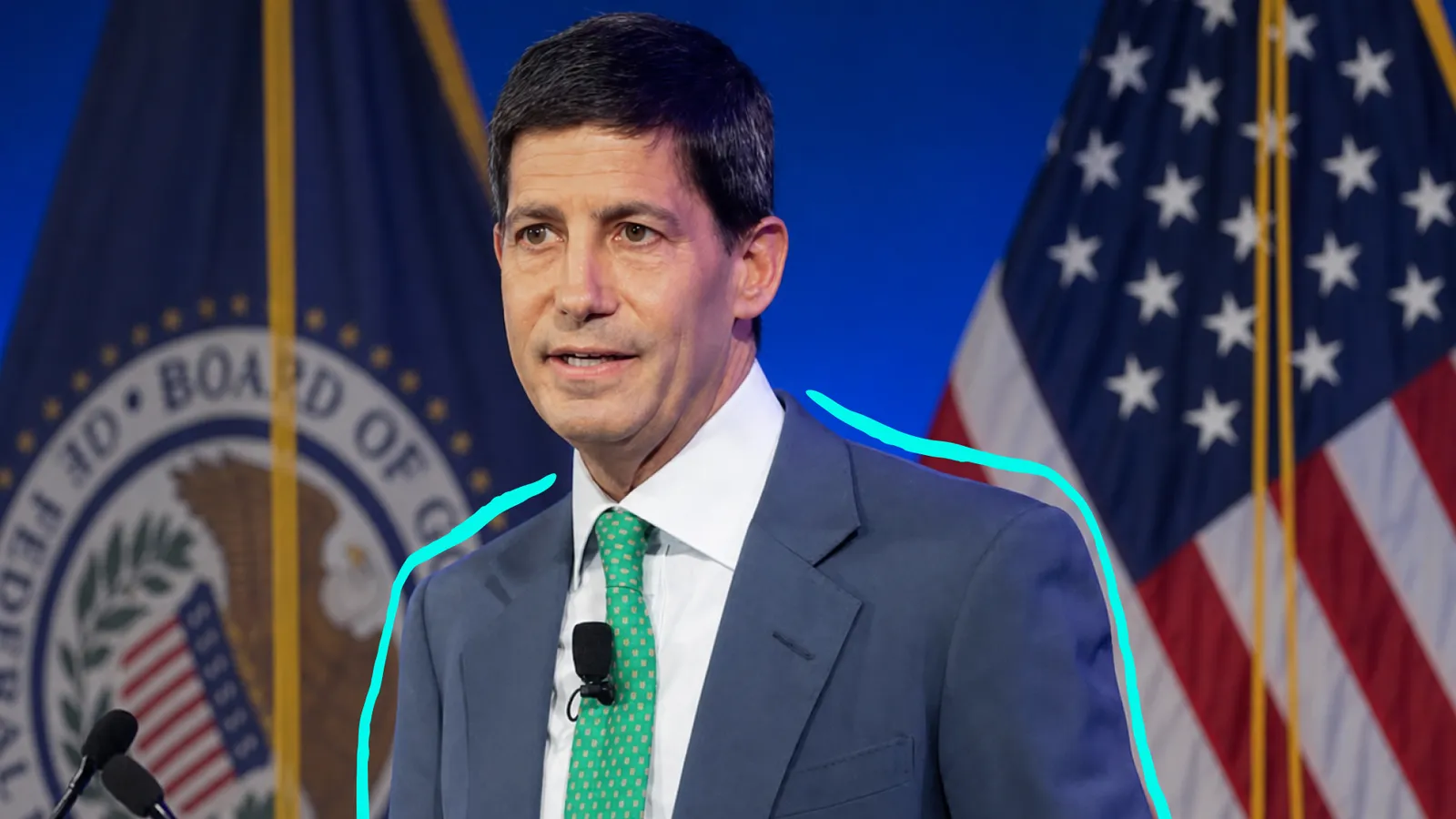
Kevin Warsh also proposed considering six FOMC meetings per year instead of eight, although no change will occur in 2026.
The Fed was closer to a rate hike than the July decision suggested
The Federal Reserve left interest rates unchanged in July, but the minutes show that the committee was much closer to tightening policy than the headline decision suggested. Officials voted 9-3 to maintain the federal funds rate at 3.50%-3.75%, marking a fifth consecutive hold after three rate cuts in late 2025.
Dallas Fed President Lorie Logan, Cleveland Fed President Beth Hammack and Minneapolis Fed President Neel Kashkari voted for a 25-basis-point increase. The hawkish camp was even larger than the formal vote indicated. Kansas City Fed President Jeff Schmid and St. Louis Fed President Alberto Musalem, who did not vote at the July meeting, later said they would also have supported a hike.
More important than the dissent itself was the broader discussion. Several officials favored higher rates immediately, while many indicated that further tightening would probably be necessary if inflation failed to decline. In the Fed's terminology, "many" generally represents a group approaching half of the 19 policymakers participating in the discussion.
That makes the July meeting difficult to describe as a routine hold. The committee kept rates unchanged, but a significant part of the Fed was already considering whether policy needed to become more restrictive.
Inflation remains the reason the Fed cannot declare victory
Most policymakers still expected inflation to ease during the remainder of 2026 as earlier tariff effects and energy-price increases faded. The problem was confidence in that forecast.
The minutes described the inflation outlook as "highly uncertain," with many officials concerned that price pressures could prove more persistent than expected. Renewed disruption from the Iran conflict also complicated the outlook because of its potential impact on energy costs.
This matters because inflation has remained above the Fed's 2% objective for years. Policymakers are increasingly sensitive to the possibility that another period of persistent inflation could affect household expectations, wages and corporate pricing decisions.
At the July meeting, the economic backdrop gave hawks room to push that argument. Growth was still described as solid, capital investment and productivity remained strong, and officials believed labor demand and supply were broadly balanced.
If that picture had remained intact, another rate increase would have been relatively easy to defend.
It did not.
The economic data has moved since the meeting
The minutes tell investors what policymakers believed on July 28 and 29. The September decision will be based on a different information set.
Since the meeting, retail sales have posted their largest decline in more than a year, with weaker spending at online retailers and auto dealers. July core inflation was also subdued, reducing the urgency for another increase in borrowing costs.
The labor market delivered the more important surprise. Employers unexpectedly cut jobs in July, while employment gains for the previous two months were revised lower. The revisions suggested hiring had been losing momentum before Fed officials recognized the full extent of the slowdown.
Recent producer-price data reinforced the softer inflation picture. July producer prices were unchanged after declining 0.1% in June, while the annual PPI rate slowed to 4.7% from 5.5%.
The Fed therefore faces a very different trade-off heading toward September. Inflation remains too high for comfort, but the argument that the economy can easily absorb another rate hike has weakened.
September hike odds have fallen sharply
Markets have reacted quickly.
Federal funds futures implied a probability of roughly 32% for a September increase around the release of the minutes, down from more than 70% at the end of July.
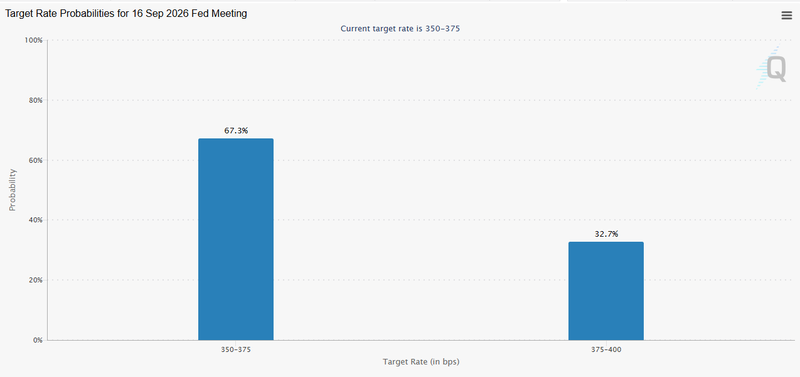
Source: CME Group
That repricing is important because it shows investors are giving more weight to the new economic data than to the hawkish tone of a three-week-old meeting.
Markets largely looked through the minutes, precisely because subsequent employment and inflation data had weakened the immediate case for tightening.
The September meeting is therefore still live, but the hurdle for a hike has risen substantially. The Fed would probably need to see renewed inflation pressure, stronger employment data or both before the hawkish bloc could build a convincing majority.
The real divide is becoming clearer
The policy debate is no longer simply between officials who think inflation is high and those who think it is falling.
Almost everyone agrees inflation remains above target.
The disagreement is about how much additional tightening the economy can tolerate while the labor market is beginning to soften.
The hawkish argument is straightforward. If the Fed waits too long and inflation proves persistent, policymakers could be forced to tighten more aggressively later. A smaller rate increase today might therefore reduce the risk of a larger intervention in the future.
The counterargument is becoming stronger with every weak data release. Monetary policy is already restrictive, long-term borrowing costs remain elevated and hiring is losing momentum. Raising rates into that environment risks reacting to inflation that may already be cooling while adding unnecessary pressure to employment and demand.
That is the decision September is increasingly shaping up to be.
Bond yields are complicating the Fed's job
Another important development is that financial conditions can tighten even when the Fed does nothing.
Long-term Treasury yields recently reached levels not seen in almost two decades, increasing borrowing costs for mortgages, companies and the federal government. That means part of the restraint normally associated with a Fed rate hike has already been delivered by markets.
The situation shifted again on August 19 after the US Treasury announced expanded liquidity support for longer-dated government securities. The 10-year yield fell to about 4.655%, while the 30-year dropped to around 5.196%.
That reaction reinforces an important point for investors. The Fed's policy rate is only one part of financial conditions. Treasury supply, fiscal concerns and long-term yields are also determining how restrictive the environment feels for businesses and consumers.
For Warsh, this strengthens the case for patience. If market rates remain high enough to constrain activity, the Fed does not necessarily need to produce the same tightening through another 25-basis-point increase.
Warsh also wants to rethink how often the Fed meets
The minutes contained another important proposal that has little to do with the September rate decision.
Warsh asked policymakers to consider reducing the number of scheduled FOMC meetings from eight to six per year. Under his proposal, meetings would occur roughly once every two months, allowing more economic information to accumulate between decisions and giving Fed officials more time to consider longer-term monetary-policy questions.
No change will take place this year, and the Federal Reserve's current calendar still lists the next policy meeting for September 15-16, followed by another meeting on October 27-28.
Still, the proposal offers an early indication that Warsh may be considering changes to the Fed's operating framework that go beyond the level of interest rates.
Fewer meetings could reduce the tendency of markets to overreact to individual monthly data releases, but each meeting could also become more consequential because more information would accumulate between decisions.
Jackson Hole now matters more than the minutes
The minutes clarified how officials were thinking in late July. The next challenge is understanding how much their views have changed since then.
That makes the Federal Reserve's Jackson Hole gathering particularly important for markets. Warsh is expected to use the event to communicate his latest assessment of inflation, labor-market weakness and the appropriate level of monetary restraint.
Investors should pay less attention to generic statements that the Fed remains committed to price stability and more attention to the conditions Warsh attaches to another hike.
Does persistent inflation alone justify higher rates? How much labor-market weakness would stop the committee from tightening? Does Warsh believe elevated Treasury yields are already doing enough of the Fed's work?
Those answers will be more useful for September than the July minutes themselves.
What could still trigger a September rate hike?
The most obvious trigger would be another acceleration in underlying inflation. If the next inflation readings show that July's moderation was temporary, the argument for tightening would immediately strengthen.
Labor-market data will be just as important. Another weak employment report would make a September increase increasingly difficult to justify, while a rebound in hiring would give hawkish officials more room to focus on inflation.
The Fed's preferred PCE inflation measure will also be critical. The July personal income and spending report, including the PCE indexes, is scheduled for August 26, giving policymakers another major inflation reading before the September decision.
That makes the next few weeks unusually important. The committee already knows that a meaningful group of officials is willing to raise rates. What it does not know is whether the economy will give them enough evidence to win the vote.
What the Fed minutes mean for September rates
The July Fed minutes were clearly hawkish. Three voting officials wanted an immediate rate increase, two additional regional presidents later said they agreed, and many policymakers warned that further tightening could be necessary if inflation remained persistent.
But the market is not trading the July economy anymore.
Jobs weakened, earlier payroll gains were revised lower, retail sales fell sharply and inflation data came in softer. That is why the probability of a September hike fell from above 70% at the end of July to around 36% despite the hawkish minutes.
The most important question now is not whether there are enough hawks inside the Federal Reserve to argue for higher rates. There clearly are.
The question is whether the August data gives them enough evidence to persuade the rest of the committee.
For September, inflation remains the reason to hike. The labor market is becoming the reason to wait.