Support
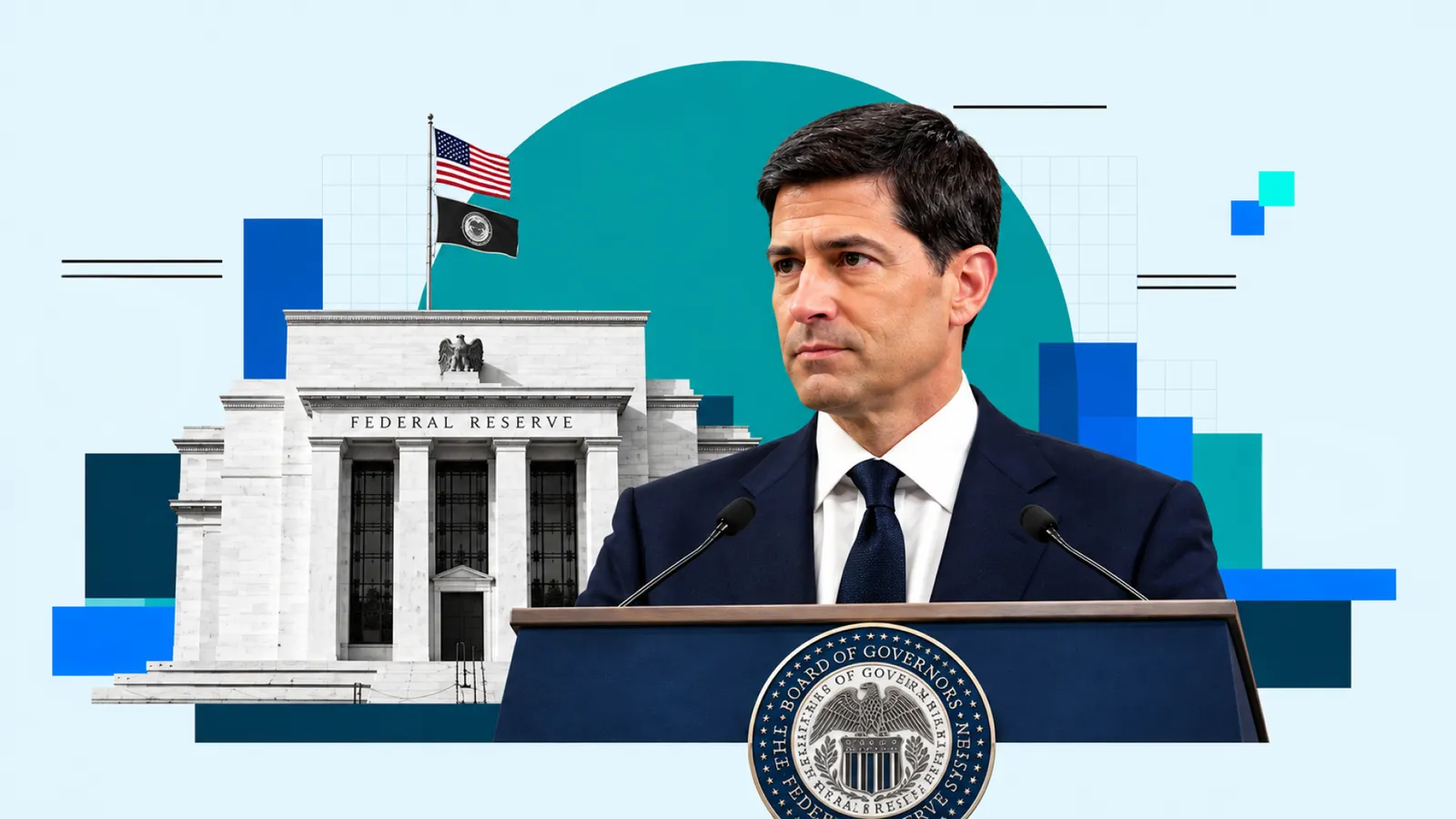
 Fed meeting today: what comes after the expected rate increase
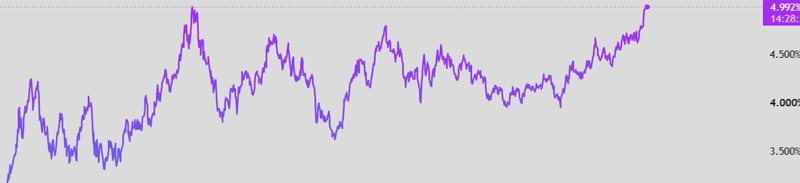
The 10-year Treasury yield climbed above 5%, reaching its highest level since 2023, as oil prices surged, inflation remained elevated and investors increasingly priced another rate increase. Markets are now assigning roughly a 92–94% probability to a 25-basis-point hike today at the Federal Open Market Committee meeting.
The 10-year Treasury is now above 5%.
Real GDP expanded at a 1.5% annual rate in the second quarter.
If the Fed hikes but investors believe inflation requires significantly more tightening, the 10-year yield could remain above 5%.
The bond market is demanding tighter policy
The 10-year Treasury is now above 5%, while markets are pricing not only the first 25-basis-point increase but additional tightening into early 2027.
That tells the Fed something important. Investors increasingly believe current financial conditions are still too loose relative to the inflation outlook.
The central bank therefore faces a credibility problem if it chooses not to act
A hike would not necessarily bring the 10-year yield down immediately. In fact, if policymakers signal that further increases are possible, the long end could initially rise further.
But holding rates unchanged after inflation has accelerated and the bond market has already repriced sharply could send the opposite signal: that the Fed is unwilling to validate the tightening demanded by markets.
Source: Trading view
Inflation is no longer easy to dismiss as temporary
August CPI increased 0.4% month on month and 3.4% over the year, while core CPI rose 0.3% in August and 2.9% annually. Producer prices also increased 0.4% in August, with energy costs becoming a significant source of upward pressure.
At the same time, August payrolls increased by 162,000 and unemployment remained at 4.1%. The economy is therefore not giving policymakers the classic recessionary reason to ignore inflation.
Growth has slowed but not collapsed. Real GDP expanded at a 1.5% annual rate in the second quarter, while consumer spending and private domestic demand remained relatively resilient. That combination gives Warsh room to focus on the price side of the Fed’s mandate.
Warsh has already identified the problem
The significance of this meeting is also personal for the new Fed chair. At Jackson Hole, Warsh said inflation remained too high and argued that the Fed should now focus predominantly on price stability.
He also pointed to strong business investment, an AI-driven capital expenditure boom and a labour market that remains consistent with full employment. That makes Wednesday's decision more than a routine policy adjustment.
Warsh has established a hawkish intellectual case
The question is whether he is prepared to implement it when the political and financial consequences become visible.
President Trump appointed Warsh amid expectations of lower borrowing costs, but current market conditions are pushing monetary policy in the opposite direction. Reuters reports that the Fed is widely expected to raise rates despite those political pressures.
The market will therefore be watching not only the rate itself, but whether Warsh's actions match his previous message on inflation.
The bigger problem is the long end of the curve
A 5% 10-year yield would matter even if the Fed had nothing to say this week. Government borrowing needs remain enormous, while the US deficit is around 6% of GDP and national debt has exceeded $40 trillion. At the same time, AI investment is absorbing large amounts of private capital.
That creates pressure on the Treasury market from several directions. More government issuance increases supply. Heavy private investment competes for savings. Higher inflation raises the compensation investors demand.
And greater uncertainty increases the term premium investors require to hold long-duration bonds. The Fed can control the overnight rate but it cannot simply order investors to accept a lower 10-year yield.
That distinction is becoming crucial
A rate hike could worsen the fiscal pressure There is an uncomfortable paradox here.
Higher rates may help the Fed contain inflation, but they also increase the government's financing costs as existing debt is refinanced. That makes the Treasury's position more difficult at exactly the moment when fiscal policy is already under scrutiny.
What happens after Wednesday?
Today meeting the probability sits near 92% of rate hike but the immediate market reaction will depend less on the 25-basis-point move itself than on what Warsh signals about the next step.
A hike accompanied by a clearly restrictive message could reinforce the dollar and keep Treasury yields elevated, while placing additional pressure on long-duration equities.
A hike presented as a limited response to an energy-driven inflation shock could produce a different reaction, particularly if markets conclude that the tightening cycle is close to its peak.
The real risk is a mismatch between policy and expectations
If the Fed hikes but investors believe inflation requires significantly more tightening, the 10-year yield could remain above 5%. If the Fed surprises by staying on hold, markets could question whether policymakers are willing to defend their inflation target while long-term yields are already rising rapidly.
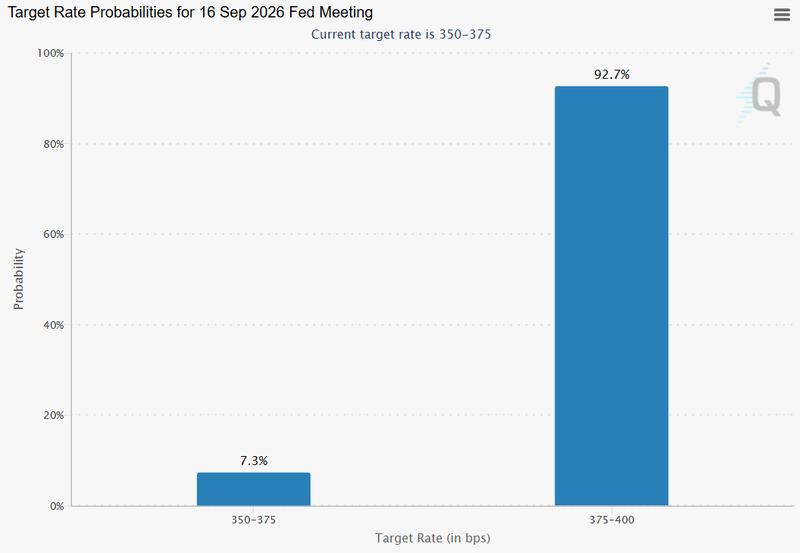
Source: CME Group