
 Support
Netflix drops 9%: is the growth story starting to crack?
Netflix has spent years proving that it can keep growing even after becoming the world's largest streaming platform. This time, however, the market is asking a different question. The issue is no longer whether Netflix can grow. It is whether it can grow fast enough to justify the expectations already built into stock.
Netflix projected Q3 revenue of $12.86 billion, below Wall Street's $13 billion forecast.
Management said its advertising business is unlikely to become a major earnings driver before 2027.
Despite spending $4.7 billion on share buybacks during the first half of 2026, the stock fell more than 9%.
Revenue is still growing, but investors wanted more
The company anticipates a 12% revenue growth in the third quarter, which would typically be seen as a healthy pace for a business of its size. The problem is that investors had already expected something better. After several quarters of strong performance, expectations rose. AI-driven advertising, monetizing password sharing, and international expansion led many investors to believe Netflix would continue to surprise positively. When management provided a forecast below consensus, the market quickly adjusted its expectations. That often hurts expensive growth stocks. The business can still improve while the share price decreases because investors were looking for even stronger results.
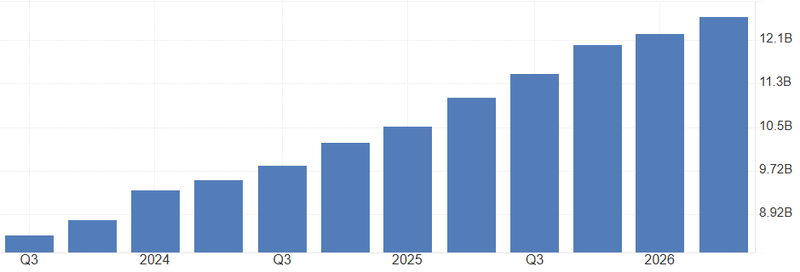
Source: Trading economics
The advertising story is taking longer
Netflix has made it clear that its ad-supported tier is progressing, but management does not expect it to become a significant source of earnings until at least 2027. This matters because advertising has become a key long-term assumption for Wall Street.
Investors hoped ads would become Netflix's next major profit source, allowing the company to achieve faster revenue growth without solely depending on subscription price increases. Instead, management has effectively told the market that this payoff will take longer. Nothing suggests the strategy has failed, but the timeline has changed. Markets rarely react positively when expected growth gets pushed further out.
The buyback was not enough
Netflix also returned a significant amount of cash to shareholders. The company repurchased $4.7 billion of its own shares during the first half of 2026, marking the largest buyback program in its history. After Paramount ended its agreement, Netflix received a $2.8 billion termination payment. This improved the balance sheet and gave management more room to speed up share buybacks.
Normally, a buyback of this size would support the stock significantly. This time, it did not. The market concentrated more on slowing growth expectations than on capital returns. Investors prefer to see new earnings opportunities rather than financial maneuvers, especially for a company still valued as a long-term growth business. The payment also had accounting consequences. Higher tax payments related to the cash inflow caused free cash flow to drop to $1.5 billion in the second quarter from $2.3 billion a year earlier. That decline does not necessarily indicate weaker operations, but it added another concern for investors to consider.
Expectations have become the real challenge
The company is no longer fighting for survival against traditional television. It has already won that battle. The challenge now is maintaining premium growth while operating at enormous scale.
That is also why stocks have become much more sensitive to expectations. Since April, Netflix shares have fallen roughly 35%, showing how quickly investors have reassessed the growth outlook. Each earnings report is no longer judged on whether Netflix is growing, but on whether that growth is accelerating fast enough to justify its valuation.
Advertising, live sports, gaming and international expansion still offer meaningful opportunities. But investors now want to see those businesses generating tangible revenue and profits, not simply supporting the long-term story. The bar has become much higher, and promising future growth is no longer enough on its own.
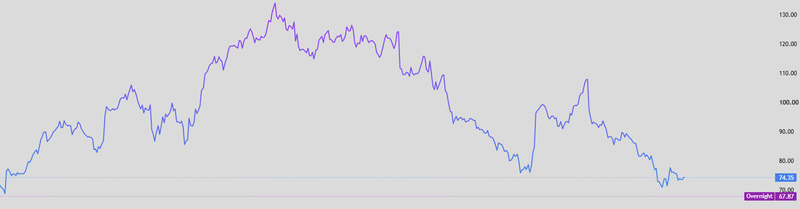
Source: Trading view


