Support
RBA raises rates to 4.85%, but a divided board signals a possible pause
The Reserve Bank of Australia raised the cash rate by 25 basis points to 4.85%, its highest level since 2008. The decision was widely expected, but the 6-3 vote exposed growing disagreement over how much further monetary policy needs to tighten when inflation remains elevated while households and the housing market are already showing signs of strain.

Six members supported the increase, while three preferred to hold at 4.60%.
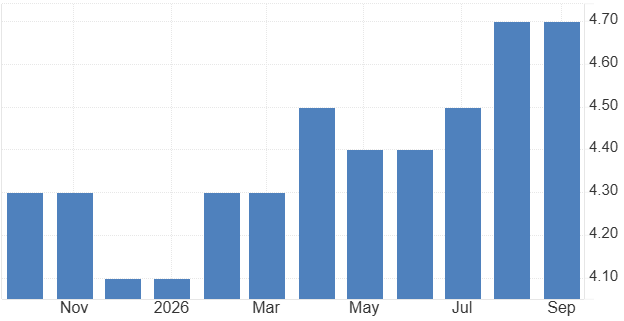
Headline inflation reached 4.3% in September, while trimmed mean inflation rose to 3.6%.
The RBA expects inflation to remain above 3% until the end of 2027.
The Australian dollar weakened after the decision as markets interpreted the split as reducing the probability of another immediate increase.
The RBA is responding to what happens after the oil shock
Higher interest rates cannot produce more oil or reverse supply disruptions in the Middle East. Raising mortgage repayments will not lower global fuel prices. The RBA's concern is what happens after those costs enter the Australian economy.
Fuel affects transport, distribution and production costs. If businesses begin passing those increases into a wider range of prices, workers may demand higher wages to recover lost purchasing power. What began as an external energy shock could then become persistent domestic inflation.
There are already signs of that process
Inflationary pressures are no longer confined to fuel, with firms continuing to report rising costs across labour, materials and services.
The RBA now expects headline and underlying inflation to remain above 3% until the end of 2027 and return to the middle of its target only around mid-2028.
The increase to 4.85% is best understood as an attempt to stop the oil shock from changing domestic price-setting behaviour.
The Bank cannot control the original shock, but it can weaken domestic demand and limit businesses' ability to pass higher costs on to consumers.
AI investment has created an uneven economy
The decision becomes more complicated because the Australian economy is not weakening everywhere at the same speed.
Household consumption has slowed, housing prices are falling and unemployment has risen to 4.7%.
At the same time, business credit remains strong and investment linked to AI data centres is expanding rapidly. The RBA has revised its near-term growth forecasts higher largely because of that investment pipeline.
Source: Australian Bureau of Statistics
That creates two different economies
Mortgage holders are cutting discretionary spending as repayments rise and property values fall. Large companies investing in data centres, energy infrastructure and technology are still competing for construction capacity, electricity equipment, skilled labour and imported semiconductors.
Although the RBA estimates that around 70% of data-centre investment will be imported, the domestic component still requires Australian labour, land, construction materials and electricity infrastructure, adding to demand in an economy where some resources are already constrained.
Investment may eventually raise productivity, but its immediate effect can be inflationary if demand grows faster than the economy's ability to supply those resources. The RBA is therefore tightening into a household slowdown because weakness in consumption has not yet created enough spare capacity elsewhere.
The split vote was a warning about the cost of continuing
The three members who voted to hold placed greater weight on rising unemployment and the deterioration in the housing market. Their concern was not that inflation had already returned to target, but that previous increases may still be working through the economy.
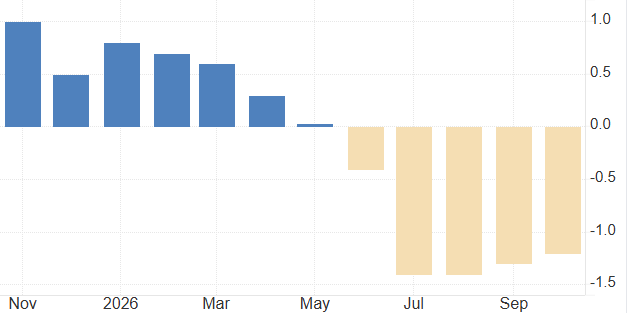
National home values fell 1.2% in October and are now 6.7% below their March peak. Capital-city prices have declined 8.1% in seven months, placing the downturn close to exceeding the largest fall recorded during the past four decades.
Source: Cotality, Australia
Housing is part of the RBA's transmission mechanism
Falling property prices reduce household wealth, while higher interest rates limit borrowing capacity. Weaker housing activity also reduces demand for construction, furniture and professional services.
The danger is that monetary policy continues tightening after those forces have already become powerful enough to bring inflation down.
This explains why the vote matters for December
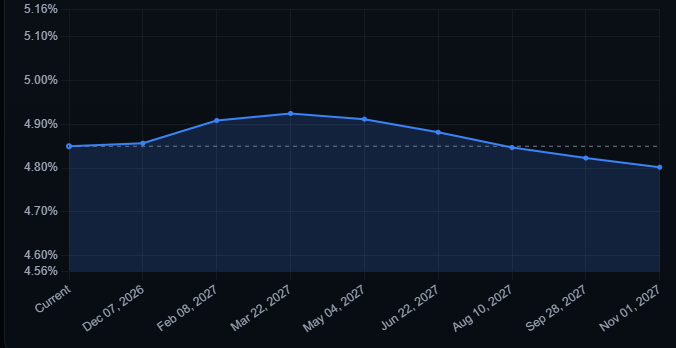
A unanimous decision would have suggested broad support for further tightening. A 6-3 split, however, leaves the Board much closer to a majority for holding rates, since only two members would need to change their position.
Governor Michele Bullock also said the next move was unclear, markets responded by pushing the Australian dollar lower, despite the rate increase, and increasing expectations that the RBA will pause in December. The currency reacted to the likely path ahead rather than the decision already delivered.
Mortgages will determine how quickly demand weakens
If commercial banks pass the latest increase on in full, the average owner-occupier variable mortgage rate could rise to approximately 6.74%, potentially eliminating variable mortgage rates below 6% from the market.
This is where the inflation and housing stories meet
Higher repayments leave households with less money for other spending, while falling property values make them less willing to borrow against housing wealth. The RBA needs that restraint to reduce firms' ability to raise prices, but it does not know how much additional pressure households can absorb before consumption and employment weaken more sharply.
The 6-3 vote reflects that uncertainty
Six members judged that the risk of inflation becoming embedded remained greater. Three concluded that the delayed effects of earlier tightening deserved more time.
What would justify another increase
A further hike would require evidence that underlying inflation remains broad even as housing and consumption weaken. Continued strength in services prices, wages or data-centre-related costs would suggest that domestic capacity remains tighter than the slowdown implies.
A pause becomes more likely if unemployment rises, household spending deteriorates or the housing downturn accelerates. A sustained decline in oil prices would also remove part of the inflation pressure that drove the forecast revision.
The RBA has raised rates to prevent an external energy shock from developing into a persistent domestic inflation cycle.
However, the divided Board suggests that policymakers may be approaching the point where additional tightening creates a different risk: controlling tomorrow's inflation at the cost of a sharper household and housing downturn than the economy can absorb.
Source: Rate probability