Support
Yen breaks 160 as intervention risk rises and BOJ rate hike bets surge
The yen’s break above 160 per dollar has brought intervention risk back into focus, but Japan may struggle to reverse the move while U.S. rates stay high and domestic real rates remain deeply negative.
The yen weakened beyond 160 per dollar, returning close to levels that triggered intervention in July.
Strategists see 161 as the first intervention-risk zone, followed by roughly 162.9 to 163.3.
Japan spent a record $96.4 billion over the past month supporting the currency.
Markets price about a 90% chance of a Bank of Japan rate hike by the September 18 meeting, with a hike fully priced by October 30.
Hedge funds have resumed rebuilding short-yen positions after cutting them sharply following the July intervention.
USD/JPY is back above the level markets thought intervention had fixed
The yen has slipped back through 160 per dollar, putting traders on alert for another round of official intervention only weeks after Japan spent record amounts defending the currency.
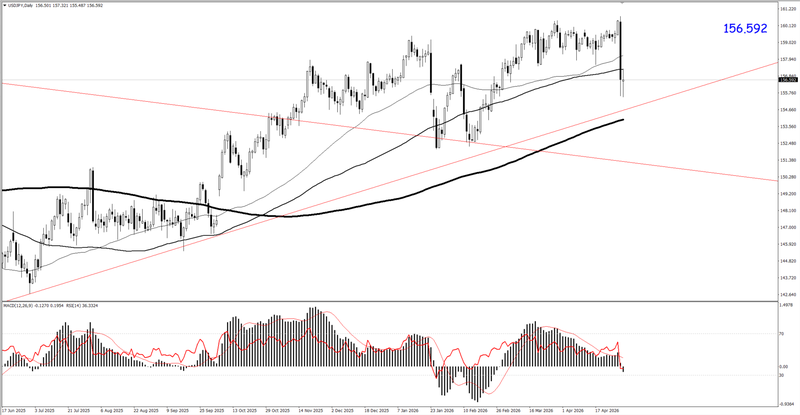
USD/JPY closed around 160.09 in New York on Friday before the yen recovered modestly to approximately 159.77 in Tokyo on Monday. The move still leaves the currency far weaker than the levels reached immediately after the July intervention, when coordinated buying by Japan and the United States briefly pushed the pair below 155.
More than half of that appreciation has now been erased.
That reversal highlights the central problem facing Japanese authorities. Intervention can produce violent short-term moves, particularly when speculative positioning is crowded, but it cannot easily reverse a currency trend being driven by large differences in monetary policy and real interest rates.
The yen is once again testing that limit.
The next intervention zone may start around 161
There is no official exchange-rate level at which Japan automatically enters the market.
Japanese authorities have repeatedly emphasized that the speed and disorderliness of the move matters more than a specific number. Still, previous intervention levels naturally become reference points for traders.
The first area attracting attention is around 161. Above that, the 162.9 to 163.3 zone becomes particularly important because authorities intervened around those levels during the previous episode.
The precise threshold matters less than the behavior of the move. A gradual drift from 160 toward 162 would probably create less urgency than a two- or three-yen surge over a few hours.
Japan also has an incentive to preserve surprise. If traders know exactly where intervention will occur, the market can position around that level and reduce its effectiveness.
For that reason, intervention could come before 162 if volatility accelerates sharply.
Source: Bloomberg
Japan has already spent a record $96.4 billion
The scale of the recent defense of the yen has been extraordinary.
Japan spent approximately $96.4 billion over the past month supporting its currency, the largest intervention effort on record.
The operation included the first coordinated yen-buying intervention involving the U.S. and Japan since 1998.
That intervention worked initially. The yen strengthened sharply from around 164 per dollar and briefly traded through the 155 area.
But the subsequent rebound in USD/JPY demonstrates why markets remain skeptical that intervention alone can establish a durable trend reversal.
Authorities can create scarcity in the yen and force speculative traders to close short positions. They cannot permanently change the relative return available from holding dollars versus yen.
That still comes down largely to interest rates.
The dollar is doing much of the damage
The latest yen decline is not purely a Japan story.
The dollar strengthened broadly after U.S. interest-rate expectations moved higher, pushing multiple currencies lower at the same time.
This creates a much harder environment for Japanese intervention.
If the yen were weakening because of a country-specific shock, Tokyo could potentially change market expectations by addressing that particular problem. When the dollar is rising across global markets because investors expect higher U.S. rates, Japan is fighting a much larger macroeconomic force.
The Federal Reserve therefore matters almost as much to USD/JPY as the Bank of Japan.
A hawkish Fed keeps U.S. Treasury yields elevated and makes dollar assets more attractive. Japanese investors then face a strong incentive to hold higher-yielding foreign assets rather than repatriating capital into yen.
That yield advantage becomes especially powerful when Japanese real rates remain negative.
Markets now expect the BOJ to act
The pressure on the currency is increasingly raising expectations that monetary policy will have to contribute more of the adjustment.
Interest-rate swaps now imply around a 90% probability that the Bank of Japan raises rates by its September 18 meeting. A hike is more than fully priced by the October 30 meeting.
That is a remarkably aggressive shift in expectations.
A BOJ hike could support the yen by narrowing the rate gap with the United States and increasing the return available on Japanese assets.
But one rate increase may not be enough.
If the Fed remains hawkish and U.S. yields stay elevated, the interest-rate differential could remain large even after the BOJ tightens. The yen could therefore receive an initial boost without experiencing the sustained appreciation authorities want.
This is why the September meeting has become so important.
Markets want to know whether the BOJ intends a single defensive move or the beginning of a broader tightening cycle.
Why intervention alone keeps losing its power
Currency intervention works best when it reinforces an underlying monetary-policy shift.
If authorities buy yen while the BOJ is simultaneously tightening and the Fed is moving toward easier policy, intervention can accelerate a trend that fundamentals already support.
The current setup is less favorable.
Japan's real interest rates remain deeply negative, meaning the return on yen assets after inflation is still unattractive compared with alternatives abroad. That gives investors a structural reason to sell or borrow yen.
As long as this remains true, intervention is more likely to buy time than permanently alter the currency's direction.
Japan can spend tens of billions of dollars forcing USD/JPY lower, but if investors immediately return to the same carry trade once volatility settles, the effect gradually disappears.
The price action since July is a good example.
Hedge funds are rebuilding short-yen positions
Speculative positioning is beginning to move against the currency again.
Hedge funds sharply reduced bearish yen positions after the July intervention as traders rushed to avoid being caught in another official squeeze. They have since resumed building shorts.
The speculative community has maintained an overall negative stance toward the yen since July 2025.
That positioning creates both risk and opportunity.
If USD/JPY continues rising gradually, additional short positions can reinforce yen weakness. But an increasingly crowded trade also gives Japanese authorities more leverage if they intervene unexpectedly.
A sudden yen rally can force leveraged traders to buy the currency rapidly to close positions, amplifying the impact of official buying.
That is why intervention can still produce large short-term moves even when the longer-term fundamentals remain unfavorable.
Japan may need more than higher rates
There are limits to how aggressively the BOJ can respond.
The central bank cannot simply raise rates until the yen strengthens without considering the effect on Japan's economy, government borrowing costs and heavily indebted private sector.
Japan's public debt burden makes rapidly rising domestic yields particularly sensitive.
This leaves policymakers searching for additional ways to support the currency.
One possibility is encouraging Japanese institutions and companies to repatriate more capital. Bringing foreign earnings and overseas investment proceeds back into Japan creates natural demand for yen without requiring direct official intervention.
Policymakers can also adjust regulations or incentives that influence overseas investment flows.
These measures are less dramatic than a $50 billion intervention but may become increasingly important if authorities want to address the structural forces behind yen weakness rather than repeatedly defending individual exchange-rate levels.
Why 160 matters for markets beyond Japan
USD/JPY is one of the world's most important currency pairs because the yen plays a central role in global funding markets.
For years, investors have borrowed cheaply in yen and invested the proceeds in higher-yielding assets elsewhere. This yen carry trade can support everything from global bonds to equities and credit.
A steadily weakening yen generally makes those strategies attractive.
A sudden yen reversal can create the opposite effect.
When the currency strengthens sharply, leveraged investors may be forced to unwind carry positions quickly, selling other assets to repay yen funding. The violent carry-trade unwind in August 2024 demonstrated how quickly a Japan-specific currency move can spread through global markets.
This is why intervention risk around 161 to 163 matters well beyond foreign exchange.
The danger is not simply that USD/JPY falls several percent.
It is how many leveraged positions are forced to adjust at the same time.
What traders should watch around USD/JPY 160 to 163
The immediate focus is whether USD/JPY can sustain a move above 160 without triggering a sharper response from Japanese officials.
A gradual move toward 161 would likely produce increasingly aggressive verbal warnings. A rapid break toward the previous intervention area around 162.9 to 163.3 would materially increase the probability of direct action.
The speed of the move remains critical.
Traders should also watch U.S. Treasury yields. Continued upward pressure on U.S. rates would make Japan's defense of the yen much harder, while lower U.S. yields could provide the currency with support that intervention alone has failed to create.
The September 18 BOJ meeting is the next major domestic catalyst. With markets assigning approximately a 90% chance to a hike, simply raising rates may no longer surprise investors. The guidance around what comes next could matter more than the decision itself.
Finally, positioning deserves attention. The more aggressively hedge funds rebuild yen shorts, the greater the potential for another sharp squeeze if authorities step in unexpectedly.
Why another yen intervention may only buy Japan more time
The yen's return to 160 per dollar shows that Japan's record intervention has changed the speed of the currency move more than its underlying direction.
Authorities spent about $96.4 billion supporting the yen, coordinated with the United States for the first time since 1998 and drove USD/JPY sharply lower. Yet more than half of that appreciation has already disappeared.
That does not mean the intervention failed. It reduced volatility, punished crowded short positions and demonstrated that officials are willing to defend disorderly moves.
But the fundamental pressure remains.
U.S. rates are high, the dollar is strong and Japanese real interest rates remain deeply negative. Markets now price a roughly 90% chance of a BOJ rate hike in September, showing that investors increasingly believe intervention alone cannot solve the problem.
The levels around 161 and 162 to 163 matter because they raise the probability of another official response.
The more important question is what happens afterward.
Unless Japan can narrow the interest-rate gap, encourage capital to return home or receive help from lower U.S. yields, another intervention may once again deliver a powerful rally in the yen without producing a lasting change in trend.