
 Support
 Oil falls on geopolitical uncertainty and EIA inventory draw; Micron beats forecasts
Oil prices fell sharply as the US–Iran ceasefire and the reopening of the Strait of Hormuz eased supply fears, despite a larger-than-expected US inventory draw and unresolved geopolitical tensions. Meanwhile, Micron exceeded revenue and EPS forecasts, lifting its shares in after-hours trading.

Brent fell by 4.16% to $73.87 and WTI by 3.80% to $70.32, as the US–Iran truce and the reopening of the Strait of Hormuz eased supply concerns.
Oil prices declined despite a 6.09 million-barrel EIA draw, above forecasts, marking a ninth consecutive weekly decline in US crude inventories.
Micron exceeded forecasts with $41.46 billion in revenue and EPS of $25.11; its shares rose by around 14% in after-hours trading.
Australia’s inflation slowed to 4.0% in May, below the 4.4% forecast, sending the Australian dollar down by 0.27%.
Geopolitical concerns and EIA draw weigh on oil prices
The initial peace agreement between the United States and Iran is causing a sharp depreciation in oil prices, as concerns over energy supply have eased. At present, a 60-day ceasefire deal that includes the reopening of the Strait of Hormuz is allowing the free transit of oil vessels, generating hopes that the energy supply chain could normalise over the medium term. Nevertheless, several doubts regarding a comprehensive peace agreement remain. As Reuters reported, Israeli Prime Minister Benjamin Netanyahu has said that Israel will not withdraw its troops from Lebanese territory, a condition that Tehran has made central to any peace deal. Meanwhile, US Republicans have criticised a reported $300 billion reconstruction plan for Iran, raising concerns with the White House that it is too generous.
At market close, the main oil benchmarks declined in tandem. The Brent futures contract (BRNU6) depreciated by 4.16% to $73.87 per barrel. Meanwhile, the West Texas Intermediate (WTI) futures contract (CLQ6) fell by 3.80% to $70.32 per barrel. In both cases, these levels had not been seen since early March 2026.
These declines occurred despite a significant contraction in oil inventories. According to the US Energy Information Administration (EIA), crude oil stocks fell by 6.09 million barrels in the latest weekly assessment, exceeding analysts’ expectations of a 4.5 million-barrel decline. The latest EIA update marks a ninth consecutive week of contraction, reflecting the continued decline in US oil reserves.
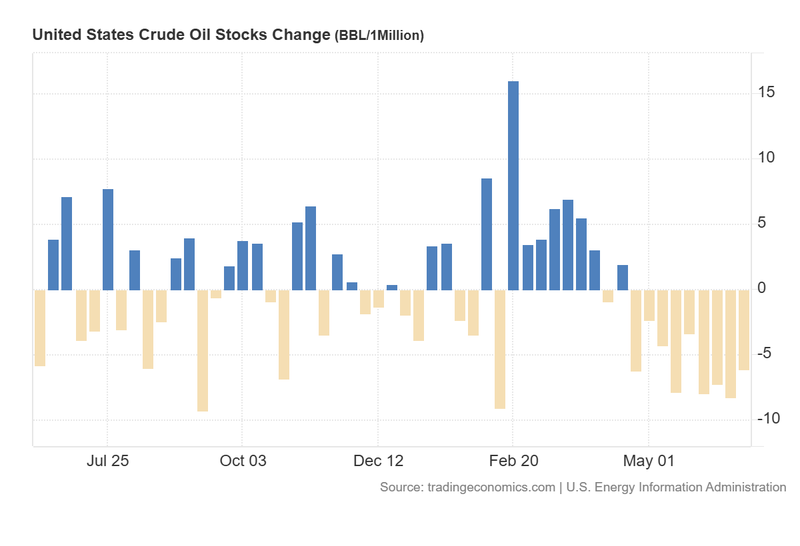
Figure 1. US Crude Oil Stocks Change (2025–2026). Source: Data from the US Energy Information Administration (EIA); figure obtained from Trading Economics.
Micron Technology exceeds forecasts on revenue and EPS
Micron Technology (MU) exceeded analysts’ estimates for both total revenue and earnings per share (EPS) in its quarterly earnings report. The semiconductor giant reported revenue of $41.46 billion, comfortably surpassing the forecast of $35.69 billion. In turn, Micron posted earnings per share of $25.11, exceeding the estimate of $20.49. These results imply an impressive growth rate of 345% in revenue and 1,214% in EPS.
At market close, Micron shares were valued at $1,048.51. However, in the post-market session, the shares were priced at $1,199, representing an increase of around 14% after the company released its quarterly results.
Australian inflation decelerates below analysts’ expectations
According to data from the Australian Bureau of Statistics, the headline inflation rate decelerated from 4.2% in April to 4.0% in May, below the market consensus forecast of 4.4%. While this represents a significant downside surprise compared with the expected 4.4% level, current Australian inflation remains above the Reserve Bank of Australia’s (RBA) target range of 2%–3%. An analysis by Trading Economics indicates that the most relevant decelerations occurred in goods inflation, which slowed from 4.7% in April to 4.2% in May, and transport costs, which eased from 6.6% to 3.3%.
Regarding the market reaction in foreign exchange, the Australian dollar depreciated against the US dollar by 0.27% to $0.6898.
