
 Support
 Ongoing US-Iran tensions sustain market uncertainty; Australian inflation decelerates
Ongoing US-Iran tensions fuel domestic inflation and political pressure ahead of the US midterms, even as oil prices decline. Meanwhile, Australia’s headline inflation decelerated to 4.2% in April, driven by easing transport costs, which relieves pressure on the RBA to tighten monetary policy amid rising unemployment.

Despite potential peace talks, Trump’s stance on Iran sparks Republican anxiety over losing congressional seats in the upcoming November midterms.
Iran remains open to serious negotiations but refuses to compromise on its uranium reserves or its strategic control over the Strait of Hormuz.
Brent and WTI crude futures dropped over 4% and 5% respectively, defying ongoing geopolitical uncertainties and supply risks in the Middle East.
Australian inflation cooled to 4.2% due to fuel tax cuts, weakening the AUD as expectations grow for the RBA to halt further rate hikes.
Geopolitical uncertainty sustained as US–Iran tensions persist
International media reports indicate that while a potential diplomatic agreement between the United States and Iran is reportedly close to materialising, profound diplomatic friction remains entrenched. According to a Reuters report, US President Donald Trump stated he remains indifferent to the political complications arising from an extended standoff with Tehran, suggesting little concern for the legislative midterm elections scheduled for this November.
Nevertheless, scrutiny from the American electorate and lawmakers continues to intensify, particularly among Republicans who are increasingly anxious about losing critical seats in the House of Representatives and the Senate. Compounding these political risks, US citizens face direct economic headwinds from the ongoing conflict, primarily driven by persistent inflationary pressures that broadly elevate the domestic cost of living.
Concurrently, Iranian officials have reiterated their readiness to engage in serious negotiations, provided that Washington approaches the dialogue with transparency and seriousness. However, Iranian officials have repeatedly indicated that control over the Strait of Hormuz and the status of the country’s uranium reserves remain key non-negotiable issues in the talks.
Despite this climate of geopolitical fragility, oil prices continued their downward trajectory at the market close. The Brent crude futures contract (BRNQ6) fell by 4.43% to settle at $92.28 per barrel, while the West Texas Intermediate (WTI) futures contract (CLN6) dropped 5.2% to finish at $88.84 per barrel.
Australian inflation decelerates, reducing pressure on the RBA to tighten policy further
Data released by the Australian Bureau of Statistics (ABS) reveals that the headline annual inflation rate decelerated from 4.6% in March to 4.2% in April, undershooting market consensus forecasts of 4.4%. On a monthly basis, consumer prices rose by 0.4%, representing a notable slowdown from the 0.6% forecast and the 1.1% surge recorded in March. An analysis by Trading Economics indicates that the most significant disinflationary progress occurred within goods inflation, which moderated from 5.5% in March to 4.7% in April. This was led by a prominent drop in transport cost growth, which fell from 8.9% to 6.6% as automotive fuel prices responded directly to the federal government’s reduction in fuel excise.
However, while this deceleration offers an optimistic signal for the domestic economy, headline inflation remains visibly above the Reserve Bank of Australia’s (RBA) official 2%–3% target range. Nevertheless, the softer reading provides the central bank with a temporary reprieve from monetary tightening pressures. Concurrently, the RBA must navigate a softening labour market, with the domestic unemployment rate ticking up to the 4.5% zone—marking its highest level since November 2021.
Following the macroeconomic data release, the Australian dollar depreciated by 0.43% to trade at $0.7135, reflecting mounting market expectations that the RBA could maintain a steady policy stance and forgo further restrictive interest rate hikes.
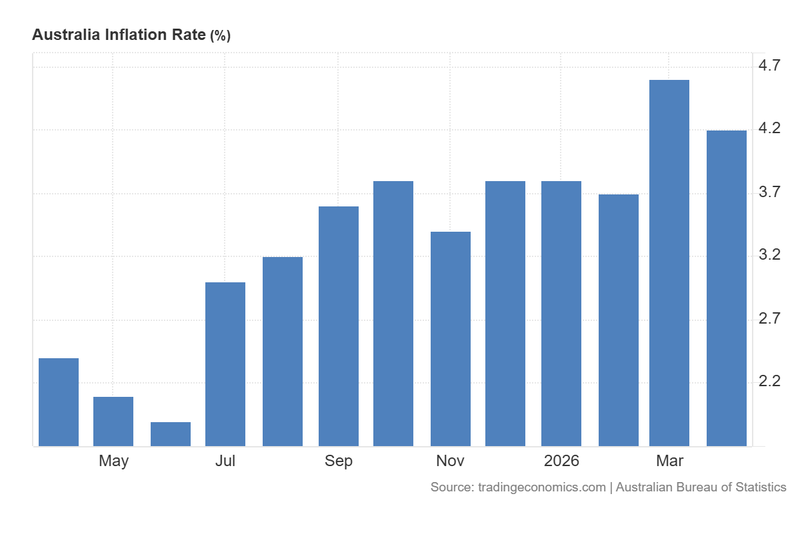
Figure 1. Australia Inflation Rate (2025-2026). Source: Data from the Australian Bureau of Statistics; Figure obtained from Trading Economics.
