
 Support
Nvidia’s $500 billion Wall Street backing eases credit fears, but the AI debt risk is not gone
Nvidia has eased a growing source of anxiety in credit markets by bringing BlackRock, Goldman Sachs, Apollo, Blackstone, Brookfield and KKR into a financing network that could provide more than $500 billion for AI infrastructure.
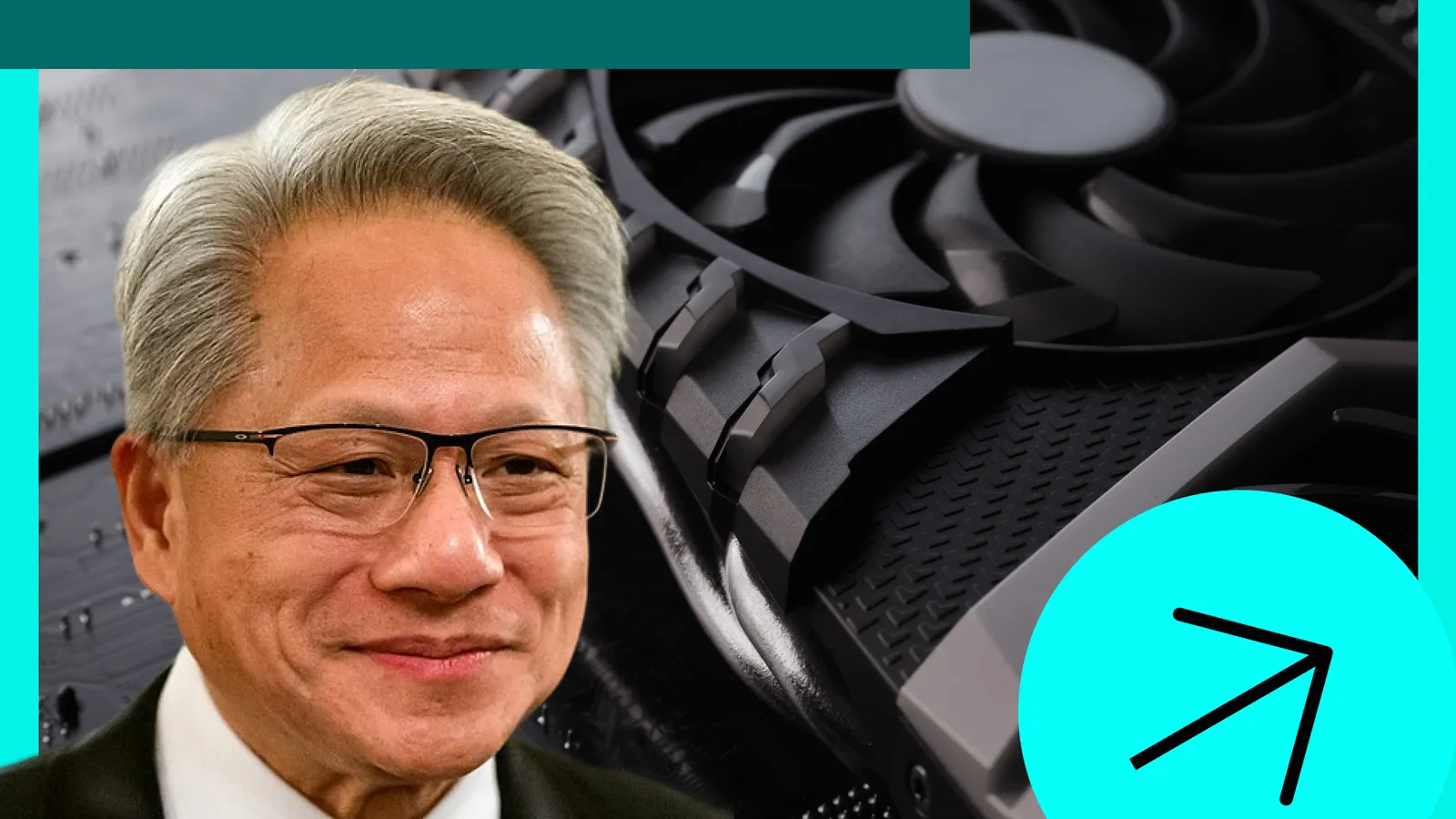
More than $500 billion of outside capital could be made available for Nvidia-related AI infrastructure projects.
BlackRock, Goldman Sachs, Apollo, Blackstone, Brookfield and KKR will independently assess individual deals rather than relying on Nvidia alone.
Nvidia’s five-year credit-default protection recently jumped to about $82,000 annually per $10 million insured before easing toward $73,000.
Nvidia generated nearly $100 billion in free cash flow in its latest fiscal year, giving it significant capacity to absorb financial pressure.
The structure reduces Nvidia’s direct exposure, but the wider AI credit market remains highly dependent on future demand for computing capacity.
Nvidia has just answered one of the AI boom’s biggest credit questions
The next phase of the artificial-intelligence investment cycle is becoming as much a story about finance as it is about semiconductors.
The important question is therefore shifting from “How much AI financing risk will Nvidia carry?” to “Who ultimately owns the downside of the AI infrastructure boom?”
Nvidia sits at the center of that shift. The company has become the most valuable publicly traded business in the world, with a market capitalization above $5.2 trillion, after demand for its processors transformed the economics of data centers. Yet the scale of the AI buildout has created a new concern: what happens when Nvidia’s customers need enormous amounts of financing to buy the very chips driving Nvidia’s own revenue growth?
That question became uncomfortable for credit investors when Nvidia started discussing increasingly large commitments to support data-center and customer financing. The fear was that the company could end up creating a circular system in which it helps finance customers that then use the money to buy Nvidia chips, boosting revenue today while leaving Nvidia exposed if those projects fail later.
The announcement of more than $500 billion in potential outside funding from some of the largest firms on Wall Street has changed that calculation.
Why $500 billion matters
The new financing coalition includes BlackRock, Goldman Sachs, Apollo Global Management, Blackstone, Brookfield Asset Management and KKR.
The significance is not simply the headline size of the capital pool. It is the way the structure distributes risk.
Each financial institution will independently evaluate projects and decide whether it wants to participate. Nvidia will act more as a platform connecting capital providers with customers rather than serving as the primary lender across the system.
That distinction has already mattered in credit markets.
Investors had been worried that Nvidia was gradually transforming from a semiconductor company into an informal lender of last resort for the AI infrastructure ecosystem. Bringing large asset managers, private-capital firms and investment banks into the process means project economics will face additional scrutiny before money is committed.
Wall Street’s involvement does not guarantee the projects will succeed, but it does make it harder to argue that Nvidia alone is artificially sustaining customer demand.
The circular-financing concern was becoming serious
The market’s nervousness did not appear out of nowhere.
In late July, Nvidia was reportedly considering backing as much as $250 billion related to OpenAI’s leasing of computing capacity at a large Ohio data-center project being developed by a SoftBank unit. Separate discussions involved potentially financing around $350 billion of OpenAI chip purchases for the same broader buildout.
Those numbers raised an obvious question.
If Nvidia finances a customer so that the customer can buy Nvidia products, how much of the resulting demand is genuinely independent?
The arrangement does not necessarily make the revenue artificial. Financing customers is common across many industries, from aircraft manufacturing to heavy machinery. It becomes more problematic when the financing grows large enough that the supplier begins taking substantial credit risk simply to maintain the pace of sales.
That was the fear beginning to show up in Nvidia’s debt markets.
Credit investors were sending a warning
The cost of insuring Nvidia’s debt against default nearly doubled in less than three weeks.
Five-year credit-default protection rose to as much as roughly $82,000 per year for every $10 million of debt insured, after spending much of the year near half that level. Following the announcement of the Wall Street financing coalition, the cost eased toward approximately $73,000, or about 73 basis points, while Nvidia’s bonds also strengthened.
This is important because equity investors and credit investors often see the same company through very different lenses.
Shareholders focus heavily on revenue growth, earnings, market share and future opportunities. Bondholders care about something more basic: who ultimately carries the losses if projects do not generate enough cash to repay their financing?
The rise in Nvidia’s credit risk suggested that lenders were becoming uncomfortable with how much financial support the company might need to provide to sustain AI infrastructure demand.
The latest structure has reduced that fear by spreading the exposure.
Nvidia is trying to become a marketplace for AI capital
The most interesting part of the arrangement is Nvidia’s proposed role.
Instead of directly financing every major customer, the company intends to create a marketplace where independent capital providers can connect with companies seeking money to build AI infrastructure.
That gives Nvidia several advantages.
Customers gain access to large pools of institutional capital. Financial firms gain access to a fast-growing pipeline of data-center and computing projects. Nvidia potentially benefits from more infrastructure being built without having to fund all of it directly from its own balance sheet.
In effect, Nvidia is trying to solve one of the biggest bottlenecks facing the AI industry: the cost of converting demand for computing into actual physical capacity.
The company can produce the chips. The harder problem is financing the data centers, power systems, networking equipment and long-term leases required to deploy them at massive scale.
Nvidia will still carry some risk
The structure does not remove Nvidia completely from the financing equation.
The company may support certain projects with guarantees of as much as 25% through what it describes as a residual-value mechanism.
The idea is that if a data-center project runs into financial trouble, lenders would first attempt to recover value by finding another operator, leasing the computing capacity to another customer or selling the underlying chips. Nvidia’s support could then apply to part of the value that remains unrecovered.
There is a logic to that structure because Nvidia’s processors are relatively fungible.
A specialized industrial asset may have little value outside the project for which it was designed. High-end AI chips can potentially be moved, resold or redirected toward another customer because demand remains broad.
That makes the collateral more flexible.
But it does not make the risk disappear.
If the AI industry eventually suffers from major overcapacity, the resale value of those chips and computing clusters could fall sharply at exactly the moment lenders need to recover their money.
The real bet is now on the value of computing power
The credit market is increasingly making one enormous assumption: that advanced computing capacity will remain scarce and valuable.
That assumption currently looks reasonable.
Demand for Nvidia’s chips remains extremely strong, hyperscalers are spending hundreds of billions of dollars on AI infrastructure, and businesses continue racing to secure computing resources.
But the amount of capital entering the sector means supply will also rise dramatically.
Hundreds of billions of dollars are being invested in data centers, power generation and semiconductor capacity. The global race to monetize AI has been estimated at roughly $5.5 trillion.
At some point, the market will have to determine whether future demand grows quickly enough to absorb all of that infrastructure.
If it does, current financing could prove highly profitable.
If it does not, some of today’s supposedly scarce computing assets may become much less valuable.
That is the risk credit investors cannot outsource.
The AI buildout is starting to look like an infrastructure boom
The financing structure also shows how much the AI trade has changed.
The first phase was mostly an equity-market story. Investors bought Nvidia, semiconductor suppliers and hyperscalers because they expected artificial intelligence to generate enormous future profits.
The second phase is much more capital intensive.
Data centers require land, power, cooling systems, networking equipment, long-term leases and massive quantities of processors. Funding the buildout increasingly requires bonds, private credit, infrastructure funds and other forms of institutional capital.
That moves the AI cycle closer to previous infrastructure booms.
Railroads, telecom networks, fiber optics and renewable-energy projects all required enormous upfront investment before the final economics became clear. Some generated extraordinary returns. Others produced overcapacity and painful losses for creditors.
AI will likely produce winners and losers as well.
The difference is that the amounts being committed are becoming enormous before the economics of many projects are fully proven.
Nvidia’s balance sheet is still a major source of strength
One reason credit markets have not reacted more aggressively is that Nvidia itself remains extraordinarily profitable.
The company generated nearly $100 billion in free cash flow in the fiscal year that ended January 25.
That provides a substantial cushion even if Nvidia eventually needs to absorb losses from selected financing arrangements.
Its financial position also separates it from many previous bubble-era companies that relied on external funding because their core businesses were unprofitable.
Nvidia is funding the AI boom from a position of exceptional operating strength.
That matters.
The central risk is therefore not that Nvidia suddenly lacks the money to support its commitments. The concern is whether it uses its balance-sheet strength to take on increasingly large risks whose returns ultimately depend on its customers continuing to buy ever more computing capacity.
The new financing coalition reduces that possibility.
Wall Street’s involvement is reassuring - but not a guarantee
There is a temptation to interpret participation from BlackRock, Goldman Sachs, Apollo, Blackstone, Brookfield and KKR as proof that the AI infrastructure boom is financially sound.
That would go too far.
These firms are sophisticated investors, but sophisticated investors can still lose money.
Their involvement is important because each firm will independently assess project economics, financing terms, collateral and expected returns. That adds discipline that would be missing if Nvidia simply guaranteed financing across the ecosystem.
But the entire group is still evaluating projects against broadly similar assumptions about future demand for AI computing.
If those assumptions prove too optimistic, risk diversification may determine who absorbs the losses rather than prevent losses altogether.
The AI financing system therefore becomes stronger, but not invulnerable.
“Panic capex” may be the real long-term risk
The most interesting criticism of the current investment cycle is the idea that technology companies are spending defensively rather than purely economically.
No major company wants to risk falling behind in AI.
That creates an unusual incentive structure.
Microsoft cannot easily stop spending if Amazon keeps building. Amazon cannot slow dramatically if Google continues expanding. AI startups need increasingly larger compute clusters to remain competitive. Governments also want domestic AI infrastructure for strategic reasons.
This can create what might be described as panic capital expenditure: everyone spends because the cost of being left behind appears greater than the risk of overbuilding.
That logic can sustain investment for a long time.
It can also eventually produce too much capacity.
For creditors, that is the key risk. A project does not need to become technologically obsolete to lose money. It only needs to generate less cash than expected relative to the debt used to finance it.
Who absorbs the losses if AI returns disappoint?
This is where the $500 billion financing announcement changes the story rather than ending it.
Previously, investors feared Nvidia might absorb a large portion of the risk through guarantees, customer loans or other financial support.
Under the new structure, much of that exposure will move toward asset managers, private-credit funds, insurers, bondholders and other providers of institutional capital.
From Nvidia’s perspective, that is positive.
From the perspective of the financial system, the risk has been distributed.
If AI infrastructure delivers strong returns, the model could become one of the largest financing opportunities in modern markets.
If returns disappoint, losses may appear across a much wider group of investors.
The important question is therefore shifting from “How much AI financing risk will Nvidia carry?” to “Who ultimately owns the downside of the AI infrastructure boom?”
What investors should watch next
The first metric is Nvidia’s credit-default swap spread. If the cost of protecting its debt continues declining, credit investors are becoming more comfortable that the company’s direct exposure is manageable.
The second is the structure of individual projects. Investors should pay attention to leverage ratios, residual-value guarantees, lease durations and who ultimately bears losses if a customer defaults.
The third is utilization. Data centers need to remain heavily used to generate attractive economics. Rising capacity combined with weaker utilization would be an early warning that infrastructure is growing faster than demand.
The fourth is chip resale value. Nvidia’s residual-value mechanisms depend partly on the idea that AI processors retain meaningful value and can be redeployed if a project fails.
And the fifth is hyperscaler spending. As long as Microsoft, Amazon, Meta, Alphabet and other major buyers continue expanding AI capex, demand for infrastructure financing will remain strong.
Any broad slowdown would test how robust the credit structures really are.
if that assumption proves wrong.


