
 Support
Semiconductor hits record sales as AMD tops $1 trillion and Micron earnings upcoming
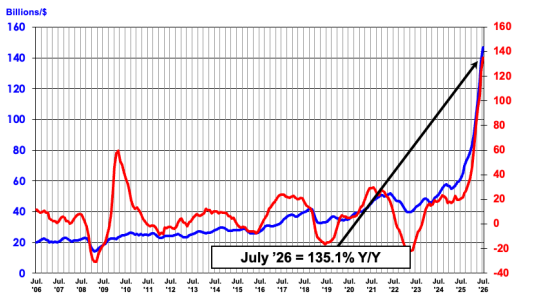
The semiconductor cycle is moving faster than the stock market expected. Global chip sales reached $146.8 billion in July, up 6.4% from June and a remarkable 135.1% from a year earlier. The latest figure is based on a three-month moving average, and the industry has already exceeded its previous full-year sales record with five months still left in 2026.
Global semiconductor sales reached $146.8 billion in July.
AMD crossed $1 trillion in market capitalisation after rising about 185% this year.
Micron enters its September 30 earnings report with company guidance for roughly $50 billion of fourth-quarter revenue.
Why global semiconductor sales are breaking records
The July sales data are unusually strong. Sales into the Americas rose 171.3% year over year, Asia-Pacific increased 134.9%, China 123.6%, Europe 85.2% and Japan 50.8%. The breadth matters because it shows that the semiconductor upcycle is not being driven by one customer group or one geography.
AI is still the main engine behind the strongest part of the cycle, particularly in data-centre processors, accelerators and memory. But the wider semiconductor market is recovering at the same time, giving chipmakers more room to raise prices and protect margins.
Source: Semiconductors.org
AMD enters the $1 trillion semiconductor club
AMD has now joined Nvidia, Broadcom and Micron in the trillion-dollar semiconductor group. Its shares hit a record above $613 on September 21, taking its 2026 gain to about 185%.
The move reflects more than enthusiasm around AI accelerators
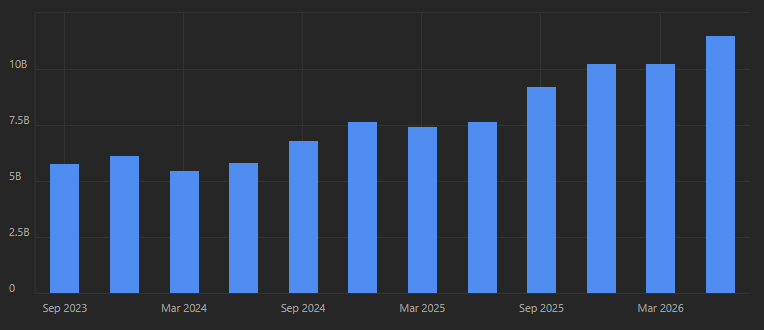
AMD's data-centre revenue reached $6.7 billion in its latest quarter, up 107% year over year, driven by demand for EPYC server processors and Instinct AI GPUs. Overall revenue rose 50% to $11.5 billion.
The market is therefore paying for a company that is gaining exposure to two parts of the AI buildout: the accelerator market and the server CPU market.
That creates a new problem for AMD
At more than $1 trillion, the stock needs increasingly large earnings growth to justify the move. A strong AI cycle helps, but expectations can rise faster than the underlying business.
Could AMD raise chip prices?
Reports from the hardware supply chain suggest AMD could raise prices by around 10%, with the increase linked to higher manufacturing and memory costs. The reports are not based on a formal AMD announcement, so the timing and size of any increase remain unconfirmed.
Still, market logic is important
TSMC produces a large portion of AMD's leading processors and accelerators, while demand for advanced packaging and high-bandwidth memory remains intense. If input costs keep rising, chip designers have two choices: accept lower margins or pass part of the increase to customers.
Source: Full ratio
Why Micron's earnings matter for AI demand
Micron's September 30 earnings report may provide the clearest evidence of how much AI demand is translating into actual semiconductor revenue.
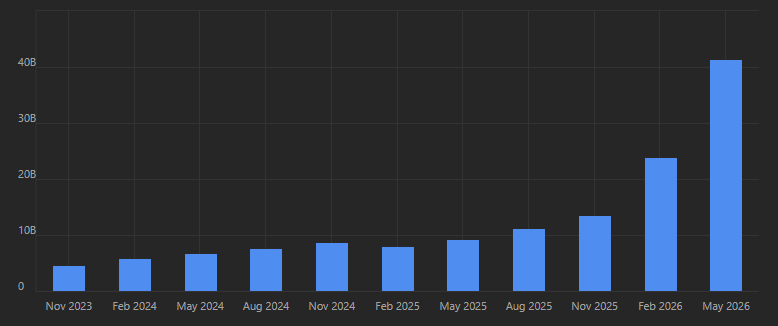
The company reported $41.46 billion of revenue in fiscal Q3, up from $23.86 billion in Q2 and $9.30 billion a year earlier. Its cloud-memory business generated $13.77 billion, while the core data-centre business produced $11.52 billion.
Micron's official Q4 guidance is $50 billion, plus or minus $1 billion, with gross margin around 86%. Analysts currently expect about $50.82 billion.
Put the four quarters together and Micron would finish fiscal 2026 with roughly $129 billion in revenue, compared with just $13.64 billion in its fiscal first quarter.
That is the number worth watching
Memory has historically been one of the most cyclical corners of semiconductors. The current AI boom is changing by making HBM and high-performance memory essential parts of data-centre infrastructure. S&P Global notes that HBM has become increasingly central to AI accelerators because it provides high bandwidth while helping manage power consumption.
Source: Full ratio
The next phase is about margins as much as volume
The semiconductor market is producing numbers that justify the AI spending story for now. Sales are accelerating. AMD is gaining share and expanding into full AI systems. Micron is seeing extraordinary demand for memory. Supply remains tight enough for companies to consider passing higher costs through to customers.
The next question is whether profits can grow as quickly as expectations
That is particularly important for AMD after its trillion-dollar milestone. It is equally important for Micron because memory prices and margins can change quickly once supply catches up with demand.
For now, industry data still points to expansion. The harder part starts when investors stop paying for the next year of AI growth and start asking how much of that growth is already reflected in today's share prices.


