Support
Week ahead: Central Bank decisions, inflation, and AI risks
Inflation is keeping further rate increases in play just as weak US housing activity, doubts over AI spending and French fiscal pressures expose strains across markets. Next week’s decisions from the BoC, Fed, ECB and BoJ will test whether policymakers believe those strains are providing enough restraint or whether they still need to do more.

Japan’s headline and core inflation excluding food both reached 2.1% in September, while the measure excluding food and energy rose to 2.4%.
The technology selloff suggests investors want clearer evidence that AI spending will translate into earnings.
UK inflation and employment data put monetary policy and fiscal credibility in focus ahead of the Budget.
What drove markets this week?
Canada inflation - the headline and the underlying trend diverge
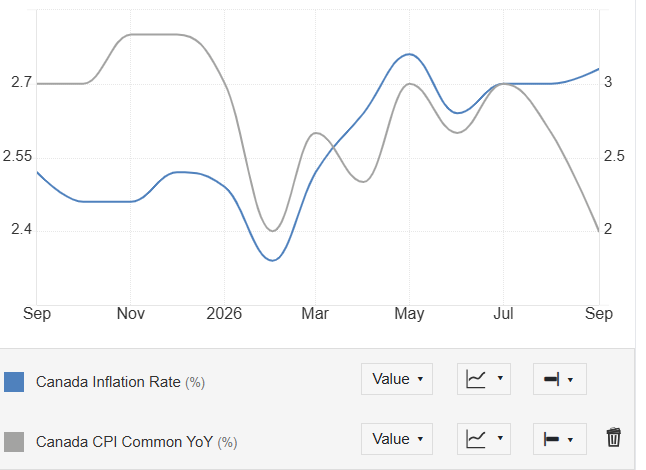
Canadian inflation rose to 3.1% from 3.0%, below the 3.2% forecast, while CPI Common eased to 2.4% against expectations of 2.6%. Gasoline drove much of the headline increase, making it difficult to interpret the report as evidence that inflation was strengthening throughout the economy.
Yet markets were pricing roughly an 80% chance of a quarter-point BoC hike to 2.50%. The tension is between softer underlying inflation today and concern that sustained energy costs could spread into prices and expectations tomorrow.
That leaves the BoC needing to explain why further tightening is necessary if it raises rates. Responding to evidence of broader price pressure would carry a different message from acting pre-emptively against a risk that has not yet fully materialized.
Source: Statistics Canada
Global equities - investors question what higher spending will deliver
In France, concerns over the government’s fiscal position pushed the 10-year bond yield to around 5.10%, raising questions about borrowing costs and debt sustainability. Higher sovereign yields also increase the discount rate applied to future earnings, putting additional pressure on equity valuations and the CAC 40.
In technology, the concern was whether heavy investment in AI infrastructure would generate returns sufficient to justify the spending. This uncertainty weighed on semiconductor stocks and contributed to weakness in the Nasdaq and South Korea’s KOSPI, where technology shares have significant influence.
The common factor was a reassessment of the returns investors could expect from financing higher spending. French public finances faced scrutiny over the cost of debt, while technology companies faced questions over future profitability.
Ahead of the central-bank meetings, lower yields could offer some relief, but would not resolve either concern without clearer evidence of fiscal discipline and sustainable returns on AI investment.
UK inflation and employment - the Budget enters a less forgiving market
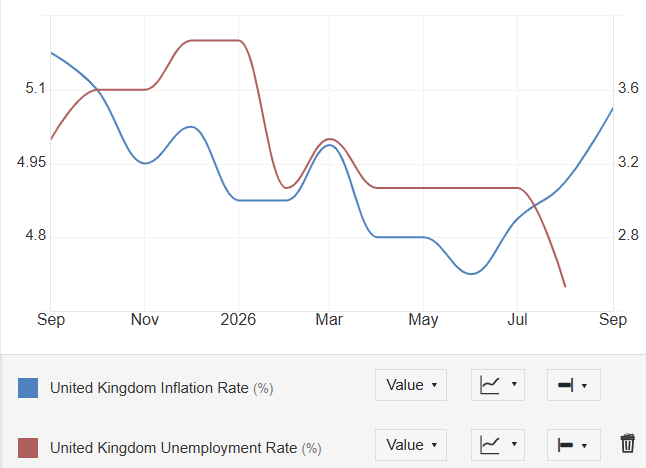
UK unemployment fell to 4.7%, below the 4.9% forecast, while annual inflation accelerated to 3.5% from 3.1%. Transport and fuel contributed to the increase, alongside firmer services’ inflation.
Together, the figures strengthen the argument for keeping further BoE tightening under consideration. Lower unemployment does not establish that every part of the economy is strong, but it makes the case for immediate monetary relief less straightforward.
Source: Office for National Statistics
US housing - restraint is visible, but uneven
Building permits reached 1.40 million, slightly above the 1.39 million forecasts, while housing starts fell 5.2% to 1.221 million, below expectations of 1.30 million.
Permits suggest a pipeline of intended construction remains, but fewer starts show that those intentions are not translating smoothly into activity. Financing costs remain a constraint in a sector that responds quickly to interest rates.
Initial jobless claims, meanwhile, stood at 194,000, down from 197,000. That points to limited layoffs, although it says less about employers’ willingness to hire.
For the Fed, housing weakness shows that restrictive conditions are having an effect. It does not yet demonstrate a broad deterioration strong enough to settle the argument against further tightening.
Japan inflation - an October pause would leave the broader question open
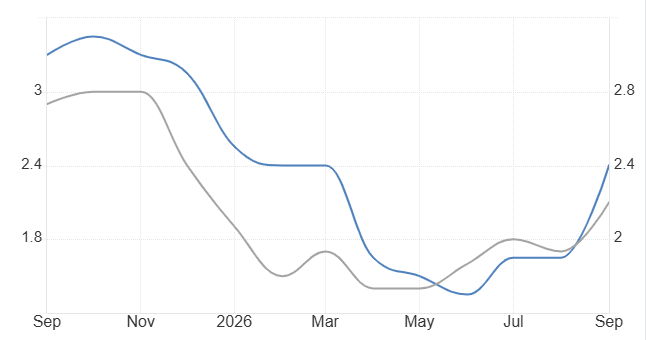
Japan’s headline and core inflation excluding food both reached 2.1% in September, while the measure excluding food and energy rose to 2.4%.
After September’s rate increases, the BoJ may prefer to assess the effects before acting again. But inflation beyond the energy component makes it harder to treat the price pressure as entirely temporary.
The yen’s response will depend on whether the bank changes expectations for the pace of subsequent tightening. Simply repeating that further increases remain possible may offer limited support if investors already anticipate them.
Source: Ministry of Internal Affairs & Communications
What to watch next week
US new home sales - another weak reading would broaden the housing concern
New home sales are forecast to fall 3.5% after a 6.4% increase. A decline alongside weaker starts would suggest pressure extends beyond construction decisions into purchases. One volatile release would not establish a wider downturn.
The more consequential signal would be sustained weakness across sales and construction, particularly if employment indicators also began to soften. That would make it harder for the Fed to view housing as an isolated pocket of restraint.
Fiscal credibility and policy surprises
The UK Budget will test whether the government can support growth while keeping public finances credible. With markets pricing in a 90% probability of a rate hike, the interaction between fiscal policy and monetary tightening becomes more important.
Higher gilt yields could reflect stronger growth expectations, but a rise driven by heavier borrowing or concerns over debt sustainability would complicate the outlook, increasing financing costs just as households and businesses face tighter monetary conditions.
The BoC’s decision presents another test of expectations
With a hike largely anticipated, the Canadian dollar may react more to guidance on subsequent moves. A hike accompanied by caution could offer little additional support; a hold would challenge existing pricing more directly.
Fed between high inflation and political pressure
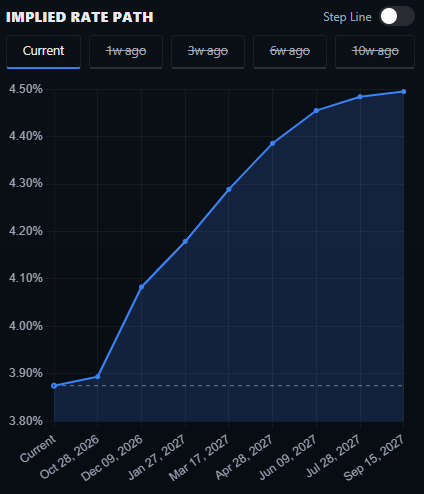
A hold is widely expected, with markets looking for a possible rate increase in December. That would raise a difficult question. If inflation is now higher than in September, when the Fed last raised rates, why pause now?
Officials may judge that financial-market strains and weakness in housing and employment are already restraining demand. However, holding rates steady while inflation remains elevated risks raising questions about the consistency of the Fed’s inflation mandate.
The decision could also fuel debate over political pressure ahead of the US midterm elections, particularly given Trump’s repeated calls for lower interest rates.
Source: Rate probability
US data could quickly reshape the Fed’s message
Core PCE inflation and third-quarter GDP arrive after the Fed’s decision. Forecasts point to core PCE of 0.3% monthly and 3.1% annually, alongside GDP growth of around 3% at an annualized rate.
Firm inflation and resilient growth would strengthen the argument that the economy can withstand additional tightening, potentially supporting December hike expectations, Treasury yields and the dollar.
Softer inflation with solid growth would offer markets a more favourable combination. Weak growth alone would be less reassuring: it could lower yields while intensifying the earnings concerns already weighing on equities.
ECB and BoJ - a hold does not mean the same thing everywhere
The ECB is widely expected to hold rates. Its guidance must address eurozone inflation while recognizing that French fiscal stress is creating uneven borrowing conditions. Keeping policy unchanged would not resolve the underlying sovereign concerns.
Eurozone GDP, unemployment and French inflation figures on October 30 will help test the balance between price pressure and activity.
French inflation contributes to the regional picture, but fiscal credibility remains a separate influence on French debt and the euro.
The BoJ’s decision is also expected to bring a hold. Its inflation outlook and assessment of import costs could nevertheless alter expectations for later tightening. A firmer signal would matter most if it exceeded what investors already assumed.
What could markets do next?
The clearest relief would come from easing inflation alongside resilient activity. That would give central banks room to wait without raising deeper questions about earnings.
A decline in yields driven by weakening growth would carry a different message. It might support government bonds while offering less protection to technology shares facing scrutiny over future returns.
Next week will test whether central banks believe existing restraints are enough. Markets will then have to judge whether that restraint is bringing inflation under control at a manageable economic cost.
Gold – technical outlook
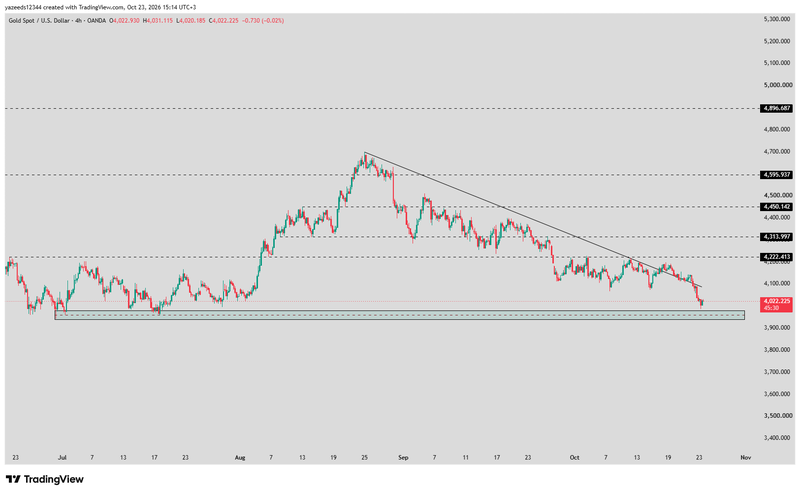
Gold’s 4-hour structure is bearish, with prices making lower highs beneath a descending trendline from the August peak near $4,700. The latest sell-off has pushed price towards the major support zone around $3,940–$3,980, making this a critical area for the next move.
A decisive break below $3,950 could expire at $3,900, followed by $3,850. However, holding the support zone may trigger a technical rebound towards $4,100, then $4,222. A stronger recovery requires reclaiming $4,314. Until then, rallies remain vulnerable to selling pressure.
Source: Trading view
Crude oil – technical outlook
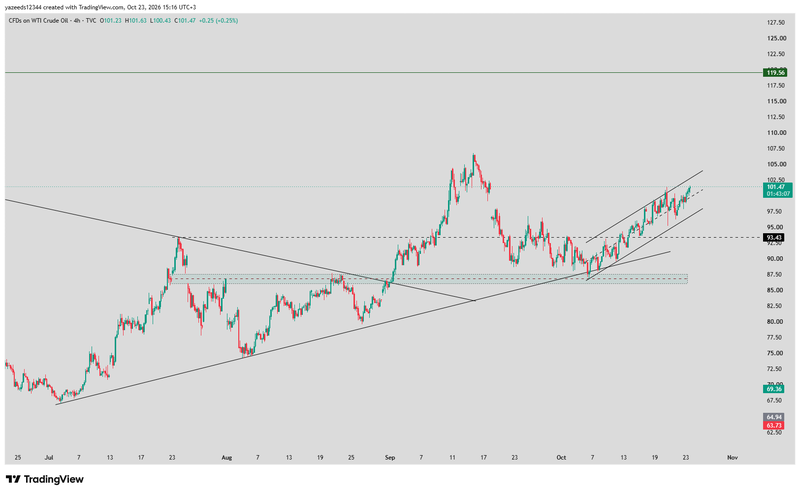
WTI remains bullish on the 4H chart, trading near $101.47 within a rising channel. Price is approaching channel resistance, making a short-term pullback possible despite strong momentum.
A breakout above $102.50–103.50 could open the way towards $105–107, with geopolitical supply concerns supporting prices.
However, rejection near resistance may send oil towards $99–97.50. A break below $97.50 would weaken the structure and expose $93.43 support.
Source: Trading view
Nasdaq – technical outlook
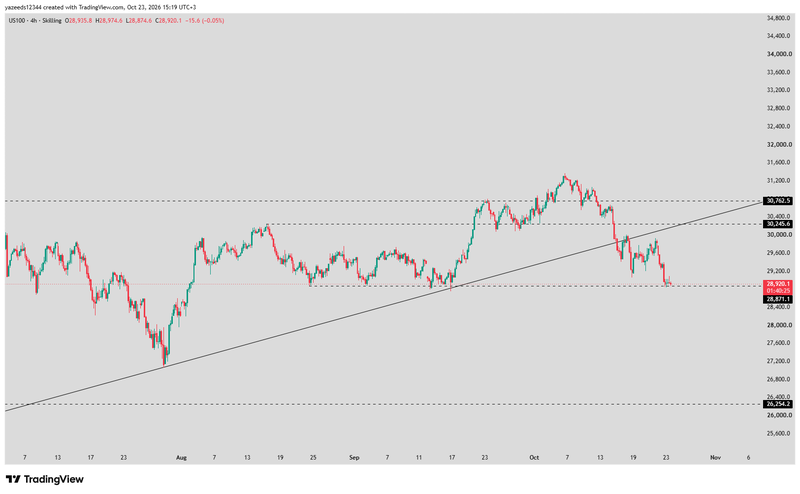
Nasdaq remains under strong bearish pressure after the technology sell-off, with price near 28,920 and the rising trendline decisively broken. AI spending concerns have intensified selling across technology and semiconductor stocks.
A break below 28,870 could extend losses towards 28,400, then 26,250.
On the other hand, holding current support may trigger a relief rebound towards 29,600–30,000. Resistance at 30,245 must be reclaimed to improve the outlook. Until then, rallies remain vulnerable to further selling.
Source: Trading view