Support
 Can LNG shortages and Hormuz push Natural Gas prices higher?
Europe is entering winter with much less gas in storage than traders would normally want, just as the conflict around Iran continues to disrupt one of the world's most important LNG routes. EU storage is only about 65% full, the lowest late-summer level in at least 15 years and well below the roughly 82% five-year average.
Europe has historically been able to attract spot LNG by paying enough to divert cargoes away from Asia.
Storage is starting September at roughly 65%, while European gas prices have risen to around €75/MWh.
Reclaiming 3.12 would be the first sign that buyers are gaining momentum again.
Hormuz is changing the way buyers think about gas
The Strait of Hormuz has become a supply question for LNG as well as oil. Qatar is one of the world's largest LNG exporters, and the disruption has already forced QatarEnergy to extend force majeure on deliveries to European and Asian customers. For Italy's Edison alone, 29 cargoes have been affected since April, representing roughly 3.8 billion cubic metres of gas.
That is pushing buyers to think beyond spot purchases
European and Asian importers are increasingly looking for supply that does not depend on the Middle East, including LNG from the United States and Australia, while also strengthening storage and transport arrangements.
Japan's JERA, for example, has been building a more diversified portfolio across the U.S., Qatar, Malaysia and Australia rather than relying on a single source. South Korea is moving in a similar direction, with long-term U.S. LNG agreements expected to make America its second-largest LNG supplier from 2027.
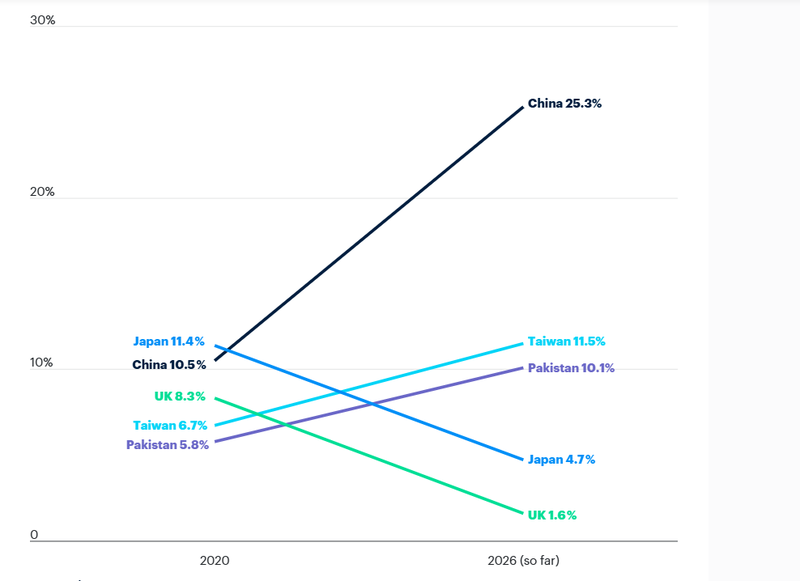
Source: Infogram
Europe's storage problem leaves little room for mistakes
The timing is becoming increasingly uncomfortable. Europe normally enters autumn by building a substantial cushion before heating demand rises. Instead, storage is starting September at roughly 65%, while European gas prices have risen to around €75/MWh, their highest level in more than three years. The lower starting point would be manageable if LNG deliveries returned to normal quickly.
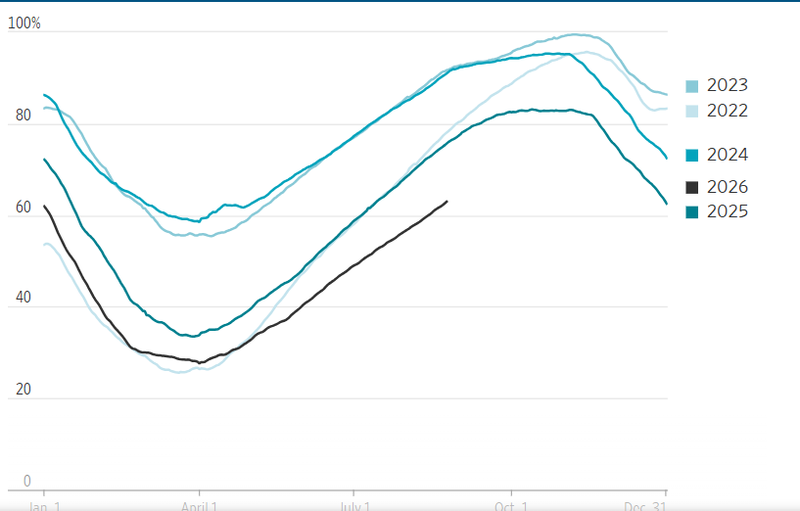
Source: EuroStats
Asia and Europe could end up bidding against each other
This is where the LNG market becomes more complicated. Europe has historically been able to attract spot LNG by paying enough to divert cargoes away from Asia. That works when spare supply is available. It becomes much harder when Middle Eastern exports are disrupted and winter demand starts rising across both regions.
The result could be a bidding war between Europe and Asia for flexible LNG. Asian spot prices have already risen sharply since the conflict began, with Northeast Asian LNG reaching around $23.20/MMBtu in recent trading, more than double pre-conflict levels.
Gas is becoming an inflation story again
The consequences are already moving beyond the energy sector. Higher gas prices raise electricity and heating costs, increase expenses for energy-intensive industries and make it harder for Europe to bring inflation down. That creates a difficult position for the European Central Bank, particularly while growth remains fragile.
The ECB can deal with demand-driven inflation through interest rates. It has much less control over a gas supply shock. A prolonged LNG disruption could keep European inflation elevated, pressure bond yields and make it harder for the ECB to ease policy even if economic activity weakens. For now, Europe's gas market is not facing a repeat of the 2022 crisis. Storage capacity is larger, LNG import infrastructure has expanded, and supply sources are more diverse.
The real test will come over the next few months: can Europe refill enough storage while competing with Asia for LNG that is increasingly being priced not just for energy, but for security?
Technical Outlook
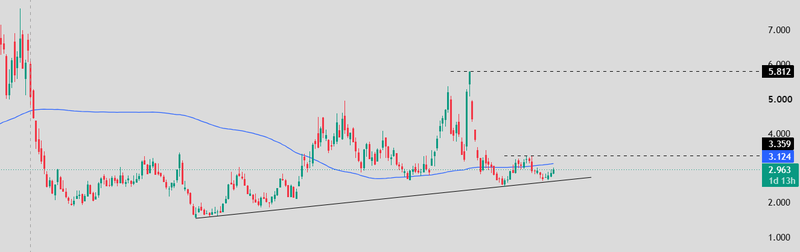
Natural gas is trying to rebuild momentum after a volatile first half of the year. The rally toward 5.81 has faded, but the pullback has not turned into a full reversal. Instead, price has continued to form higher lows above the rising trendline, showing that buyers are still stepping in on weakness.
The 126-day moving average around 3.12 is now the main level to watch. Natural gas is trading near 2.96, just below the average, while 3.35 has repeatedly capped rallies. That leaves price caught between the rising trendline below and these resistance levels above. A break from this range could decide the next move.
Scenarios ahead
The bullish case remains intact as long as the rising trendline holds. Reclaiming 3.12 would be the first sign that buyers are gaining momentum again, while a move through 3.35 would give the recovery more room to run. Above that level, the previous high around 5.81 would come back into focus.
The bearish case starts if the trendline gives way and price remains below the 200-day moving average. That would weaken the recent sequence of higher lows and raise the risk of a deeper pullback toward 2.50–2.60. For now, the key question is simple: can buyers push prices above 3.12, or will sellers break the trend that has supported the recovery?
Source: Trading view