Support
GBP/USD forecast: BoE rate decision and US non-farm payrolls
Sterling enters the week with two supports already in place. The UK Budget avoided fiscal shock, and markets expect the BoE to raise interest rates for the first time since 2023. Yet GBP/USD may depend less on the expected hike than on what happens one day later, when US payrolls determine whether the Federal Reserve still has room to tighten in December.

Markets attach approximately a 92% probability to a 25-basis-point BoE increase.
The budget cushions households from the energy shock, leaving the BoE to watch whether support keeps core inflation firm.
US payrolls are expected to improve to around 58,000, keeping a December Fed increase in play.
The BoE is acting against the risk of persistence
Expectations that BoE to rise rates from 3.75% to 4.00%, the first increase since August 2023. The case of acting does not come from a belief that higher interest rates can reverse energy shock.
Consumer prices rose 3.5% annually in September, above the Bank’s earlier 3.0% forecast, and higher energy costs could push inflation above 4% early next year. The BoE cannot produce more oil or lower imported energy prices. It can only influence what happens after those costs enter the economy.
The policy danger begins if the initial increase changes domestic behaviour. Workers may seek higher wages to recover lost purchasing power, while companies may pass input costs into services and other prices. Waiting until that process is clearly visible would provide better evidence but less time to stop it. The expected hike is therefore insurance against persistence rather than an attempt to control the source of the shock.
The September vote was 6–3 in favour of holding. A poll now points to a 7–2 majority for an increase, suggesting that recent inflation data have shifted the centre of the committee rather than only strengthening its hawkish members.
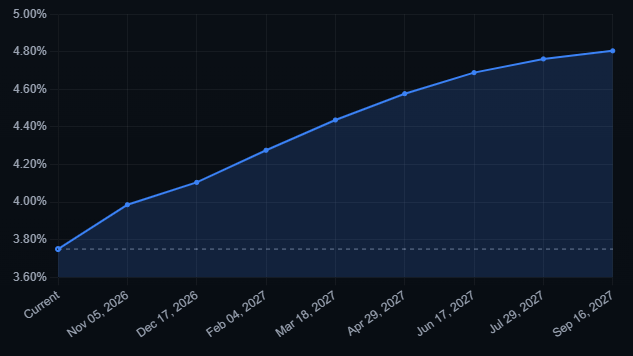
Source: Rate probability
Why do a rate increase may not be enough for sterling
The decision itself should contain little surprises. Investors have already priced most of the move and are looking further ahead, with several additional increases anticipated during 2027.
That is where the vote and guidance become more important than the quarter-point change. Businesses appear to be absorbing more of the energy shock than they did in 2022, and spare capacity remains in parts of the economy.
A cautious message would change the currency calculation; Sterling has benefited from the expectation that UK rates will rise faster than previously assumed. If the Bank says one increase may be sufficient while it studies wages and services inflation.
Part of that support could disappear even though Bank rate moves higher. The market needs evidence of a tightening cycle, not confirmation of a decision it already expects.
The Budget can soften the shock but preserve inflation pressure
John Healey’s Budget was designed partly to protect households and motorists from higher energy costs. That support reduces the immediate loss of disposable income and lowers the risk that the energy shock causes a sharp fall in consumption.
The government also retained 15 billion of headroom against its main fiscal rule, keeping the package within the limit’s investors had prepared for, this is why the Budget helped sterling without creating a large market reaction.
It avoided a borrowing surprise, allowed gilt investors to keep confidence in the fiscal framework and supported household demand at the same time.
The same support, however, changes the inflation calculation, if public spending replaces part of the income households lose to energy, demand may remain firm enough for businesses to pass through more of their costs.
Wage demands may also stay stronger because the economy avoids a deeper slowdown. The warning signal for the BoE would therefore be an acceleration in services, wages and other core prices, rather than the original increase in energy itself.
The dollar waits for politics and payrolls
The dollar began the week in a holding pattern as investors prepared for the US midterm elections, the result could change expectations for taxes, spending and congressional control, but its initial effect on currencies is likely to come through Treasury yields.
A result associated with less fiscal expansion could reduce some support for the dollar, while expectations of heavier borrowing could lift yields.
The result could change expectations for taxes, spending and congressional control, but its initial effect on currencies is likely to come through Treasury yields.
A result associated with less fiscal expansion could reduce some support for the dollar, while expectations of heavier borrowing could lift yields.
Payrolls will test December rate expectations
The October employment is expected to improve to around 60,000 from 29,000, while unemployment is forecast to remain at 4.2%. Markets place the probability of a December Fed increase near 75%.
A 60,000 increase would remain modest, so the headline cannot settle the debate alone. Wage growth, hours worked and revisions will show whether hiring is merely slow or whether household income is beginning to weaken.
Stable unemployment and firmer wages would suggest that the economy can absorb another increase, supporting Treasury yields and the dollar.
A weaker report would change the relative-rate outlook. If hiring disappoints, wages soften or unemployment rises, investors may reduce the probability of a December move.
In that environment, even a cautious BoE hike could support sterling because US rate expectations would be moving in the opposite direction.
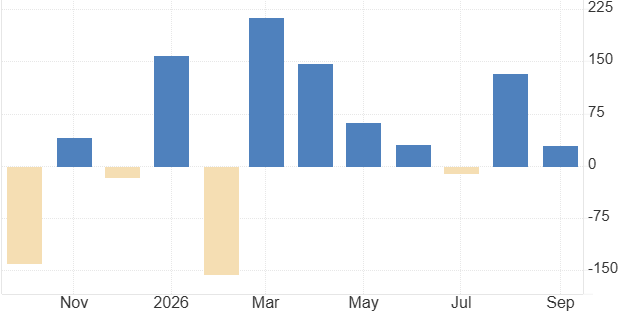
Source: U.S. Bureau of Labor Statistics
Technical outlook
GBP/USD is trading around 1.3419, extending its recovery after finding support near 1.3160. Buyers have regained some ground, but the broader picture remains mixed as a descending trendline continues to cap the upside.
The pair is still moving within a converging structure, with descending resistance extending from the 1.3870 peak and rising support originating near 1.3000. This leaves the market approaching a point where a break in either direction could set the next trend.
Buyers regain momentum, but resistance remains
Repeated attempts to push below 1.3161 failed to attract sustained selling, allowing buyers to regain control of the short-term move. GBP/USD has since climbed back above its moving average near 1.3397, improving the near-term outlook.
That recovery, however, is not yet enough to signal a broader reversal, the descending trendline remains intact, and the pair still needs to clear several resistance levels before the bullish case gains stronger technical support.
Scenarios ahead
Holding above 1.3390–1.3400 would keep the recovery on track and bring 1.3563 into focus. A sustained break above this level and the descending trendline could open the way towards 1.3680–1.3780.
On the downside, a move back below the moving average could weaken momentum and expose support to 1.3300, followed by 1.3161. A decisive break below 1.3161 would put 1.3000 back in view.
For now, the short-term bias is improving, but the broader structure remains unresolved. A clear break above 1.3563 and descending resistance is needed to strengthen the case for a bullish reversal.
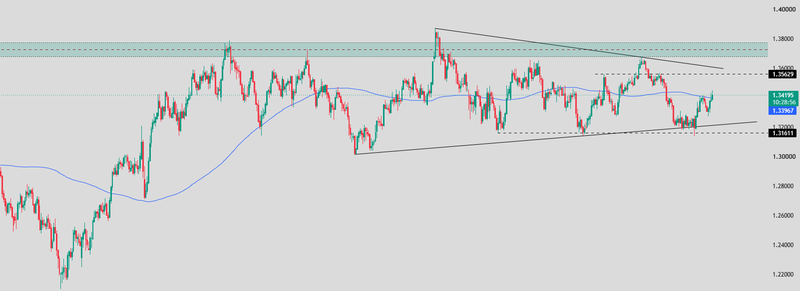
Source: TradingView