Support
GBP/USD rises on a BoE hike and a weaker dollar
Sterling’s move towards 1.35 looks like a straightforward interest-rate story. The pound is gaining from the Bank of England’s first increase in more than three years, while the dollar is losing support as US yields and oil prices fall after the midterm elections. But cheaper energy also reduces the need for further BoE tightening, leaving the rally dependent on which side reprices first.
The BoE raised Bank Rate to 4%, with eight members supporting the quarter-point move and Catherine Mann preferring 4.25%.
The Autumn Budget avoided a borrowing surprise and preserved the fiscal rules, reducing the danger of another gilt selloff.
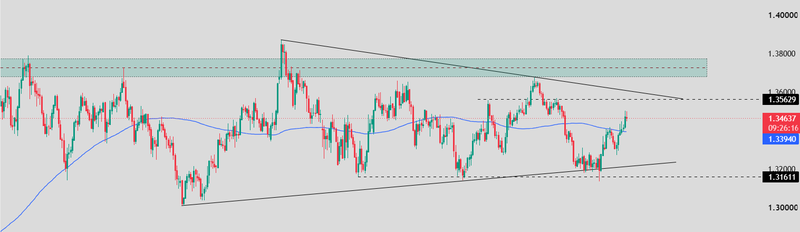
GBP/USD has recovered to around 1.3464 after buyers stepped in near 1.3161.
The BoE acted before inflation spread further
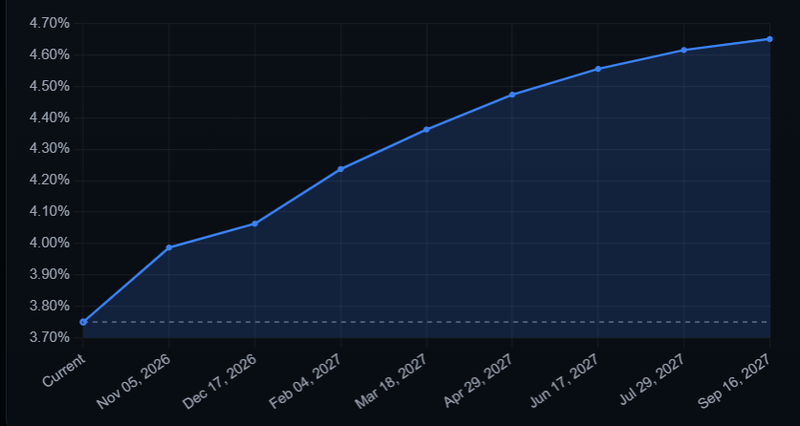
The BoE raised Bank Rate to 4%, with eight members supporting the quarter-point move and Catherine Mann preferring 4.25%. The vote was more forceful than expected, but it did not reflect an economy running beyond capacity. Policymakers acted because September’s 3.5% inflation rate could enter the 2027 wage round and become harder to remove.
That process is not yet firmly visible
Businesses expect wage settlements of around 3.5% next year, while companies have absorbed part of the energy shock instead of passing it fully to customers. The increase was insurance against persistence rather than proof that a wage-price cycle has formed.
Sterling can benefit from the higher rate today, but further gains require evidence that the BoE will still need to tighten after the immediate energy pressure fades.
Source: Rate probability
The US election gave sterling a second engine
Democratic control of Congress pushed the US ten-year yield towards 4.85% and weakened the dollar. Investors expect greater resistance to fiscal, tariff and Middle East policies that had added an inflation premium to US yields.
This is not yet a rejection of the Fed’s tightening path. Markets still assign roughly an 80% probability to a December increase, while recent employment and services data show firm demand. The dollar has lost yield support, but the case for another Fed move remains.
Lower oil creates a hidden contradiction for GBP/USD
Falling oil helps the pound through a weaker dollar and reduces pressure on Britain’s import bill and household incomes. It also weakens the reason the BoE raised rates. If energy continues to retreat, markets may remove some UK increases priced for 2027.
GBP/USD can therefore rise on lower oil initially and struggle later if UK rate expectations fall faster than their US equivalent. Softer energy is weakening the dollar while gradually reducing sterling’s interest-rate advantage.
The Budget removed a risk without creating a growth story
The Autumn Budget avoided a borrowing surprise and preserved the fiscal rules, reducing the danger of another gilt selloff. It did not improve Britain’s growth outlook, while limited headroom leaves the government sensitive to high borrowing costs.
For sterling, the Budget provides protection rather than momentum. It limits fiscal damage but cannot carry GBP/USD higher if the rate advantage or dollar weakness reverses.
What will decide whether 1.35 holds?
A soft US payrolls report would confirm lower Treasury yields and give GBP/USD room to hold above 1.35. Strong employment would rebuild the dollar’s yield advantage and reveal how much of sterling’s rise came from the US side.
An oil rebound would keep another BoE increase alive but damage UK demand and fiscal headroom. The cleaner route to further gains is lower US yields combined with enough domestic inflation persistence to keep the BoE cautious, without another energy shock weakening the economy it is trying to protect.
Technical outlook
GBP/USD has recovered to around 1.3464 after buyers stepped in near 1.3161, pushing the pair back above its moving average at 1.3394. The rebound points to improving short-term momentum, although the broader picture remains one of consolidation. The descending resistance line from the 1.3870 high continues to cap the recovery, leaving the pair short of a confirmed bullish reversal.
Descending resistance from 1.3870 meeting rising support that extends from around 1.3000. The latest test of 1.3161 failed to produce a sustained break lower, and the subsequent move back above the moving average suggests that selling pressure has eased.
For the recovery to gain further traction, GBP/USD needs to hold above 1.3394. That would keep the door open for a move towards 1.3563, where the pair faces its next resistance. A sustained break above the descending trendline would strengthen the bullish case and bring the 1.3680–1.3780 area into focus.
A move back below 1.3394 would weaken the recovery and shift attention towards 1.3300, followed by the recent low at 1.3161. A decisive break below 1.3161 would invalidate the rising support structure and expose the 1.3000 area.
Source: Trading view