Support

Gold price rebounds above $3,660 as tech stocks recover despite Fed rate hike fears
Gold rebounded from a 15-month low as recovering technology stocks eased selling pressure, although persistent US inflation and expectations of further Fed tightening threaten a sustained recovery.

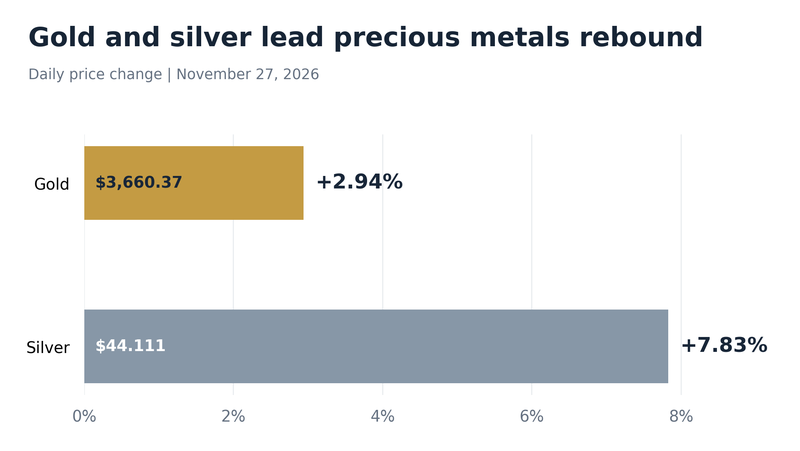
Gold rose 2.94% to $3,660.37 an ounce, putting it on track for a weekly gain.
Silver surged 7.83% to $44.111, significantly outperforming gold.
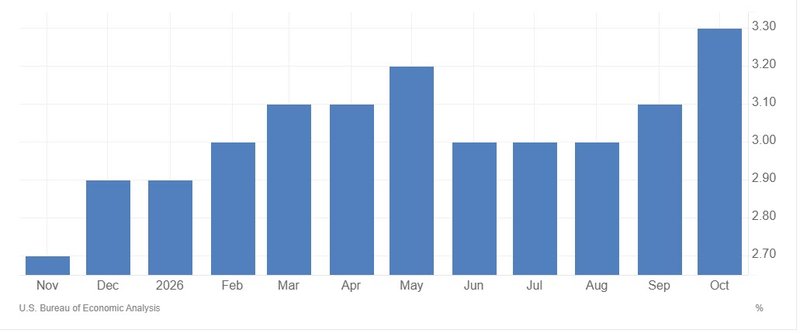
US core PCE inflation reached 3.3% in October, reinforcing expectations for a December Fed rate hike.
Gold remains on course for a third consecutive monthly loss exceeding 5%, with $3,450–$3,500 emerging as a critical support zone.
Gold rebounds as selling pressure across financial markets eases
Gold prices recovered sharply on Friday, November 27, as a tentative rebound in technology stocks and a weaker US dollar helped bullion recover from its lowest level in 15 months.
Spot gold rose 2.94% to $3,660.37 an ounce, while silver surged 7.83% to $44.111. Platinum and palladium also recorded gains of approximately 5% earlier in the Asian session, reflecting a broader recovery across precious metals.
Asian equities advanced for a second consecutive session, with Chinese stocks receiving additional support after the State Council reaffirmed its commitment to supporting financial markets in a rare midday statement.
Meanwhile, a broad measure of the US dollar declined 0.1% during Asian trading, providing additional relief for dollar-denominated commodities.
Why gold is rising alongside technology stocks
The simultaneous recovery in equities and precious metals reflects the increasingly important role of liquidity in determining gold prices.
During the recent technology selloff, investors faced growing pressure to reduce leveraged positions and raise cash. Gold's liquidity made it a convenient source of funding, leaving the metal vulnerable to selling despite its traditional safe-haven status.
As equity markets stabilize, the need to liquidate other assets may diminish. Silver's particularly strong rebound is consistent with recovering risk appetite, given its greater exposure to industrial demand and typically higher price volatility.
Friday's rally may therefore reflect an easing of liquidation pressure rather than a fundamental improvement in gold's monetary policy outlook.
Fed rate hike expectations remain gold's biggest obstacle
The recovery comes despite an increasingly restrictive outlook for US monetary policy.
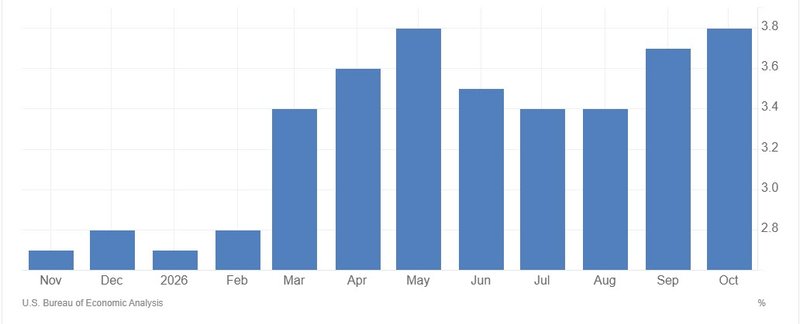
Data released on Wednesday showed that the core Personal Consumption Expenditures (PCE) price index, the Federal Reserve's preferred measure of underlying inflation, rose 3.3% year on year in October. Headline PCE inflation reached 3.8%, highlighting the persistence of price pressures.
Source: TradingEconomics
The figures reinforced expectations for another interest rate increase at the Fed's December 8–9 meeting, while investors are also considering the possibility of further tightening in early 2027.
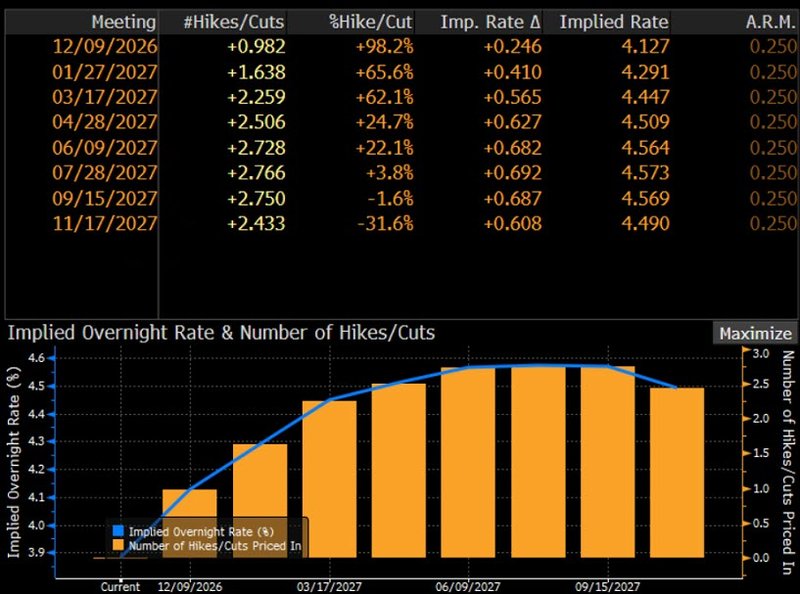
Source: Bloomberg
Higher interest rates increase the opportunity cost of holding gold, particularly when government bonds offer attractive yields. Persistently elevated real yields could therefore continue limiting the metal's recovery even if equity-market volatility subsides.
For gold, the more consequential question is how much additional tightening the Fed will deliver beyond December. A single rate increase may already be largely reflected in prices, but expectations of a prolonged tightening cycle could introduce further downside pressure.
Gold heads for a third consecutive monthly decline
Despite Friday's rebound, gold has remained below $4,000 an ounce since November 11 and is heading for a third consecutive monthly loss of more than 5%.
The downturn extends a broader correction from January's historic peak, which accelerated after the US-Iran war pushed energy prices higher and complicated efforts to contain global inflation.
The conflict has created an unfavorable environment for bullion. While geopolitical uncertainty typically supports safe-haven demand, higher energy costs have reinforced inflation and interest rate expectations, increasing the relative attractiveness of interest-bearing assets.
Friday's recovery has yet to reverse that broader dynamic.
Gold price forecast: Why $3,450–$3,500 is a critical support zone
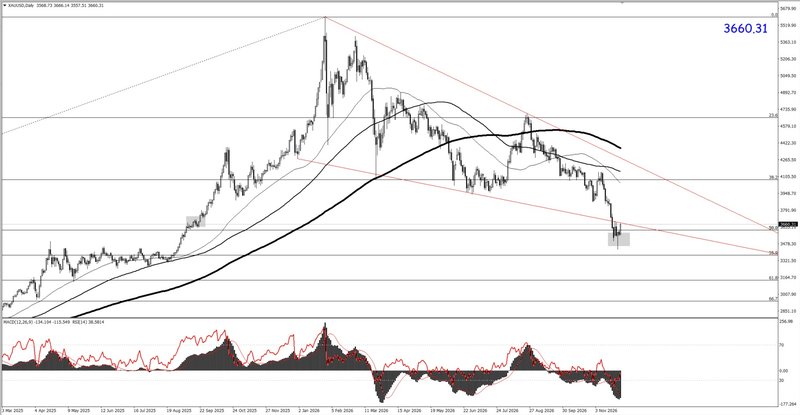
From a technical perspective, the area between $3,450 and $3,500 represents one of the most important support zones for gold.
This range marked the breakout area in August 2025 that preceded the historic rally toward January's record highs. Its significance now lies in whether former resistance can provide durable support following the substantial correction.
What could determine gold's next move?
A sustained recovery above $3,500, accompanied by stabilizing Treasury yields and reduced liquidation pressure across equities, could help gold establish a more durable base.
Conversely, a decisive break below $3,450 would undermine that technical structure and increase the risk of a deeper correction, particularly if markets price in additional Fed rate hikes for 2027.
The $4,000 threshold remains a broader reference for assessing whether gold can begin repairing the damage sustained during November.
The immediate rebound suggests that selling pressure may be easing, but a sustained recovery requires more than improving sentiment in technology stocks. Until inflation moderates sufficiently to limit further monetary tightening, gold remains caught between recovering investment demand and restrictive monetary conditions.
The December Fed meeting could determine whether the current rebound develops into a meaningful recovery or remains a temporary interruption in the broader downtrend.