Support
Oil market tightens as US crude stocks keep falling
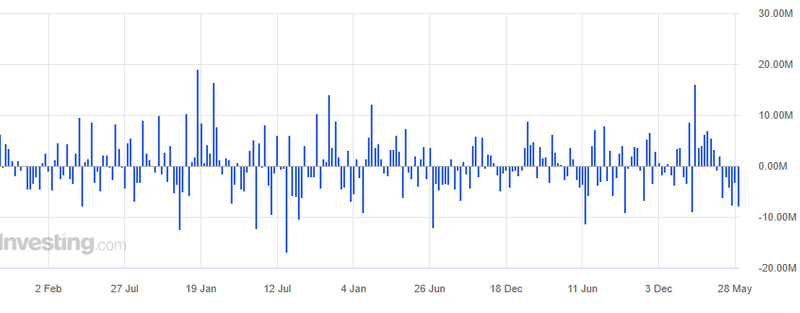
The oil market is moving back into a more fragile position. US commercial crude inventories fell by around 7.97 million barrels last week, marking the sixth straight weekly draw and pushing crude reserves further below normal seasonal levels.
US commercial crude stocks fell by nearly 8 million barrels.
A possible rollback of Russian oil sanctions waivers.
Break below 79.50 would indicate corrective phase continue to 70–72.
The inventory draw is not a small signal
The latest EIA data showed US commercial crude stocks falling to around 433.7 million barrels, about 3% below the five-year seasonal average. That matters because inventories are the market’s safety cushion. When they keep falling, traders become more sensitive to any new supply shock, whether it comes from geopolitics, refinery demand, export flows or sanctions policy.
The draw was also much larger than expected. Analysts had been looking for a decline of around 4 million barrels, but the actual drop was almost double that. That kind of surprise usually tells the market that the physical balance is tighter than the headline price action may suggest.
Source: Investing.com
Oil is being supported by shortage risk, not just demand
For now, crude is not rising only because demand is strong. It is being supported because the market is losing buffers.
When inventories are healthy, traders can absorb bad news more calmly. When stocks are falling week after week, every policy change starts to matter more. A sanctions shift, a refinery outage, a shipping disruption or another Middle East escalation can have a bigger price impact because there is less spare inventory to lean on.
Russian oil waivers add another layer of risk
The White House’s intention to roll back existing sanctions waivers on Russian oil “as soon as possible” would make the supply picture even more complicated. The US had previously extended waivers allowing some Russian seaborne oil purchases to help energy-vulnerable countries during the Iran-related supply shock.
Removing those waivers may make sense politically as part of a broader trade and sanctions realignment. But from an oil market perspective, it risks taking flexibility out of an already tight system. That is the uncomfortable part. Washington may want to tighten pressure on Russia, but the market is already dealing with falling US inventories, high export demand and fragile Middle East supply flows.
Technical outlook
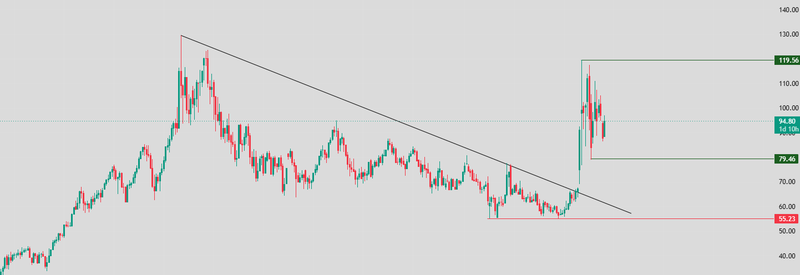
Crude oil is holding around 95 after pulling back from the sharp rally that pushed prices above 110. The move has cooled, but that does not mean the broader picture has turned weak. After such a strong advance, some sideways movement is normal. The market usually needs time to absorb the rally before deciding whether buyers still have enough strength for another push higher.
The main level to watch now is 79.50. This is the area where the current bullish structure needs to hold. As long as oil stays above this level, the recent breakout remains alive, and the current pause can still be seen as consolidation rather than a real reversal.
On the upside, 119.50 is the level buyers need to clear. This was the recent high and remains the main barrier for the market. If oil breaks above it and holds there, momentum could return quickly, with the next target area sitting around 125–130.
Scenarios ahead
If crude continues to trade above 79.50, the market will still look healthy. In that case, the current range may simply be a reset after an aggressive rally, giving buyers time to rebuild before another attempt toward 119.50.
But if oil loses 79.50, the tone will change. That would suggest the rally is losing strength and could open the way for a deeper pullback toward 70–72.
For now, the price still leans positive, mainly because oil has already broken above the long-term downtrend. But the next move depends on whether buyers can defend 79.50. If they can, the bullish structure remains in place. If they cannot, the market may need a deeper correction before trying to recover again.
Source: Trading view