
 Support
 UK inflation holds steady as GBP/USD falls sharply
UK inflation remained at 2.8% in May, below expectations, easing pressure on the Bank of England ahead of its policy meeting. However, core inflation edged higher and sterling fell by 1% against the dollar as the Federal Reserve’s hawkish stance widened policy divergence.
UK CPI remained at 2.8% in May, below the 3.0% forecast, as inflation in food, drink, housing, and household services eased.
Core inflation edged up to 2.6% from 2.5%, suggesting that underlying price pressures remain sticky despite softer headline CPI.
The Bank of England is still expected to keep interest rates unchanged at 3.75%, although analysts continue to see scope for a rate hike in 2026.
UK inflation remains steady, below analysts’ estimates
According to data from the United Kingdom’s Office for National Statistics, the headline inflation rate remained unchanged at 2.8% in May, below analysts’ expectations of a rise to 3.0%. According to an analysis by Trading Economics, the moderation in inflation was driven primarily by easing price pressures in food and non-alcoholic beverages, which slowed from 3.0% in April to 2.2% in May, as well as in housing and household services, which decelerated from 3.0% to 2.7%. By contrast, transport inflation accelerated from 4.5% in April to 6.8% in May.
In turn, the core inflation rate—which excludes the most volatile components, such as energy and unprocessed food—edged up slightly from 2.5% to 2.6%, suggesting that inflationary pressures may be shifting towards the stickier components of the price basket.
The inflation release reduces pressure on the Bank of England (BoE), which is due to announce its monetary policy decision on Thursday, 18 June. Market consensus expects the BoE to keep interest rates unchanged at 3.75%. Nevertheless, analysts still anticipate the possibility of an interest rate increase during 2026.
Following the inflation release, the British pound depreciated sharply against the US dollar by 1.0% to $1.3292. In addition, the decline in GBP/USD was driven by the more restrictive tone adopted by the Federal Reserve, which signalled the possibility of further interest rate increases in order to contain inflationary pressures.
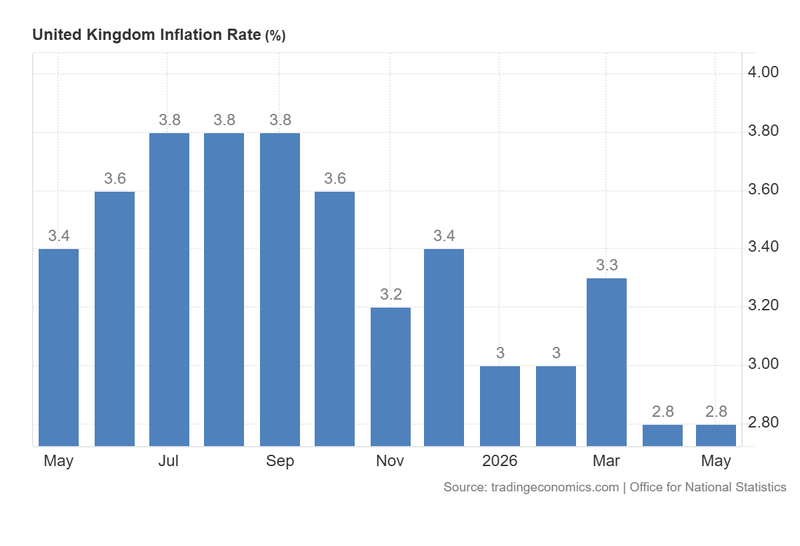
Figure 1. United Kingdom Inflation Rate (2025–2026). Source: Data from the UK Office for National Statistics; figure obtained from Trading Economics.
Technical analysis of the GBP/USD pair
From a technical perspective, the GBP/USD pair continues to trade within the parameters of a well-defined long-term bullish channel. However, the immediate market structure suggests a transition into a consolidative or corrective phase:
- Trend context: While the pair maintains a long-term bullish trajectory defined by a sequence of higher highs and higher lows, it is currently trading below its 50-day, 100-day, and 200-day Simple Moving Averages (SMAs).
- Resistance levels: Should the pair attempt a recovery and break above the immediate resistance at 1.3420—which converges with the 200-day SMA—the next major technical level would be the structural resistance at 1.3650. A decisive daily close above this threshold would signal a formal resumption of the primary bullish trend and a potential extension into higher price territory.
- Support levels: If short-term bearish momentum persists, the next critical floor is identified at 1.3170. This level represents a key convergence zone between short-term structural support and the upper boundary of the broader bullish chart pattern. A breach of the 1.3170 zone would significantly increase the probability of a deeper market correction.
- Momentum indicators: Both the Moving Average Convergence Divergence (MACD) and the Relative Strength Index (RSI) are trading close to neutral territory, reflecting the absence of a dominant market direction. Therefore, it is likely that fundamental factors will carry the greatest weight in shaping future market movements.
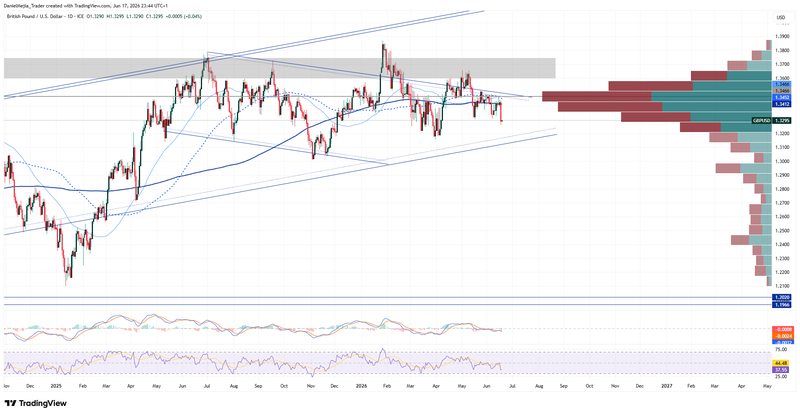
Figure 2. GBP/USD pair (2025–2026). Source: Data from the Intercontinental Exchange (ICE); own analysis conducted via TradingView.


