
 Support
US jobs report weakens fed October hike fades as DXY targets 103
The September US jobs report delivered a much weaker labour-market signal than expected, sharply reducing the case for an October rate hike while leaving the Fed with enough inflation risk to keep December firmly in play.

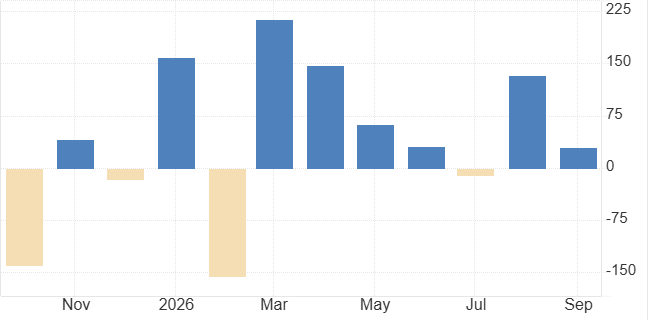
US non-farm payrolls rose by just 29,000 in September.
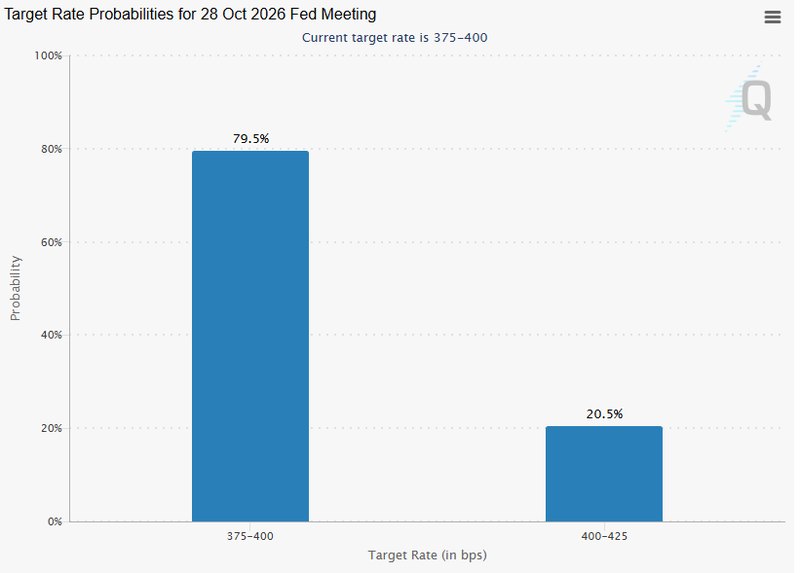
The probability of hike at the October meeting fell to around 18%.
A sustained break above 103 would strengthen the recovery and open the way toward 110–112.
September payrolls exposed a weaker labour market
US non-farm payrolls rose by just 29,000 in September, dramatically below the 90,000 consensus and marking a sharp deterioration from the previously reported 162,000 increases in August. More importantly, the weakness was not confined to one month.
August payrolls were revised down to 133,000, while July was revised from a 21,000 increase to a 10,000 contraction. The revisions removed 60,000 jobs from the previous estimates, leaving average payroll growth over the past three months at only about 51,000.
That changes the interpretation of the report
The US labour market is no longer simply showing slower hiring. It is beginning to show a broader loss of momentum.
Unemployment is rising, but not collapsing
The unemployment rate increased to 4.2% from 4.1%, remaining within the narrow range seen since March. Wage growth also slowed, with average hourly earnings rising 3.0% year on year in September.
Source: U.S. Bureau of Labor Statistics
October is becoming much harder to justify
Markets reacted quickly. The probability of another Fed hike at the October meeting fell to around 18%, from roughly 64% earlier last week, futures were pricing less than a one-in-five chance after the jobs report, while December remained close to 90%.
The shift makes sense
Fed officials had already indicated that there was no need for urgency after the September hike. New York Fed President John Williams said policymakers could use incoming data to gain greater clarity before deciding on another increase, while still seeing the possibility of one further hike later in the year.
Source: CME Group
Bonds and the dollar are taking the message seriously
A weaker payroll report reduces expectations for near-term Fed tightening, putting downward pressure on Treasury yields and easing one of the biggest headwinds for rate-sensitive assets.
That can support equities and gold while reducing some of the dollar's recent strength. But the reaction becomes more complicated if inflation remains elevated.
If oil stays high while employment continues weakening, the Fed could face the uncomfortable combination of slowing growth and persistent inflation. That would make December much more important than October.
The labour market has changed the Fed's timing, not necessarily its destination September's report is a warning that monetary policy is beginning to weigh more heavily on employment.
Payrolls of just 29,000, combined with substantial downward revisions and a 4.2% unemployment rate, make another immediate hike increasingly difficult to justify.
But the inflation problem has not disappeared
For now, markets are effectively pricing a Fed that can wait in October and reassess in December. The next move will therefore depend less on whether the Fed wants to tighten and more on whether inflation gives it a reason to do so.
Technical outlook
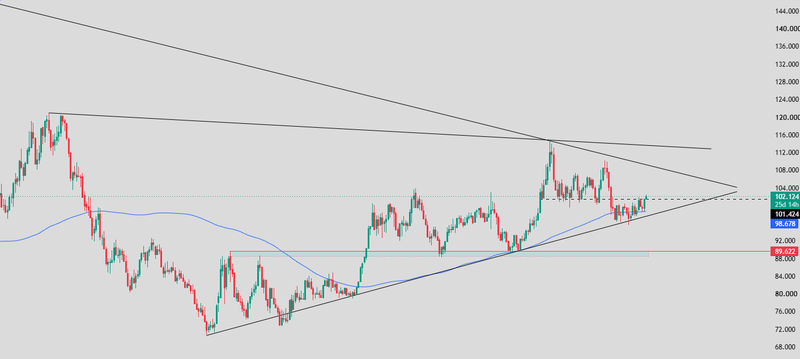
The dollar index is trading around 102.30 after recovering strongly from 89.62. The broader structure has changed, and what was a prolonged downtrend is now developing into a series of higher lows, with price holding above the rising trendline and the 98.68 moving average.
The bigger technical shift came with the break above the long-term descending trendline. DXY pushed toward 105 before pulling back into the 101–102 area, but the correction has remained orderly. Buyers continue to defend the rising trendline, suggesting the move is still a consolidation within the recovery rather than a confirmed reversal.
The 101.40–101.50 area is now the key short-term pivot, while the rising trendline sits around 100–101. Holding this zone keeps the higher-low structure intact. Above, 103–105 remains the main barrier, with previous highs and the longer-term trendline creating a significant resistance zone.
Scenarios ahead
A sustained break above 103–105 would strengthen the recovery and open the way toward 110–112, where longer-term resistance converges.
Failure around 103–105 followed by a break below 101 would weaken the structure. A move below 98.68 would be more important, exposing 93–90 as the next major support area.
For now, the recovery remains constructive above 100–101. But the real test is still ahead... 103–105 will determine whether DXY is building a new medium-term uptrend or simply correcting its longer-term decline.
Source: Trading view


