Support
 Week ahead: US CPI will test the bond market’s relief
Bond buyers have stepped back in, but the relief may not last. Strong Treasury auctions pulled yields away from their recent highs, yet the Federal Reserve’s September minutes left the door open to another rate increase before year-end. Next week’s inflation data could decide whether the bond market has found a floor or whether investors will demand higher yields again.

Services prices remain stubborn despite a slight slowdown in activity.
Markets still must contend with the possibility of a December Fed hike.
French fiscal uncertainty is adding pressure to the euro as energy costs remain elevated.
US CPI, PPI and retail sales will determine whether inflation or weakening demand takes the lead.
What moved markets this week?
Services prices keep the Fed on alert
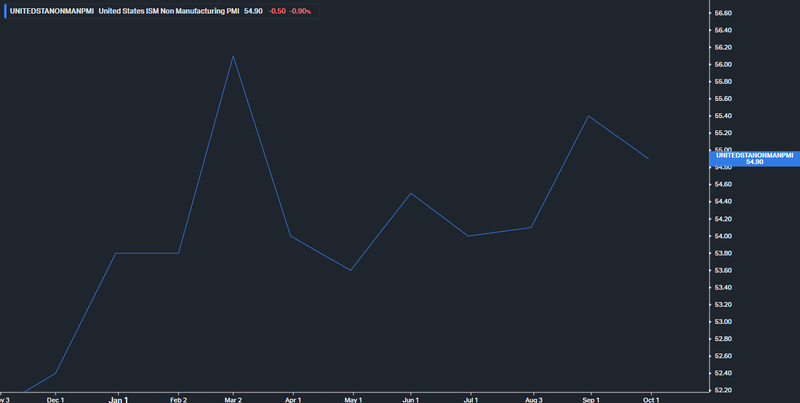
The US ISM Services PMI slipped to 54.9 from 55.4, missing the 55.1 forecast. The headline suggests a modest loss of momentum, but the Prices Index told a different story, climbing to 74, its highest level since 2022.
That is an awkward combination for the Fed. Activity is slowing only gradually, while businesses continue to report significant cost pressures. If those costs are passed on to consumers, the case for keeping interest rates high becomes harder to challenge.
Source: Koyfin
December rate decision is still open
The September FOMC minutes showed that most policymakers saw another rate increase by year-end as appropriate, although they differed over the reasons and timing. Some remained concerned about persistent inflation, while others viewed a further increase as protection against another price shock.
The labour market is losing momentum, but that alone may not be enough to change the Fed’s course. A softer CPI report could give policymakers room to wait. Another upside surprise would make a December hike harder for markets to dismiss.
Treasury demand has improved, but the problem remains
Strong demand at the latest, $39 billion 10-year note and $22 billion 30-year bond auctions helped bring the 10-year yield back to 5.24%, after it touched 5.364%.
The auctions show that investors are willing to buy at higher yields. They do not mean inflation and fiscal concerns have disappeared. If next week’s data points to another rise in consumer prices, the recent retreat in yields could quickly reverse, putting pressure back on equities and other assets sensitive to borrowing costs.
France is becoming a bigger problem for the euro
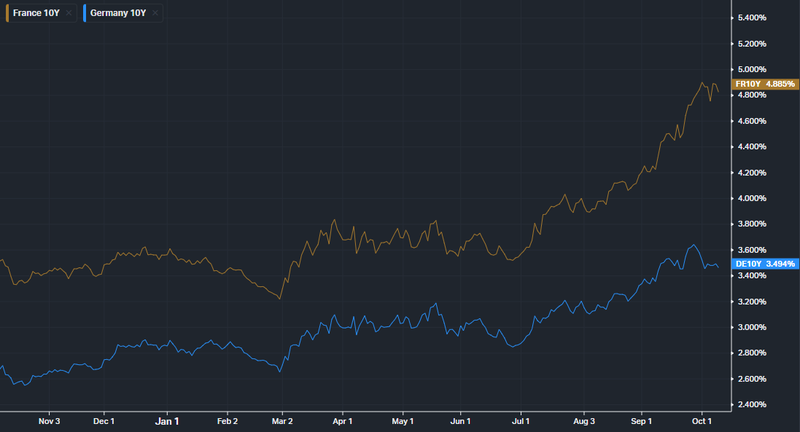
The euro fell to a 17-month low as concerns over French public finances intensified. Debt has reached around 119% of GDP, while the 10-year French German yield spread has widened to approximately 135–140 basis points.
The widening spread reflects investors demanding more compensation to hold French debt. It also makes the government's task harder, as higher borrowing costs complicate efforts to rein in the deficit. For the euro, the combination of fiscal uncertainty, weak demand and elevated energy prices leaves little room for an easy recovery.
Source: Koyfin
Energy remains an unresolved risk
European diesel prices reached a record €2.24 per litre, prompting plans for emergency fuel-stock releases. Donald Trump said the US would not attack Iran before the November midterm elections, while Vladimir Putin expressed support for efforts to end the conflict.
The comments may ease immediate fears of escalation, but they do not remove the risk of supply disruption. If energy prices remain high, inflation could prove more persistent even as economic activity weakens.
What to watch next week
UK data will test sterling
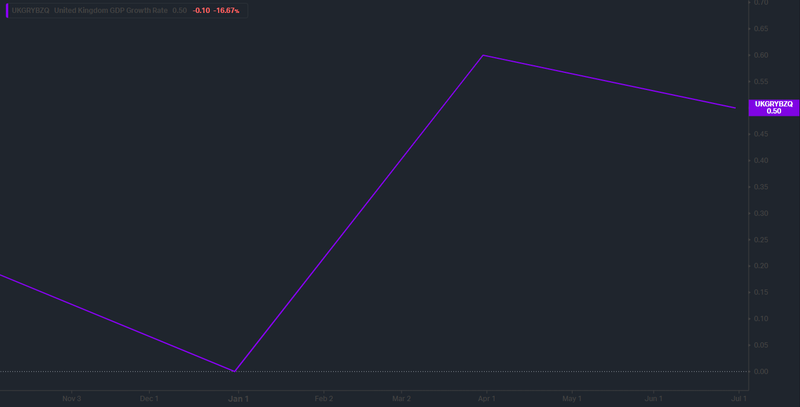
Annual retail-sales growth is expected to improve from 0.5% to 0.8%, while monthly GDP growth is forecast to slow from 0.5% to 0.1%. Stronger sales could lend sterling some support, but the bigger question is whether households are spending more in real terms. If growth weakens while inflation remains stubborn, the Bank of England will have less room to ease policy without risking another rise in prices.
Source: Koyfin
Australia’s labour market and RBA minutes
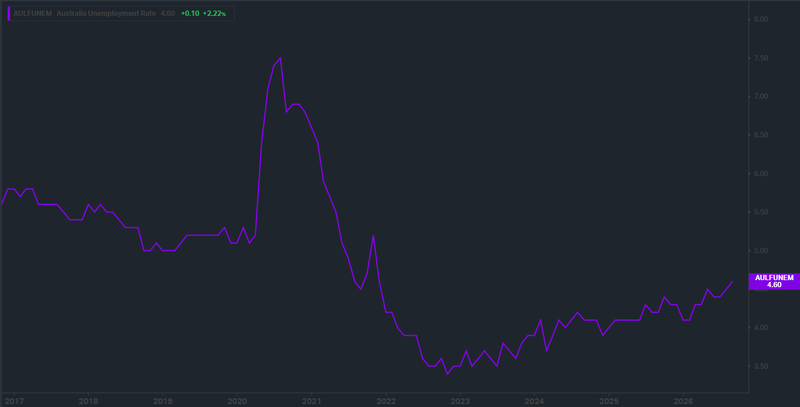
The RBA minutes should provide more detail on the thinking behind the reported increase in the cash rate to 4.60%. Unemployment is expected to remain at 4.6%. A firm labour market would keep the possibility of further tightening alive, while signs of deterioration would strengthen the argument for holding rates steady.
Source: Koyfin
US CPI will decide whether yields can stay lower
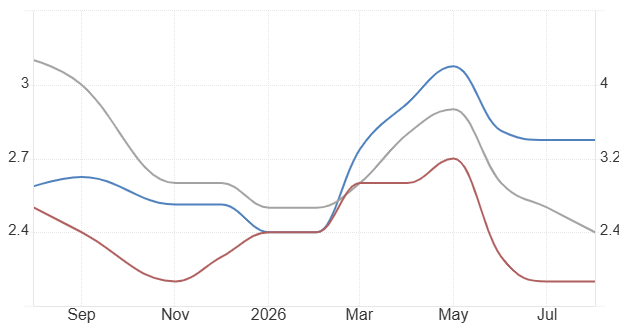
Headline inflation is forecast to rise from 3.4% to 3.6% annually, with monthly CPI accelerating from 0.4% to 0.6%. Core CPI is expected to ease to 0.2% monthly, although its annual rate is forecast to edge up from 2.4% to 2.5%.
The composition matters more than the headline alone. If energy drives the increase while monthly core inflation cools, the Fed may be able to look through part of the move. If core prices also accelerate, investors will have more reason to price in another rate increase. That would put Treasury yields and the dollar back under upward pressure.
Source: Trading economic
PPI and retail sales will complete the picture
Producer prices are expected to rise 0.5% monthly, up from 0.4%, while retail-sales growth is forecast to slow from 1.2% to 0.1% monthly and from 6.0% to 5.2% annually.
Higher producer prices would suggest that cost pressures have not faded. Slower sales would point to consumers becoming more cautious. If both trends appear together, the Fed will face a difficult trade-off, inflation remains too firm to ignore, but demand may already be weakening under the weight of higher prices and borrowing costs.
What could markets do next?
A stronger CPI and PPI would put the Treasury recovery at risk and lend support to the dollar. Softer underlying inflation, particularly alongside weaker retail sales, could help yields stabilise by reducing pressure on the Fed to tighten again.
The euro faces its own obstacles in France’s fiscal position, while any sustained fall in energy prices would offer some relief to the European inflation outlook.
The bond market has recovered some ground, but it has not yet resolved the question that drove yields higher in the first place. If inflation is still rising while growth slows, the Fed may have little room to ease, and bond buyers may need higher yields to return in force.
Gold – technical outlook
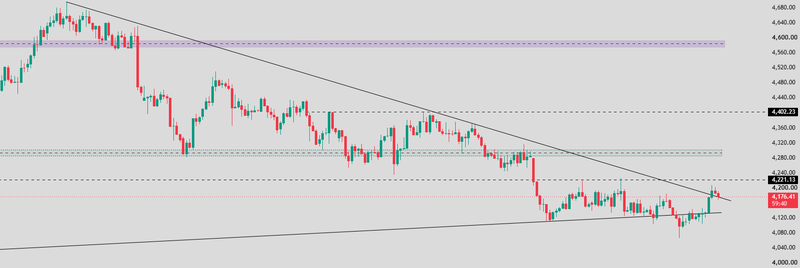
Gold is trading around $4,176, testing the descending trendline after rebounding from the $4,080–$4,100 support area. The broader structure remains bearish, with lower highs still intact.
A break above $4,221 could open the way toward $4,280–$4,300. However, rejection near current levels would leave gold vulnerable to a retest of $4,120 and $4,080. A sustained break below $4,080 would strengthen the downside case, while reclaiming $4,300 would signal a more meaningful recovery.
Source: Trading view
Crude oil – technical outlook
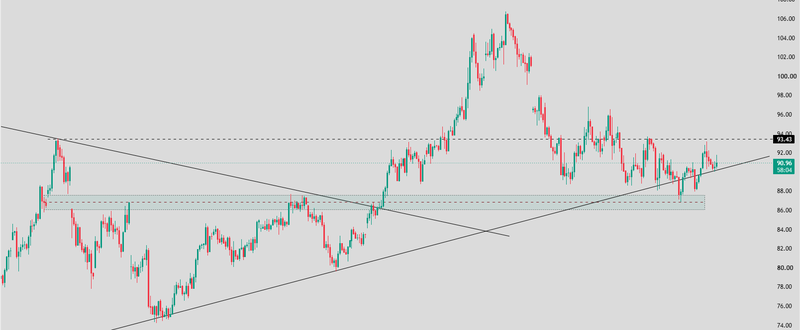
WTI is trading around $90.96, consolidating above the rising trendline after retreating sharply from the $106 peak. The broader recovery has lost momentum, but the short-term structure remains constructive while the trendline and $86–$88 support zone hold.
A break above $93.43 could open the way toward $96 and then $100. Rejection below $93.43 followed by a break beneath $89 and the $86–$88 support zone would weaken the structure, exposing $84–$80.
Source: Tradingview
EUR/USD – technical outlook
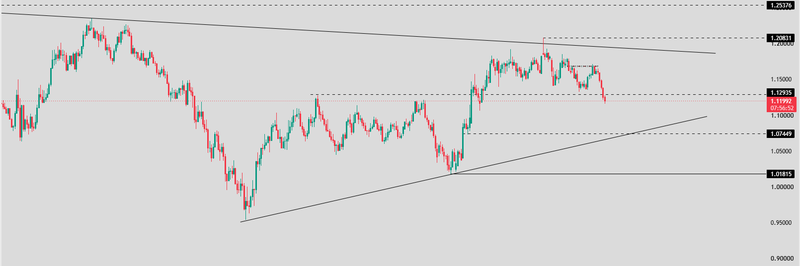
EUR/USD is trading around 1.1199, after a sharp rejection from the 1.17–1.18 region. The pair has broken below the 1.12935 support level, weakening the short-term structure and shifting momentum in favour of sellers.
If price remains below 1.12935, the next important support is 1.1070–1.1100, near the rising trendline. A break below that area would expose 1.07449
Reclaiming 1.12935 would be the first sign of stabilisation. A stronger recovery above 1.15 would improve momentum and reopen the path toward 1.17–1.18.
Source: Tradingview