Support
A guide to forex carry trades and interest rates
In a forex carry trade, traders use a low-yielding currency to fund a position in a higher-yielding currency. The aim is to earn the rate difference and potentially benefit from favourable currency movement.
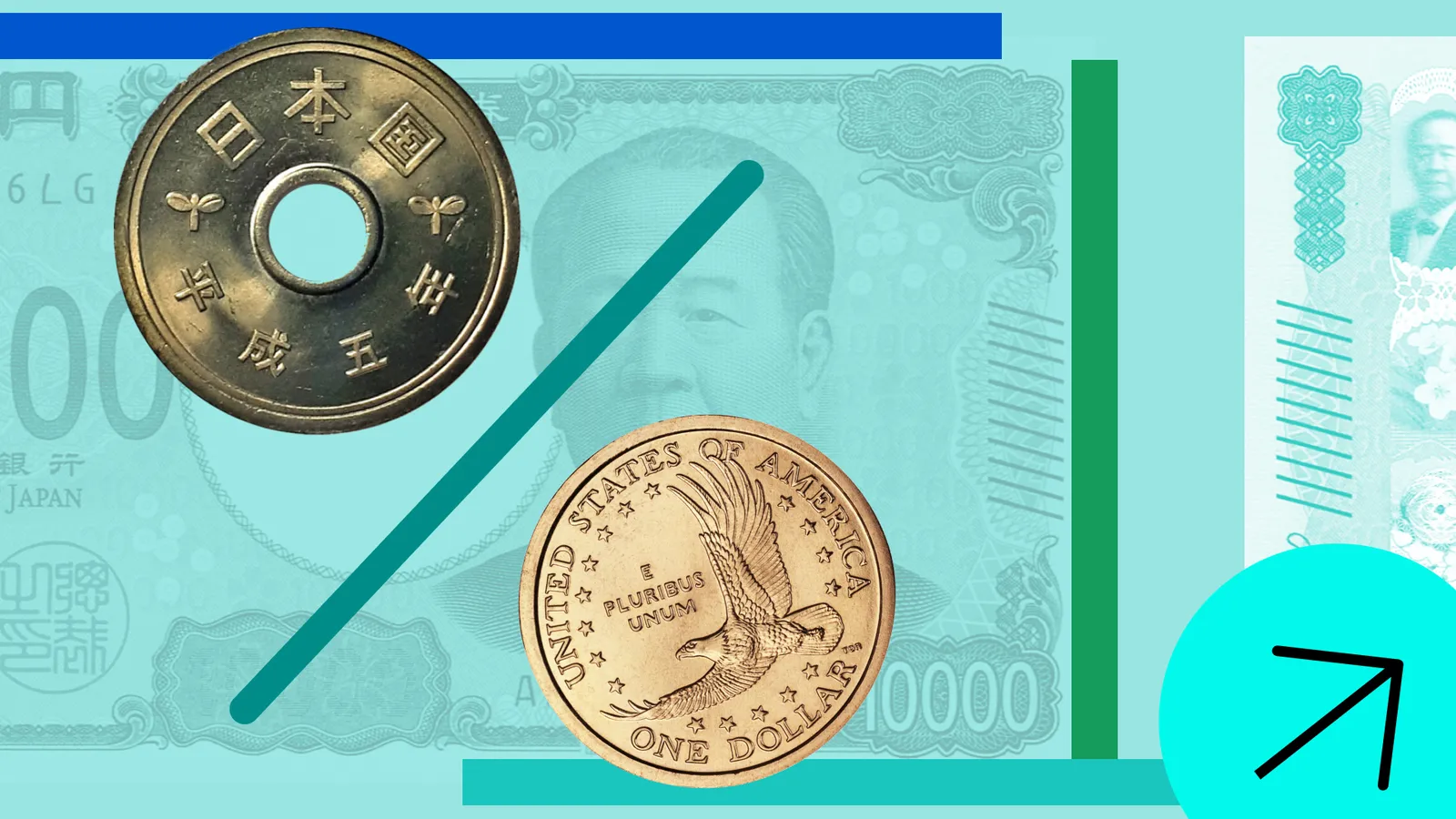
Carry trades are based on the interest rate gap between currency pairs.
Swap and rollover rates are key to how the strategy works.
Traders usually fund positions with low-yielding currencies to buy higher-yielding ones.
What is a forex carry trade?
A forex carry trade is a strategy built around interest rate differences between currencies.
In simple terms, a trader sells or borrows a currency with a low interest rate and buys a currency with a higher interest rate. If the trade is held overnight, the trader may earn the interest rate difference through rollover or swap payments, depending on the broker’s pricing and the currency pair.
For example, if one country has very low interest rates and another has much higher rates, traders may look to buy the higher-yielding currency against the lower-yielding one. The idea is to collect income while holding the position.
But the carry trade is not only about interest.
The exchange rate still matters. If the high-yielding currency falls sharply, the loss from the price move can be much larger than the income earned from the interest rate difference.
Borrowing low-yield currencies to buy high-yield currencies
The classic carry trade starts with a funding currency.
This is usually a currency with low interest rates. For many years, the Japanese yen and Swiss franc were common funding currencies because their central banks kept rates low for long periods.
The trader then buys a currency with a higher interest rate.
The appeal is clear: the lower-yield currency costs less to hold, while the higher-yield currency may pay more. If the exchange rate stays stable, the trader may collect positive carry over time.
This strategy tends to attract more attention when markets are calm. When investors feel comfortable taking risks, they are more willing to borrow low-yield currencies and move into higher-yielding ones.
How interest rate differentials create expected returns
The interest rate differential is the reason the carry trade exists.
If one currency has a 1% interest rate and another has a 5% rate, the gap is four percentage points. A trader who is long the higher-yielding currency and short the lower-yielding one may expect to benefit from that spread.
But the actual return is not always the same as the headline rate gap.
Markets already price interest rate expectations into currency pairs. Brokers also apply their own swap rates, and these can differ from central bank rates. Liquidity, holidays, weekends and market expectations can all affect the final rollover credit or debit.
The role of forex rollover and swap rates
Rollover is what happens when a forex position is held overnight.
Because forex is traded in pairs, every position involves two currencies. One is being bought, and the other is being sold. Each currency has an interest rate behind it, so holding the trade overnight creates a financing adjustment.
That adjustment is the swap.
If the trader is long the higher-yielding currency and short the lower-yielding one, the swap may be positive. If the trader is on the wrong side of the rate difference, the swap may be negative.
The swap shown on the trading platform is what matters in practice, not only the central bank rate. A pair can look attractive on paper, but the broker’s swap rate, spread, market expectations or rollover rules can change the real return.
Why do interest rates move exchange rates in carry trades?
Interest rates influence currencies because they affect where money wants to go.
When one country offers higher rates, global investors may be more willing to hold that currency. Higher yields can attract capital, especially when the economy looks stable and the central bank is trusted.
That is why high-yielding currencies can strengthen during calm markets, but higher rates do not always mean a stronger currency.
Sometimes rates are high because inflation is high, the economy is unstable, or investors demand extra compensation for risk. In that case, the high yield may be a warning sign, not an opportunity.
Exchange rate appreciation and depreciation effects
A carry trade performs best when the higher-yielding currency appreciates or at least does not fall. If the trader earns positive swap and the exchange rate moves in their favour, the trade can benefit from both income and price movement.
The problem starts when the exchange rate moves against the position.
A trader might collect swap for several days, but one sharp currency move can wipe out that income quickly. This is even more important when leverage is used, because small exchange rate moves can have a much larger impact on the trading account.
What are the risks involved with currency carry trades?
The biggest risk in a carry trade is that the currency move goes the wrong way.
Interest income usually builds slowly, currency losses can arrive quickly.
There is also central bank risk. If the central bank behind the high-yielding currency starts cutting rates, the carry advantage can shrink. If the funding currency’s central bank raises rates, the trade becomes more expensive to hold.
Carry trades usually do well when investors are comfortable taking risk. But when markets become nervous, high-yielding currencies can come under pressure as traders reduce exposure.
Unwinding risk during market stress and flight to safety
Carry trades can unwind quickly when markets move into risk-off mode.
During calm periods, many traders may be positioned the same way: short the low-yielding funding currency and long the higher-yielding currency. That can work for a while because trade is supported by yield and confidence.
Traders rush to close the trade. They sell the higher-yielding currency and buy back the funding currency. That can push the funding currency sharply higher and the higher-yielding currency lower.
This is why currencies like the Japanese yen have often strengthened during periods of market stress. It is not only because investors see them as safe. It is also because traders are forced to unwind old carry positions.
Monitoring central bank events and rebalancing
Carry trades need regular monitoring because the interest rate story can change quickly.
A trader may enter a carry trade because one central bank is holding rates high while another is keeping policy loose. But that advantage can shrink if the high-yielding central bank starts talking about rate cuts, or if the funding currency’s central bank becomes more hawkish.
For example, a long USD/JPY carry trade may look attractive while US rates are high and Japanese rates remain low. But if the Federal Reserve signals future rate cuts, or the Bank of Japan hints at tighter policy, the carry advantage can narrow. At the same time, the yen may strengthen if traders begin unwinding old carry positions.
The same idea applies to USD/CHF. If the Swiss National Bank becomes less dovish, or if US rate expectations fall, the positive carry may become less attractive. The trade may still work, but the original reason for holding it becomes weaker.
A trader does not have to wait until the trade fully breaks down. They may reduce position size before a major central bank decision, tighten stops if volatility rises, or close part of the trade if the rate differential is no longer improving.
Example carry trade approach and trade management
A carry trade should start with the rate difference, but it should not end there.
A trader may first look for a currency pair with positive swap. For example, USD/JPY and USD/CHF can both be attractive carry trade pairs when US interest rates are higher than Japanese or Swiss rates. In both cases, the trader may earn positive carry by holding long dollar exposure against a lower-yielding funding currency.
USD/JPY can offer strong carry, but it is often much more volatile. The pair is highly sensitive to Bank of Japan policy, Japanese intervention risk, US Treasury yields and global risk sentiment. That means the swap income may look attractive, but a sudden yen rally can quickly wipe out weeks of carry.
USD/CHF can also offer positive carry, but it usually behaves more defensively. The Swiss franc is a safe-haven currency, and the pair may move less aggressively than USD/JPY in normal conditions. That can make USD/CHF feel more stable for carry traders, although it still carries risk during market stress or when the Swiss National Bank shifts policy.
The question is not only which pair pays positive swap. The better question is which pair offers a better balance between carry income and price risk. USD/JPY may offer more movement and more opportunity, but also more danger. USD/CHF may offer a smoother carry profile, but traders still need to watch risk sentiment, central bank policy and key technical levels.
Calculating potential swap income versus FX risk
Before entering a carry trade, traders should compare the expected swap income with the possible exchange rate loss.
A trader can check the daily swap on the platform, estimate the holding period, then compare that expected income with the distance to the stop-loss. If the trade may earn a small amount in swap but risks a much larger currency loss, the trader needs to be honest about that balance.
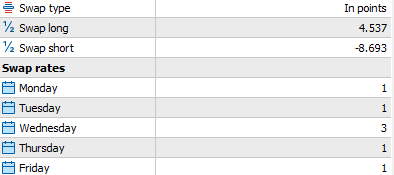
Source: Meta trader 5
Entry, position sizing and stop-loss planning
Position size matters more than the swap income.
Because carry trades can be held for days, weeks or months, traders may be tempted to use larger positions to increase the daily rollover credit. That can be dangerous. The larger the position, the more damage a normal currency move can do.
Carry trade strategy summary and best practices
A forex carry trade can work well when three things line up: a positive interest rate spread, a stable or strengthening high-yield currency, and calm market conditions.
But it should never be treated as easy income.
The same trade that looks comfortable during low volatility can become painful when markets turn defensive. Exchange rate losses, central bank surprises and sudden carry unwind can all overwhelm the interest income.
The best carry trades are not built on yield alone. They are built on the reason behind the yield, the direction of the currency, and the trader’s ability to manage risk.
Who uses carry trades?
Carry trades are used by different types of market participants, but they do not all use them in the same way.
Hedge funds often use carry trades on a large scale. They may borrow in low-yielding currencies and build positions in higher-yielding currencies when volatility is low and global risk appetite is strong. For them, carry is usually part of a broader macro strategy that also includes central bank expectations, bond yields and market sentiment.
Retail forex traders also use carry trades, especially because forex platforms make it easy to hold positions overnight. The attraction is simple: a trader may earn positive swap while holding the trade. But retail traders need to be especially careful because leverage can make small currency moves much more damaging than the daily carry income.
Institutional investors may use carry trade as part of portfolio diversification. Pension funds, asset managers and global investors often look at currency exposure alongside bonds, equities and other assets. For them, carry can be one source of return, but it is usually managed with strict risk controls.
FAQs
What is an example of a carry trade?
A simple example of a carry trade is buying USD/JPY when US interest rates are higher than Japanese rates. In this case, the trader is long the US dollar and short the Japanese yen. If the broker offers positive swap, the trader may earn rollover income while holding the position, if the exchange rate does not move strongly against them.
What is the most popular carry trade?
The most popular carry trades are often linked to USD/JPY and USD/CHF when US interest rates are higher than Japanese or Swiss rates. In both cases, traders may buy the US dollar and sell the lower-yielding currency to earn positive swap. USD/JPY is usually more active and more volatile, while USD/CHF is often seen as a steadier carry trade because the Swiss franc tends to move more defensively.
What is a reverse carry trade?
A reverse carry trade is the opposite of a normal carry trade. Instead of buying the higher-yielding currency and selling the lower-yielding one, the trader takes a position that may have negative swap. This can happen when a trader expects the low-yielding currency to strengthen enough to offset the cost of holding the trade.
What is carry trade in foreign currencies?
A carry trade in foreign currencies is a forex strategy based on interest rate differences between two currencies. Traders aim to earn positive rollover by buying a higher-yielding currency and selling a lower-yielding one. The strategy can generate income in stable markets, but exchange rate losses can quickly outweigh the swap income.
What is the Japan carry trade?
The Japan carry trade usually refers to borrowing or selling Japanese yen to fund investments in higher-yielding currencies or assets. It became popular because Japanese interest rates stayed very low for many years. When global markets are calm, this trade can attract strong demand. When risk sentiment turns negative, it can unwind quickly.