Support
 Difference between internal and external structure in ICT
Internal and External Structure are two of the most important concepts in ICT trading because they explain where price is moving now and where it is trying to go next. Many traders learn Break of Structure (BOS), Fair Value Gaps, and Order Blocks without understanding the framework that connects them. Internal and External Structure provide that framework.
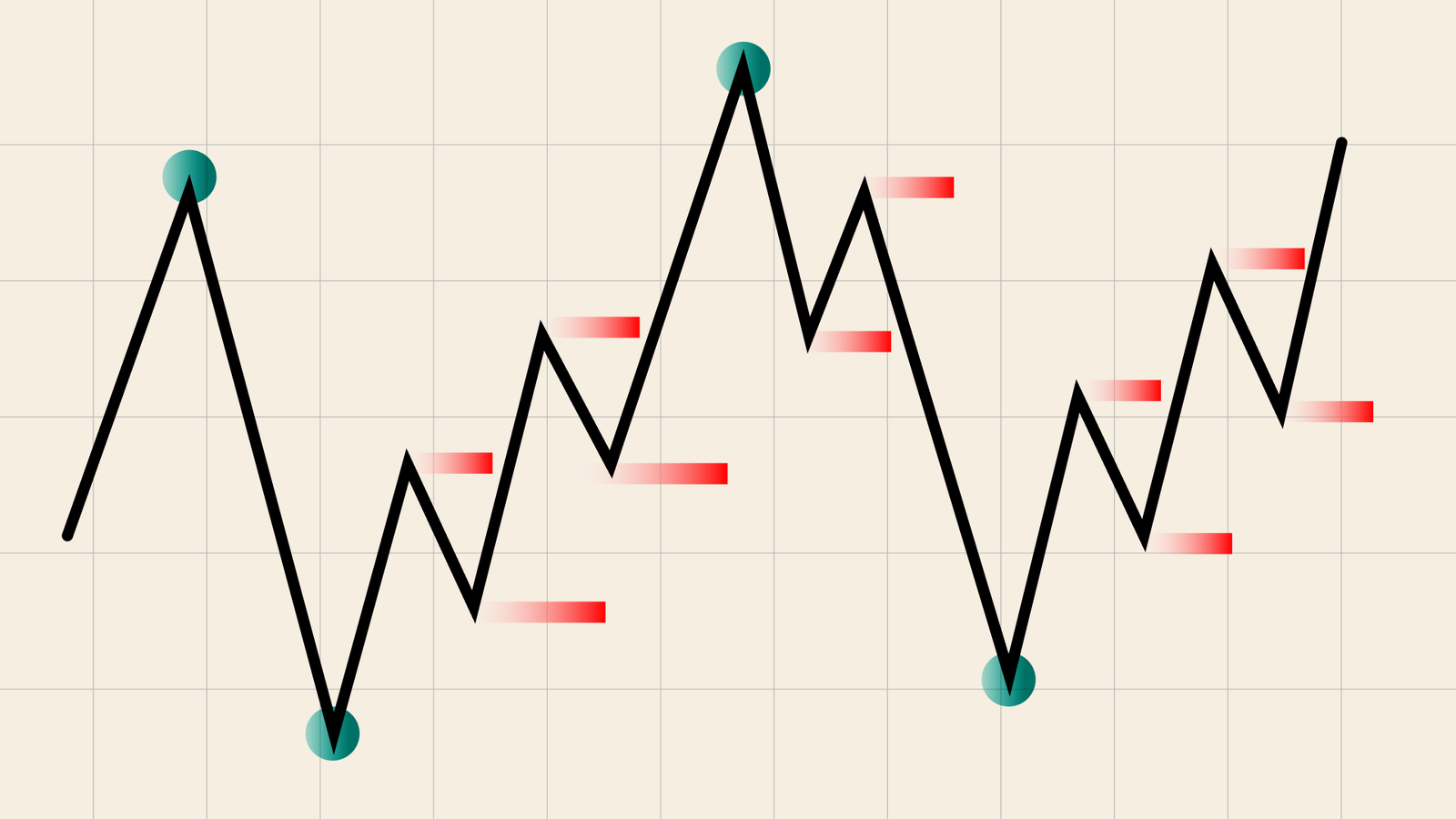
External structure represents the larger swing highs and lows that attract major liquidity.
Internal structure consists of the smaller swings that develop inside a dealing range.
Price often moves from Internal Range Liquidity (IRL) toward External Range Liquidity (ERL), or the opposite, depending on market context.
Higher-timeframe structure usually carries more weight than lower-timeframe structure.
The strongest ICT setups appear when internal structure aligns with external liquidity targets.
Internal vs external structure
At first glance, every swing on a chart can seem equally important. ICT separates them by asking a different question: Is this swing changing the larger trend, or is it simply part of the current range?
A small pullback inside an uptrend may matter for entries, but it does not necessarily change the bigger picture. A major swing high or swing low, however, often becomes a destination for liquidity and can shift the market's overall direction.
What internal structure means
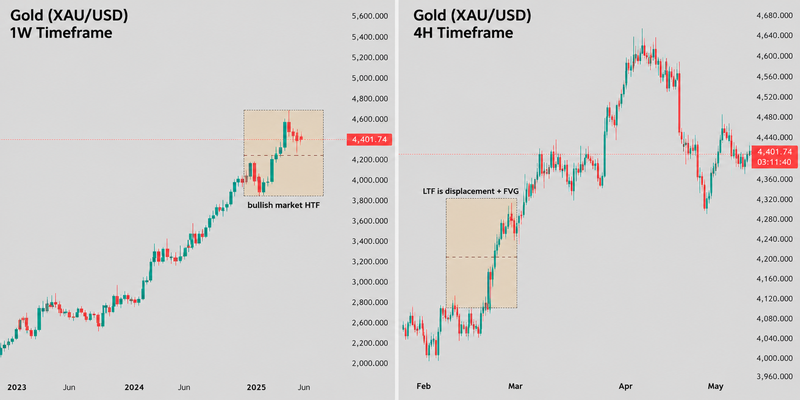
Internal structure refers to the smaller swings that form inside a larger price range. These movements create the rhythm of the market as price retraces, pauses, and continues toward a larger objective.
Imagine a bullish market making higher highs and higher lows on the four-hour chart. On the fifteen-minute chart, price may create several smaller pullbacks before continuing higher. Those smaller highs and lows make up the internal structure.
These internal swings are important because they often create Fair Value Gaps, short-term liquidity pools, and entry opportunities. They help traders time positions without losing sight of the larger objective.
The mistake many traders make is treating every internal break as a complete trend reversal. Internal structure often changes several times before the external trend changes at all.
Source: Trading view
What external structure means
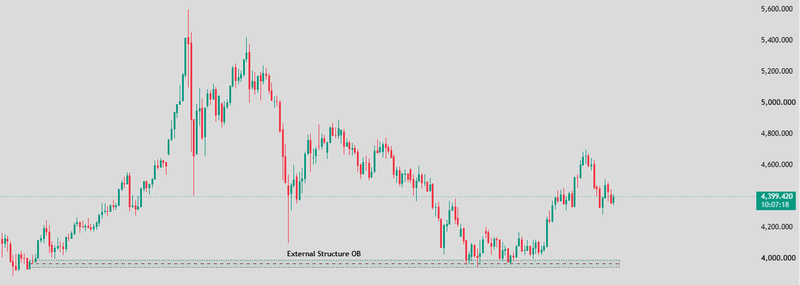
External structure refers to the major swing highs and swing lows that define the broader market direction. These are the levels that higher-timeframe traders usually pay the most attention to because they often contain the largest liquidity pools.
For example, a daily swing high that has held for several weeks becomes a much more significant objective than a five-minute swing high created an hour ago. If price eventually reaches that daily high, the market is interacting with external liquidity rather than simply moving inside its current range.
Source: Trading view
Internal vs external structure vs IRL and ERL
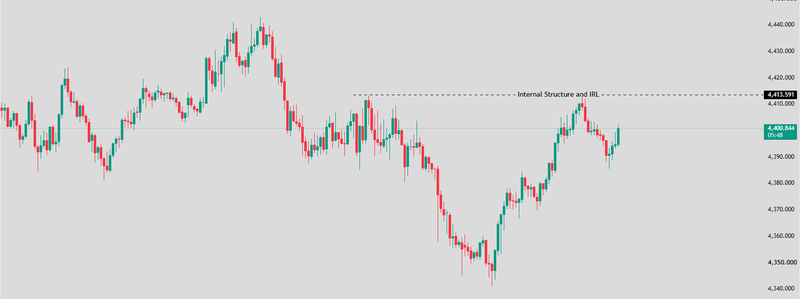
Internal and External Structure become much clearer once IRL and ERL are added. Internal Range Liquidity (IRL) refers to liquidity sitting inside the current dealing range. This includes smaller swing highs, swing lows, internal equal highs and lows, and other liquidity pockets created before price reaches the edge of the range.
Source: Trading view
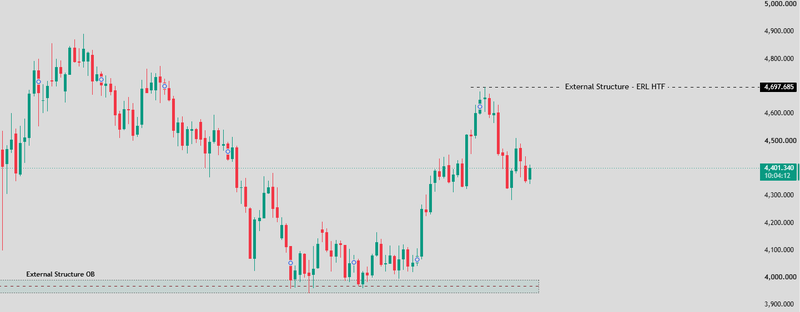
External Range Liquidity (ERL)
Sits outside the dealing range. These are the larger highs and lows that often become the market's next major objective. Think of IRL as the stepping stones inside the range, while ERL represents the destination waiting beyond the boundary.
A common ICT narrative is that price consumes internal liquidity first before expanding toward external liquidity. Once that larger objective is reached, the process can begin again in the opposite direction.
Source: Trading view
Why price moves: liquidity, dealing range, and draw on liquidity
One of the biggest differences between ICT and traditional technical analysis is that ICT explains price movement through liquidity.
Instead of assuming the market moves randomly between support and resistance, ICT views price as constantly searching for available orders. This idea becomes easier to understand once you know what a dealing range is.
What is the ICT dealing range?
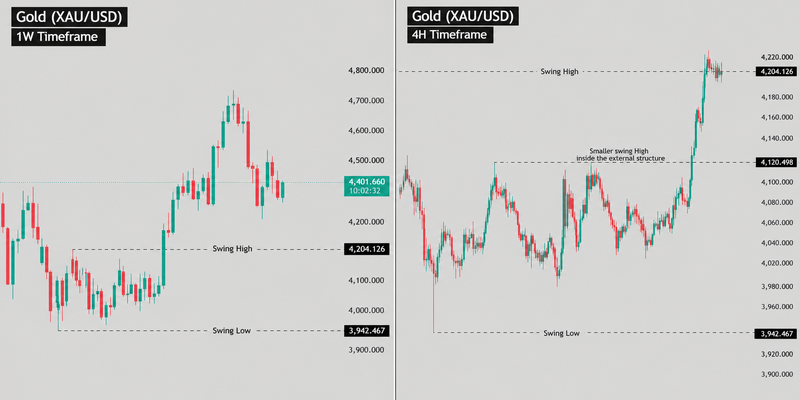
A dealing range is the price space between a swing high and a swing low. These two extremes create boundaries that define where internal and external liquidity exists.
Inside that range, smaller swings continue to form as buyers and sellers compete. Outside the range sit the larger liquidity targets that often attract the next expansion.
The dealing range is not fixed forever. Once price breaks beyond one of its major boundaries and establishes a new external swing, a new dealing range begins to develop.
Source: Trading view
How price moves to seek and take liquidity
Price rarely travels in a perfectly straight line because liquidity is rarely distributed evenly across the chart.
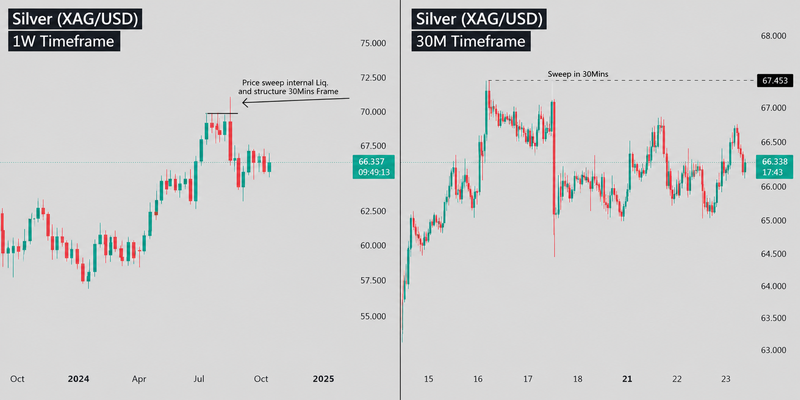
As the market moves, it often pauses around internal liquidity, consumes smaller highs or lows, and then continues toward larger external objectives. This explains why many strong trends still contain multiple pullbacks before reaching their final target.
For example, if a bullish market is targeting last week's high, it may first sweep several internal lows, fill nearby Fair Value Gaps, and create new internal structure before finally reaching that higher-timeframe liquidity pool.
Source: Trading view
IRL-to-ERL and ERL-to-IRL narrative
One of the most useful ICT narratives is understanding whether price is moving from IRL to ERL or from ERL back into IRL.
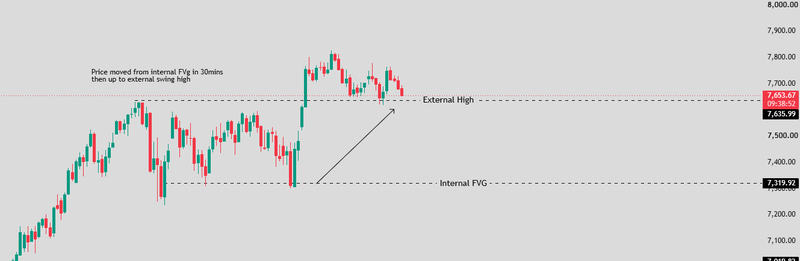
IRL-to-ERL move usually happens when price has finished interacting with internal liquidity and begins expanding toward a larger external objective. These moves often show stronger displacement because the market has already consumed much of the nearby liquidity.
Source: Trading view
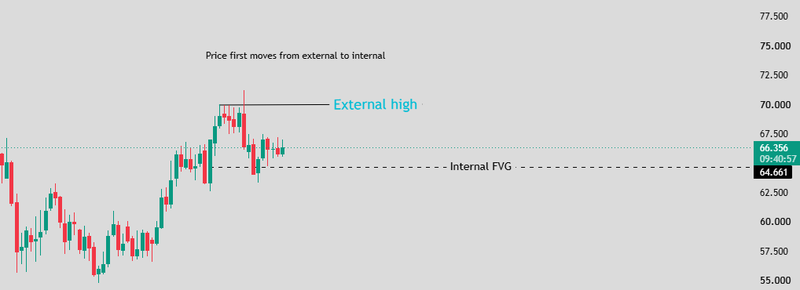
ERL-to-IRL
Move often appears after external liquidity has already been taken. Once a major high or low is swept, price may return into the dealing range, filling imbalances and interacting with internal liquidity before the next larger move develops.
Source: Trading view
Risks of trading internal and external structure
Internal and External Structure can improve market bias, but they are often misunderstood. The biggest mistake is assuming that every internal break means the external trend has changed. In ICT, internal movement often creates entries, while external structure usually defines the larger objective.
Confusing an internal break with an external reversal
One of the most common mistakes is treating a lower-timeframe Break of Structure (BOS) or Change of Character (CHOCH) as proof that the higher-timeframe trend has reversed. Price can break several internal swings while still moving toward the same external liquidity target.
Trading against the higher-timeframe objective
A strong internal bullish setup can fail if the daily chart is still drawing toward external sell-side liquidity. This is why traders build their bias from higher timeframes first, then use internal structure to time the entry rather than to decide the market's overall direction.
Misidentifying the dealing range
The dealing range should be built from meaningful swing highs and lows, not every small reaction. If the range is drawn incorrectly, IRL and ERL levels become unreliable, making it easier to chase moves that have already completed their objective.
Entering before liquidity is taken
Price often consumes internal liquidity before expanding toward external liquidity. Entering too early can place a trader directly into the liquidity sweep instead of the move that follows it. Waiting for displacement and confirmation usually produces cleaner entries.
Ignoring killzone timing
Internal structure can form throughout the day, but the strongest moves toward external liquidity often develop during the London and New York Killzones. Taking trades during low-liquidity hours increases the chance of slow, choppy price action and false structure breaks.
Forcing structure onto every chart
Not every swing is institutional structure. Traders sometimes mark every small high and low as IRL or assume every larger swing is ERL. The better approach is to focus on the clearest dealing range, the strongest liquidity targets, and the market's current narrative rather than forcing labels onto every movement.
FAQs
What is internal structure in ICT?
Internal structure refers to the smaller swing highs and swing lows that form inside a larger dealing range. It helps traders identify short-term liquidity, Fair Value Gaps, and execution opportunities without changing the broader market bias.
What is external structure in ICT?
External structure is made up of the major swing highs and swing lows that define the higher-timeframe trend. These levels usually contain larger liquidity pools and often become the market's primary targets.
What is the difference between internal and external structure?
Internal structure shows how price moves within a dealing range, while external structure defines the larger destination outside that range. Internal swings help with entries, whereas external swings are more important for overall bias and liquidity targets.
What is IRL and ERL in ICT?
IRL stands for Internal Range Liquidity, which is the liquidity inside the current dealing range. ERL stands for External Range Liquidity, which sits beyond the range boundaries at major swing highs and lows.
What is a dealing range in ICT?
A dealing range is the price area between a meaningful swing high and swing low. ICT traders use it to map where internal liquidity exists and where external liquidity is waiting beyond the range.