Support
What is SpaceX and who owns it?
SpaceX is a pioneering American aerospace, telecommunications, and artificial intelligence company that designs, manufactures, and launches advanced rockets and spacecraft. It was founded by tech entrepreneur Elon Musk in 2002.
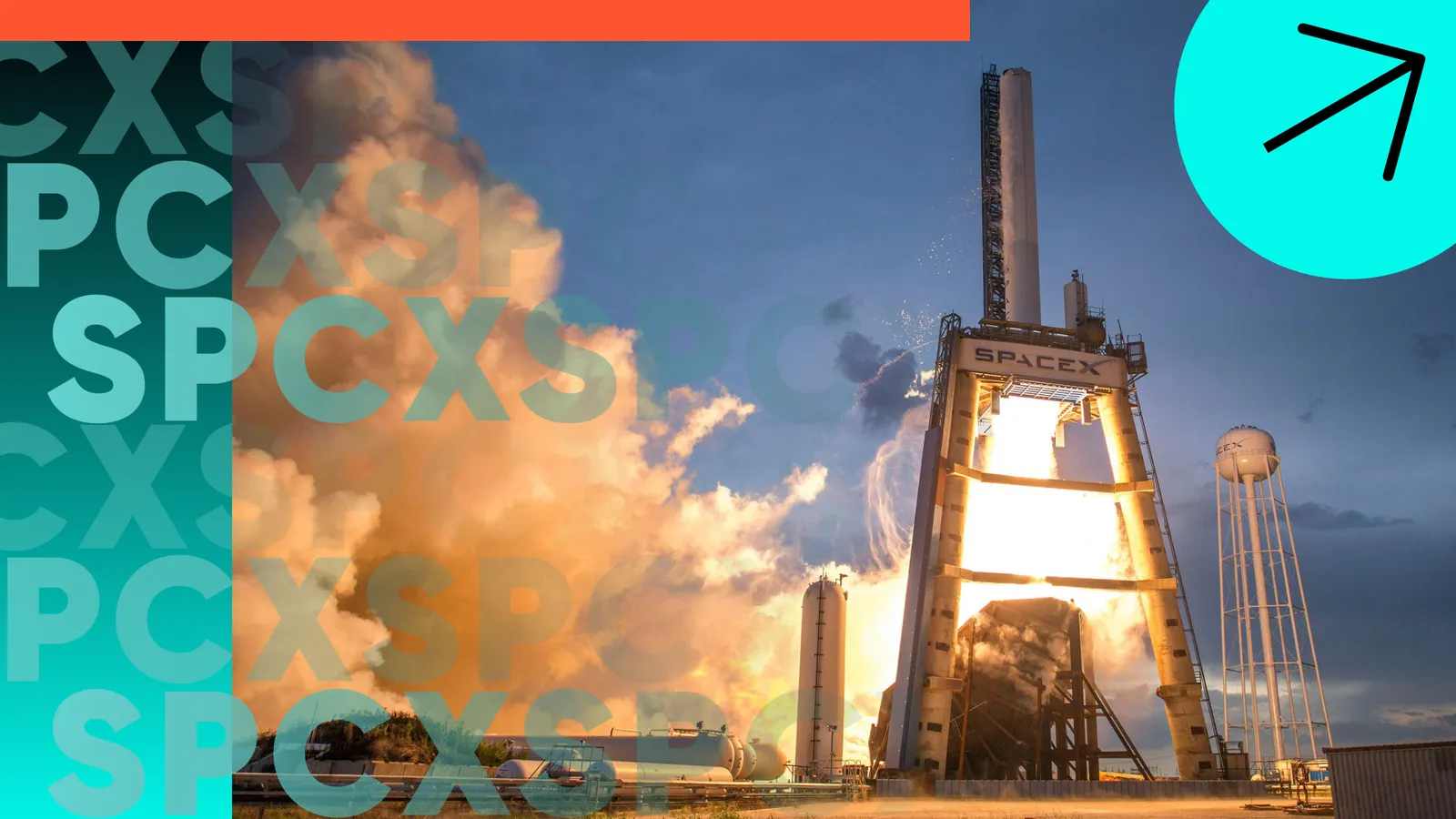
SpaceX, officially Space Exploration Technologies Corp., is an American aerospace company founded by Elon Musk.
SpaceX expanded beyond rockets. Starlink became a major satellite internet network.
Elon Musk became the first person in history to reach a net worth of $1 trillion.
Traders using Equiti can trade SpaceX through CFDs.
What is SpaceX and who owns it?
SpaceX, officially Space Exploration Technologies Corp., is an American aerospace company founded by Elon Musk.
The company designs, builds and launches rockets and spacecraft. Its main businesses include commercial rocket launches, NASA missions, defense-related contracts, satellite internet through Starlink, and the development of Starship, the large rocket system designed for deep-space missions.
It is not only an aerospace company. It is also a technology infrastructure company. Starlink connects users to the internet through satellites. Falcon rockets carry satellites and cargo into orbit. Dragon has carried astronauts and cargo to the International Space Station. Starship is designed to support heavier missions, including future trips to the Moon and Mars.
SpaceX was founded by Elon Musk, and he remains the central figure behind the company.
Before its public-market debut, SpaceX was privately held, meaning ordinary investors could not simply buy its shares on a normal stock exchange. Ownership was mainly held by Elon Musk, employees, early investors, venture capital firms and private-market shareholders.
Short history of SpaceX
SpaceX was created in 2002 with a goal that sounded unrealistic at the time: reduce the cost of space travel and eventually make life multiplanetary.
The early years were difficult. The company’s first rocket, Falcon 1, failed several times before finally reaching orbit in 2008. That success was a turning point. Falcon 1 became the first privately developed liquid-fuel rocket to reach Earth orbit.
The company developed Falcon 9, a reusable rocket that became the backbone of its launch business. It also built Dragon, the spacecraft that later became the first private spacecraft to visit the International Space Station.
Then came one of the company’s biggest breakthroughs: landing and reusing rocket boosters.
That changed the economics of space launch. Instead of throwing away expensive rocket stages after each mission, SpaceX proved that major parts of a rocket could return, land and fly again. This helped reduce costs and gave the company a major advantage in the launch market.
Over time, SpaceX expanded beyond rockets. Starlink became a major satellite internet network, serving households, businesses, governments and remote regions. Starship then became the company’s next major project, designed to carry heavier payloads and support future missions beyond Earth orbit.
What is the goal of SpaceX?
The long-term goal of SpaceX is simple, but extremely ambitious: make humanity multiplanetary.
In practical terms, that means building the technology needed to send people and cargo beyond Earth, especially to Mars. But the company’s near-term goals are more commercial and infrastructure focused.
SpaceX wants to lower launch costs, increase launch frequency, expand Starlink’s satellite internet network, win more government and commercial contracts, and prove that Starship can become a fully reusable launch system.
This is where the investment story becomes more serious.
The Mars vision attracts attention, but Starlink and launch services are what make the company financially important today. Investors are not only buying a dream about space colonization. They are also looking at satellite broadband, recurring revenue, defense demand, launch reliability and the possibility that SpaceX becomes a major infrastructure platform.
What are SpaceX’s biggest achievements?
SpaceX has achieved several milestones that changed how investors, governments and competitors think about the space industry.
The first major achievement was Falcon 1 reaching orbit in 2008. It proved that a private company could build and launch an orbital rocket successfully.
Another major milestone came when Dragon became the first private spacecraft to visit the International Space Station. That helped SpaceX move from a risky startup story into a serious NASA partner.
The reusable Falcon 9 booster was another turning point. Landing an orbital-class rocket booster and using it again changed the cost structure of space launch. It also helped SpaceX build a strong reputation for frequent and reliable missions.
Crew Dragon was also important because it returned human spaceflight capability to American soil. Instead of relying on foreign launch systems, NASA astronauts could travel to the International Space Station using a SpaceX vehicle.
Starlink may be the company’s most commercially important achievement. It turned SpaceX from a launch company into a global satellite internet provider, creating a business with recurring revenue and strategic value.
Interesting facts about SpaceX
One of the most interesting things about SpaceX is that its rockets are coming back.
That sounds normal now because SpaceX made it look normal. But for decades, rockets were mostly treated as disposable machines. Reusability changed the entire conversation around launch costs.
Another important fact is that Starlink is not a side project. It is a major part of the SpaceX business model. The satellite internet network gives SpaceX a recurring revenue stream that is very different from one-time launch contracts.
SpaceX also works closely with the US government. NASA missions, defense contracts and national security launches all play an important role in the company’s position.
How to invest or trade SpaceX?
There are two different ways to gain exposure to SpaceX: investing and trading.
When SpaceX is publicly listed, investors may be able to buy stock through a stockbroker after the IPO begins trading. Some investors may also try to access the IPO itself, although IPO allocations are usually limited and depend on the broker, investor eligibility and share availability.
Another route is indirect exposure through ETFs. When SpaceX is listed on Nasdaq 100, ETFs that track those indices may eventually hold SpaceX shares. Some thematic ETFs focused on aerospace, space technology, defense, satellite infrastructure or innovation could also include SpaceX if the company meets their investment rules.
Trading is different
Trading SpaceX usually means speculating on price movement rather than holding the stock as a long-term investment. This can be done through contracts for difference, or CFDs, where available. With CFDs, traders do not own the underlying SpaceX shares. Instead, they trade on whether the price may rise or fall.
For example, a trader using a platform such as Equiti can trade SpaceX through CFDs if the product is available in their region and account type. This allows exposure to short-term price moves, but it also carries higher risk because CFDs can involve leverage, margin requirements and fast price swings.
Trade SpaceX with Equiti
Traders who want to trade SpaceX can follow availability through Equiti’s trading platforms, including MT5, depending on account type, jurisdiction and product access.
Trading SpaceX with Equiti allows clients to follow the stock as part of the broader US equity and technology market theme. For active traders, SpaceX may be watched alongside other growth, defense, aerospace, AI infrastructure and satellite-related names.
SpaceX IPO makes Elon Musk the world's first trillionaire
The SpaceX IPO is not only a landmark moment for public markets. It also creates a personal wealth milestone that has never been seen before. With SpaceX listing at a valuation near $1.77 trillion, Elon Musk’s stake in the company may push him toward becoming the world’s first trillionaire.
The company is entering the public market with a valuation of nearly $1.77 trillion, making it one of the largest listings ever. But the bigger headline is personal. Elon Musk, SpaceX’s founder and dominant shareholder, will become the first person in history to reach a net worth of $1 trillion.
The reason SpaceX can create this kind of wealth effect is simple: investors are not valuing it as a traditional aerospace business.
SpaceX has several powerful stories inside one company. Falcon rockets dominate commercial launch. Dragon supports NASA missions. Starlink gives the company a recurring satellite internet business. Starship offers a long-term path toward heavier launches, lunar missions and possibly Mars.
FAQs
Where is SpaceX located?
SpaceX is headquartered at Starbase in Texas, near Brownsville, after moving its official headquarters from Hawthorne, California. Even so, Hawthorne remains a major operating site, with important engineering, manufacturing, and mission control work still based there. SpaceX also operates launch and testing facilities in Texas, Florida, California, and other U.S. locations.
Who funds SpaceX?
SpaceX was originally funded mainly by Elon Musk, who used part of his personal fortune after PayPal’s sale to start the company. Over time, SpaceX has also received major funding through private investors, commercial launches, Starlink revenue, and U.S. government contracts, including NASA programs. That mix helped the company move from early rocket tests to large-scale space operations.
When was SpaceX created?
SpaceX was created in 2002 by Elon Musk. The company’s full name is Space Exploration Technologies Corporation, and its mission was to reduce the cost of space launches and make space technology more reusable and commercially practical. SpaceX later became one of the most important private space companies, especially through Falcon rockets, Dragon spacecraft, and Starlink.
When was SpaceX’s first successful launch?
SpaceX’s first successful launch came on September 28, 2008, when Falcon 1 reached orbit on its fourth attempt. That mission was a major turning point because Falcon 1 became the first privately developed liquid-fuel rocket to reach Earth orbit. The success helped prove SpaceX’s model after several early launch failures.