Support
Why do currency values change?
A currency's value is shaped by exchange rates, economic conditions and market demand. This guide explores how currencies are valued and the factors that can cause them to strengthen or weaken.
A currency's value is typically measured against another currency through an exchange rate
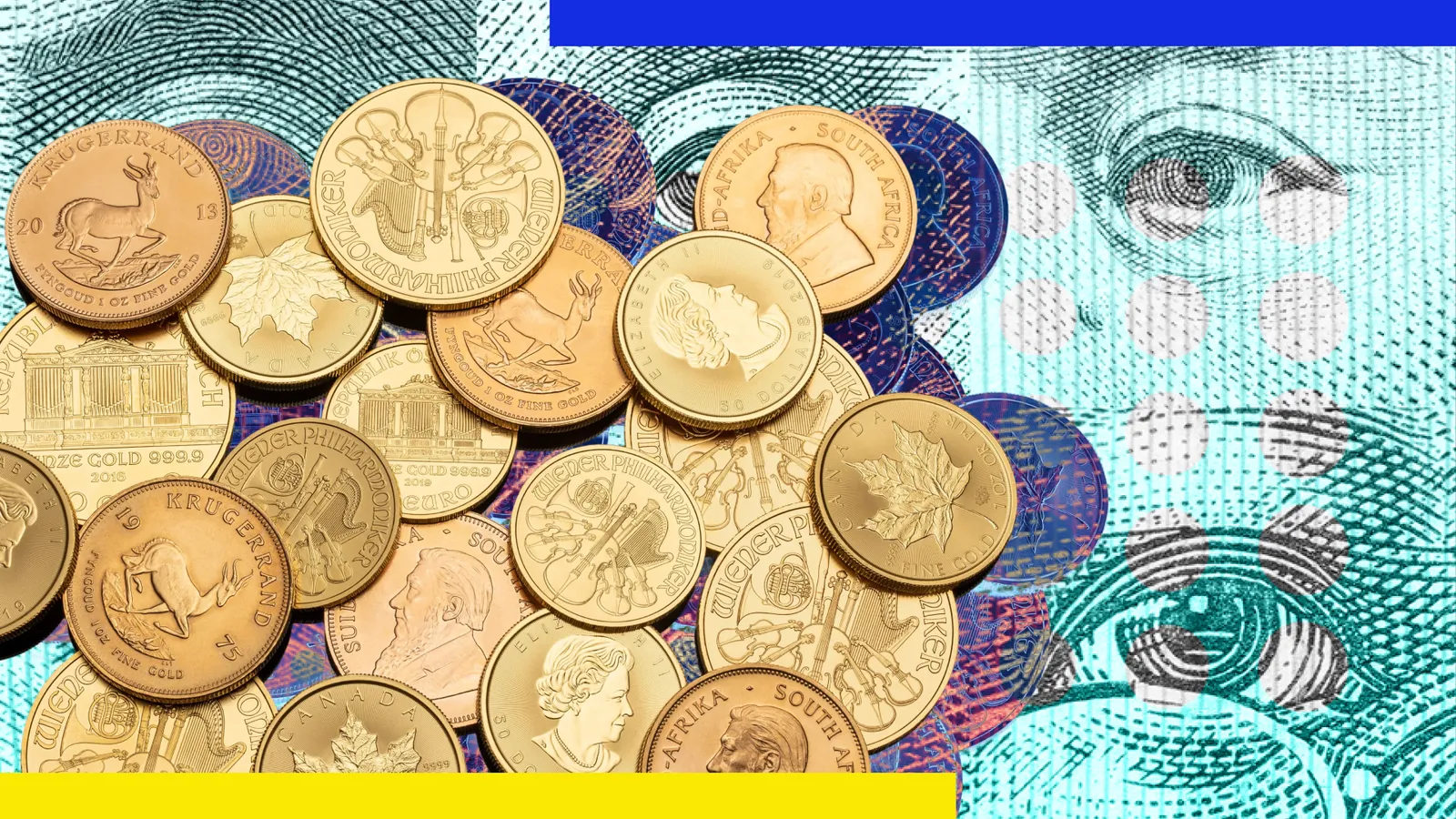
Modern fiat currencies derive their value from trust, demand and economic fundamentals rather than precious-metal backing
Currencies with floating exchange rates generally rise and fall according to market supply and demand
Some governments and central banks maintain fixed or managed exchange-rate systems to influence currency movements
Purchasing power parity looks at what money can buy in different countries, offering another way to assess currency value
How currencies are valued in global markets?
A currency is valued through its exchange rate against another currency. The exchange rate shows how much of one currency can be exchanged for another. For example, if one euro can be exchanged for 1.10 US dollars, the EUR/USD exchange rate is 1.10.
This means a currency is never valued in isolation. Its value is always measured relative to another currency.
Exchange rates are different from purchasing power. A currency may strengthen against another currency while the cost of goods and services at home continues to rise because of inflation. Economists often use purchasing power parity (PPP) to compare what money can actually buy in different countries.
The way a currency is valued can also depend on its exchange-rate system. Major currencies such as the US dollar, euro and British pound generally move according to supply and demand in the foreign exchange market. Other currencies may be fixed or managed against another currency, often with support from a central bank.
Which factors influence a currency's value?
For currencies that trade freely in the foreign exchange market, value is largely driven by supply and demand. When demand for a currency increases, its value may rise. When demand falls, its value may weaken.
Several factors can influence this balance. Strong economic growth, lower inflation, higher interest rates and confidence in a country's financial system can all support demand for a currency. Trade and investment flows also play a role, as foreign businesses and investors often need the local currency to buy goods, services or financial assets.
A currency may come under pressure when inflation rises, economic growth slows or uncertainty increases. Government debt levels, trade imbalances and changes in market sentiment can also affect exchange rates.
Currency markets are forward-looking, meaning exchange rates often respond not only to current conditions but also to expectations about what may happen next.
What affects currency supply and demand?
Changes in interest rates, inflation, capital flows and money supply can all affect currency supply and demand. These factors influence how attractive a currency appears to investors, businesses and financial markets, helping to shape exchange rates over time.
Interest rates
Higher interest rates can make a currency more attractive to investors seeking returns on deposits, bonds and other interest-bearing assets. This can increase demand for the currency and support its value.
However, expectations matter as well. Currency markets often react to what traders think central banks will do next. A currency may weaken after a rate rise if investors expected a larger increase or a more hawkish outlook.
Inflation
Inflation affects both purchasing power and confidence. Low, stable inflation can support a currency because it suggests prices are relatively predictable and money is retaining its value.
Higher inflation can have the opposite effect, reducing purchasing power and potentially weakening demand for a currency. Traders often monitor inflation data because it can influence future central bank decisions and interest rates.
Capital flows
Capital flows refer to the movement of money between countries. Foreign investment in shares, bonds, businesses or property can increase demand for a currency because investors typically need the local currency to purchase those assets.
Capital outflows can have the opposite effect, particularly if investors become concerned about economic growth, government finances or political stability.
Money supply
Money supply refers to the amount of money circulating within an economy. If the supply of a currency grows faster than demand for it, the currency may come under pressure.
Central banks can influence money supply through monetary policy, while government spending and broader economic conditions can also play a role. More money in circulation does not automatically weaken a currency, but it can if demand and confidence fail to keep pace.
How can a country strengthen its currency?
A country can strengthen its currency by increasing demand for it and maintaining confidence in its economy. Factors such as low inflation, stable public finances, strong trade performance and credible economic policy can all help support a currency's value.
There is rarely a single solution. Higher interest rates may attract foreign investment, while lower inflation can help preserve purchasing power and confidence. However, investors and traders also consider factors such as economic growth, government debt, employment and political stability when assessing a currency's outlook.
Some of the main ways a country can support its currency include:
- Higher interest rates, which may attract foreign capital when inflation is under control.
- Lower inflation, which can help preserve purchasing power and support confidence.
- Stronger trade performance, which can increase demand for the local currency.
- Sustainable government finances, which can reassure investors about long-term stability.
- Central bank intervention, which may be used to support a pegged exchange rate when sufficient reserves are available.
The impact of these measures often depends on the country's exchange-rate system. Floating currencies tend to respond quickly to economic data and market expectations, while pegged currencies rely more on the policies used to maintain the target exchange rate.
What gives fiat currency its value?
A fiat currency has value because people, businesses and governments accept it as a means of payment. Unlike commodity-backed currencies, modern fiat currencies are not backed by physical assets such as gold or silver.
Instead, their value is largely based on confidence in the issuing country, its institutions and the economy that supports the currency. The more widely a currency is trusted and used, the more valuable it is likely to be.
Exchange rates are only one way to measure a currency's value. Economists also look at purchasing power, which reflects how much goods and services a currency can buy within an economy. Purchasing power parity (PPP) is one method used to compare this across countries.
How the foreign exchange market determines exchange rates?
Currencies are traded in pairs, with one currency valued against another. For example, in EUR/USD, the euro is the base currency and the US dollar is the quote currency. The exchange rate shows how much of the quote currency is needed to buy one unit of the base currency.
Exchange rates move as buyers and sellers interact in the forex market. If demand for a currency increases, its value may rise relative to other currencies. If demand weakens or selling pressure increases, its value may fall.
The foreign exchange market includes banks, financial institutions, companies, investment funds and individual traders. Prices are influenced by a constant flow of transactions and orders throughout the trading day.
Forex trading takes place almost continuously during the working week, allowing markets to react quickly to new information. Economic data releases, interest-rate expectations, inflation reports, trade developments and political events can all influence exchange rates, often before the broader economy shows visible signs of change.
Exchange-rate systems: fixed, floating and managed
Exchange-rate systems determine how much a currency can move against another currency. Some currencies are largely driven by market forces, while others are fixed or managed by central banks.
Floating exchange rates: market pricing
A floating exchange rate is determined by supply and demand in the foreign exchange market. Major currencies such as the US dollar, euro and British pound generally operate under floating exchange-rate systems.
Under a floating system, exchange rates respond to factors such as interest rates, inflation, economic growth and market expectations. Because there is no fixed target to maintain, prices can adjust quickly as new information becomes available.
Fixed exchange rates: currency pegs
A fixed exchange rate links a currency to another currency or asset at a predetermined level. This arrangement, often called a currency peg, is designed to keep the exchange rate relatively stable.
Saudi Arabia's riyal peg to the US dollar is a well-known example. To maintain the peg, the central bank may buy or sell currencies using its foreign reserves when the exchange rate comes under pressure.
While a peg can reduce day-to-day fluctuations against the anchor currency, factors such as inflation, capital flows and market confidence can still affect the broader economy.
Managed exchange rates: central bank intervention
Managed exchange-rate systems sit between fully floating and fully fixed systems. Exchange rates are allowed to move, but central banks may intervene when they believe market movements have become too volatile or no longer reflect policy objectives.
Intervention can involve buying or selling currencies in the foreign exchange market, while interest-rate decisions and policy announcements can also influence exchange rates indirectly.
Understanding the exchange-rate system behind a currency can provide useful context when assessing its performance. A floating currency, a pegged currency and a managed currency may all appear stable at times, but the reasons for that stability can be very different.
FAQs
What does it mean when a currency is stronger than another?
A stronger currency can buy more of another currency in a specific exchange rate, such as GBP/USD or EUR/USD. It does not mean the currency is stronger against every other currency, or that the cost of living is lower at home, as domestic purchasing power is also affected by inflation and local prices.
Why can a currency lose value even when interest rates rise?
A currency can weaken after an interest-rate rise if markets expected a larger increase or believe rates may fall in the future. Exchange rates often respond to expectations, economic outlooks and inflation trends, not just the headline rate decision.
Can a country keep a currency peg forever?
A currency peg can remain in place for many years if the central bank has sufficient reserves and markets remain confident in the policy. However, inflation, capital outflows or changing economic conditions can make a peg more difficult to maintain over time.
Is exchange-rate value the same as what your money buys at home?
No. An exchange rate measures the value of one currency relative to another, while purchasing power reflects what that money can buy within an economy. Economists often use purchasing power parity (PPP) to compare buying power across countries.
What makes people want to buy a country's currency?
Demand for a currency can come from trade, investment, savings and financial markets. Strong exports, attractive interest rates, controlled inflation and confidence in a country's economy can all increase demand for its currency.