Help
Help 
UK inflation falls to 15-Month low but energy risks may limit the relief
UK inflation fell more than expected to a 15-month low in June as cheaper motor fuel, softer food inflation and clothing discounts reduced pressure on household budgets. The relief may be temporary, however, as higher domestic energy bills and renewed Middle East tensions threaten to push inflation higher again.
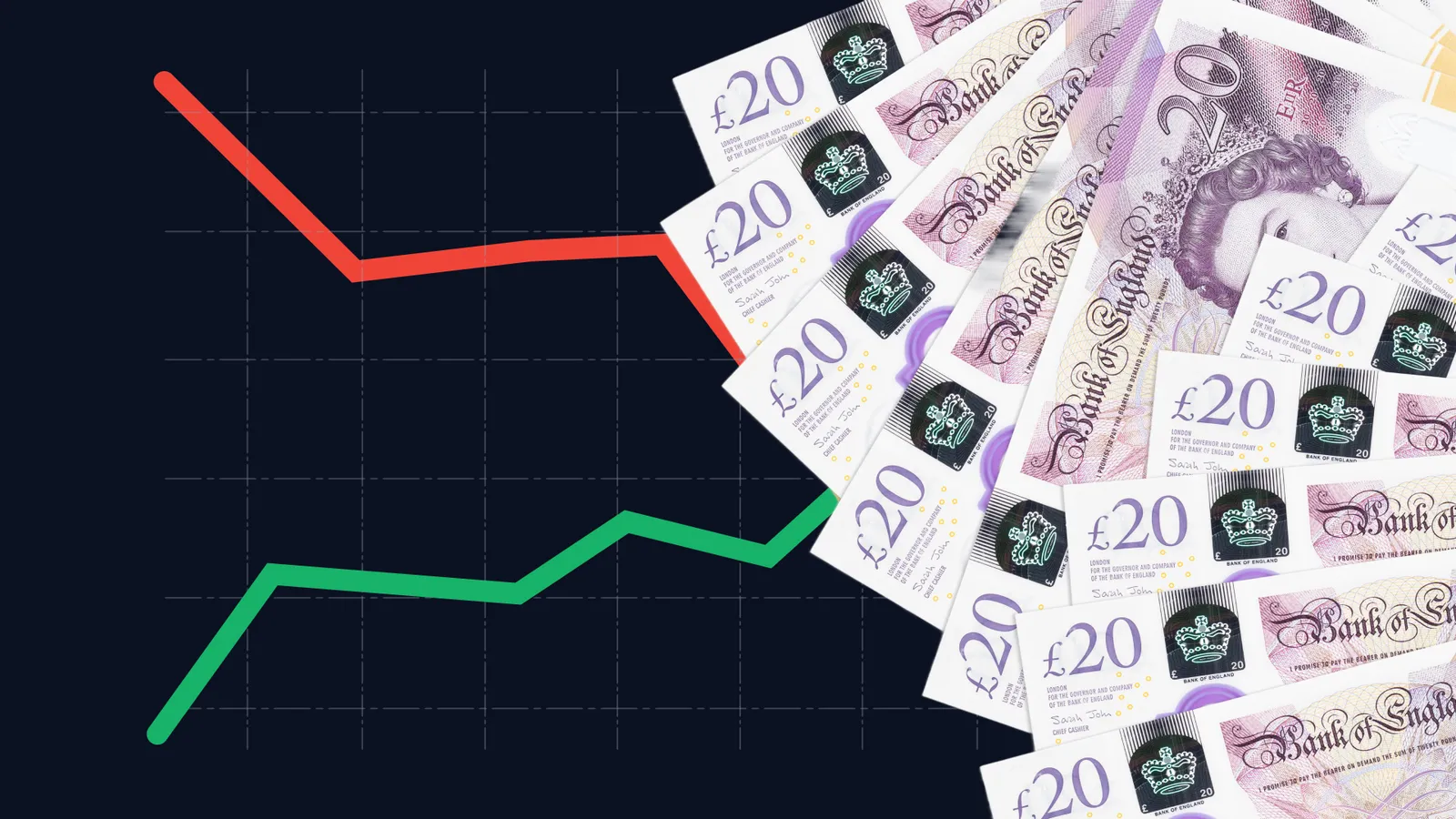
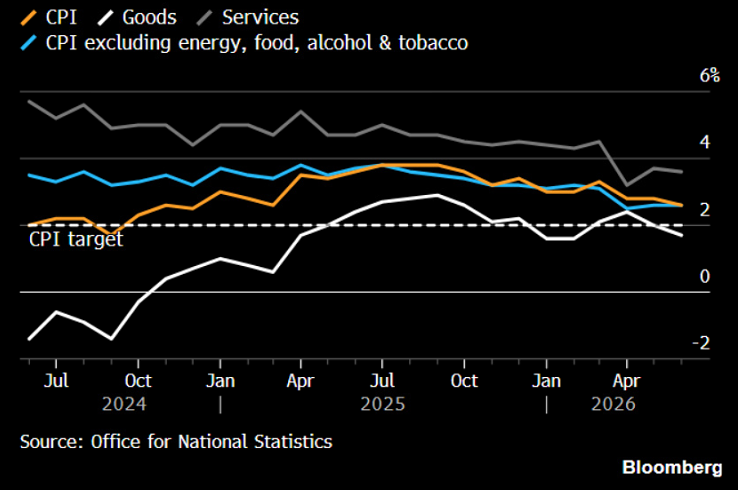
UK inflation slowed to 2.6% in June from 2.8% in May.
The reading was below the 2.7% market forecast.
Petrol and diesel prices fell 3.1% during the month.
Markets still price at least one Bank of England rate hike this year.
UK inflation falls for a third month below forecasts
UK consumer-price inflation slowed to 2.6% in the 12 months to June, down from 2.8% in May and the lowest annual rate since March 2025.
The reading came in below the 2.7% expected by economists and marked the third consecutive month in which inflation undershot forecasts.
Source: Bloomberg
The latest decline offers some relief to households after several years of elevated living costs. It also gives the Bank of England more room to keep interest rates unchanged at its upcoming policy meeting while it assesses the impact of higher energy costs, weak growth and a gradually loosening labor market.
The composition of the report, however, suggests that the improvement may not last.
Cheaper fuel provides the largest downward pressure
Transport costs made the biggest contribution to the decline in inflation.
Petrol and diesel prices fell by 3.1% in June after crude oil prices dropped on hopes that the US-Iran conflict was moving toward a settlement.
The decline in motor-fuel costs reduced the annual CPI rate by around 0.14 percentage points, making transport the largest source of downward pressure in the report.
UK petrol prices have also fallen to around 152 pence per liter, roughly 4% below their peak in late May.
This matters for households because fuel prices affect both direct transport costs and the wider cost of moving goods through the economy. Lower prices can reduce inflation expectations and provide a modest improvement in disposable income.
But crude oil has since moved back above $90 a barrel as tensions between the US and Iran escalated again, raising the possibility that part of the recent fuel-price relief could reverse.
Food inflation falls to its lowest since 2024
Food and non-alcoholic beverage inflation also eased in June, reaching its lowest level since 2024.
The category reduced the annual CPI rate by around 0.06 percentage points.
Food prices are especially important for households because they are highly visible and purchased frequently. Even a moderate slowdown can influence how consumers perceive the broader inflation environment.
The decline supports the view that price pressures are becoming less broad-based. However, higher energy and transport costs could still feed back into food prices if the renewed rise in oil and gas proves persistent.
Clothing discounts add to the decline
Heavy discounting in clothing and footwear provided another downward contribution.
The category reduced the annual inflation rate by around 0.04 percentage points as retailers cut prices.
Furniture, household goods, alcohol, tobacco and housing-related services also made small downward contributions.
These declines helped offset modest upward pressure from restaurants, hotels, recreation and miscellaneous goods and services.
The report therefore showed easing inflation across several goods categories, rather than a decline driven by one item alone.
Services inflation remains sticky
Services inflation slowed only slightly, to 3.6% from 3.7%.
The figure was still marginally above expectations and remains well above the Bank of England’s 2% inflation target.
Services prices are closely watched by policymakers because they are more heavily influenced by domestic wages, rents and operating costs than by global commodity prices.
The modest decline indicates that underlying inflation pressure is easing slowly rather than disappearing.
Core inflation, which excludes energy, food, alcohol and tobacco, also remained relatively firm. This suggests the Bank of England will remain cautious even after the softer headline reading.
June may mark the low point for inflation
The improvement in June may prove temporary.
Household energy bills are set to rise after a 13% increase in the regulated price cap. That change is expected to show up in July inflation data.
Natural-gas prices have also risen sharply in recent weeks, while oil prices have returned above $90 a barrel following renewed hostilities in the Middle East.
These developments could push headline inflation higher over the coming months, even if wage growth and domestic demand continue to soften.
June may therefore represent the low point for UK inflation this year rather than the beginning of a sustained move toward the 2% target.
Burnham government targets household energy costs
The cost of living has become an early priority for Prime Minister Andy Burnham’s government.
One of the administration’s first measures was the removal of value-added tax from household electricity bills beginning in October.
The government estimates that the change could reduce inflation by around 0.1 percentage points.
The policy may help offset part of the rise in regulated energy costs and provide some breathing space for households. Its impact will depend on wholesale energy prices and whether oil and gas markets remain under pressure.
The measure also shows how fiscal policy may increasingly influence the short-term inflation outlook alongside interest-rate decisions.
BOE expected to hold rates
The Bank of England is widely expected to leave interest rates unchanged at its next meeting.
Policymakers face a difficult balance. Higher energy prices could lift headline inflation, but the labor market is weakening and economic growth remains sluggish.
The latest inflation report strengthens the argument for patience. Headline CPI is now at 2.6%, services inflation is edging lower and fuel and food prices are providing relief.
Raising rates in this environment could place additional pressure on activity without addressing the external source of the energy shock.
The BOE will publish a fresh set of forecasts alongside its decision on July 30, giving markets a clearer view of how officials see the balance between inflation and growth.
Markets still price rate-hike risk
Despite the softer inflation report, investors have not removed the possibility of tighter policy.
Money markets currently price one rate increase this year and around a 60% chance of a second.
That reflects concern that higher oil and gas prices may persist and feed into household bills, business costs and inflation expectations.
The June data may therefore reduce the urgency for a near-term hike without eliminating the risk later in the year.
Future policy will depend heavily on energy prices, services inflation, wage growth and the strength of the labor market.