
 Help
Help 
Bitcoin surges as Treasury buybacks and Washington fuel the rally
President Donald Trump brought executives from Coinbase, Ripple, Kraken and Nasdaq to the White House and used the meeting to reinforce his support for digital assets. The administration repeated its backing for a U.S. Strategic Bitcoin Reserve, rejected the idea of a U.S. central bank digital currency, and renewed its push for clearer crypto legislation. That combination is changing how investors read the market. For years, regulation was seen as one of Bitcoin's biggest obstacles. Now some inv

Bitcoin climbed toward $75,000, marking its strongest weekly advance since early 2024.
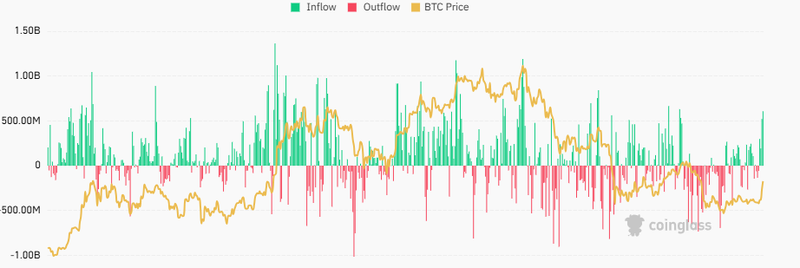
Spot Bitcoin ETFs attracted roughly $517 million in net inflows, the strongest demand since May.
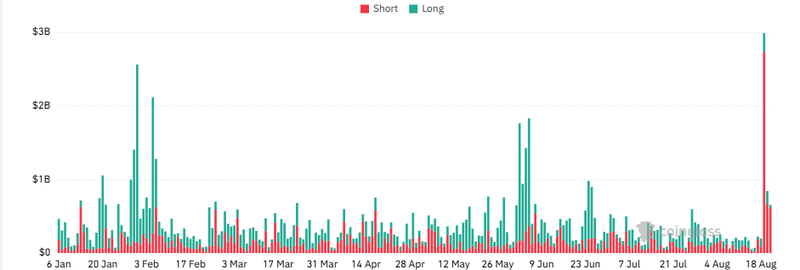
Short liquidations reached around $2.7-$3 billion in a single day, accelerating the rally.
A Senate procedural vote on the Clarity Act is scheduled for September 15 and could become the next major catalyst.
The White House is changing how investors read the crypto market
The meeting stood out because of who was in the room as much as what was said. Rather than treating crypto as a sector that needs tighter oversight, the administration presented digital assets as an industry the U.S. wants to keep at home. Trump's message was straightforward: build the rules in America, keep the companies in America, and stop sending investment elsewhere.
That is the part institutional investors are paying attention to
Large funds have never struggled to understand Bitcoin. The bigger issue has been uncertainty around custody rules, token classification and which regulator is ultimately in charge. Those questions have kept some investors on the sidelines for years. The Clarity Act is unlikely to solve every regulatory issue overnight, but even the prospect of a clearer framework is changing expectations before the vote has even taken place.
The Senate vote could become the next catalyst
Attention is now shifting toward September 15, when the Senate is expected to hold a procedural vote on the Clarity Act. The legislation is designed to draw clearer lines between the SEC and the CFTC, giving the industry a more predictable regulatory framework. Supporters argue that clearer rules would encourage investment, while critics continue raising concerns about conflicts of interest and consumer protections.
Markets are already treating the vote as more than a legislative event
A positive outcome would reinforce the idea that Washington is becoming increasingly supportive of digital assets. A setback would not necessarily reverse Bitcoin's longer-term trend, but it could slow some of the regulatory optimism that has helped fuel recent buying.
ETF money is returning
The rally is not being driven by retail traders alone. Spot Bitcoin ETFs attracted around $517 million in net inflows, their strongest performance since May. That matters because ETF flows often provide a cleaner picture of institutional demand than daily trading volumes.
When money enters spot ETFs, those products generally need to acquire Bitcoin to back new shares. That creates real buying rather than purely speculative positioning. The combination of stronger ETF demand and improving regulatory expectations is giving investors two reasons to rebuild exposure at the same time.
Source: Coinglass
The short squeeze made the move much bigger
The rally also fed on itself. As Bitcoin pushed higher, traders who had bet against the market were forced to close their positions. Those forced purchases added even more buying pressure, helping prices accelerate. Around $2.7-$3 billion short positions were liquidated within roughly 24 hours.
This is why Bitcoin's strongest rallies often happen faster than many other markets. When prices rise sharply, bearish traders become buyers, creating a feedback loop that can extend the move well beyond what ordinary buying might produce on its own.
Source: Coinglass
The Strategic Bitcoin Reserve is becoming part of the bigger picture
The White House also continued highlighting the U.S. Strategic Bitcoin Reserve, an initiative that has gradually become part of the broader policy narrative around digital assets. The reserve itself is not creating immediate new demand because it is based largely on government-held Bitcoin. But it has changed how many investors think about Bitcoin's role inside the financial system.
A few years ago, the conversation centered on whether governments would regulate crypto more aggressively. Now part of the discussion is whether governments themselves should hold Bitcoin as a strategic asset. That represents a meaningful shift in perception, even if the practical effects take longer to develop.
Treasury buybacks brought buyers back
The rally picked up speed after the U.S. Treasury unexpectedly expanded its buyback program for long-dated bonds. That helped pull Treasury yields lower after weeks of climbing borrowing costs, giving investors a reason to step back into risk assets.
The timing mattered. Bitcoin was already attracting fresh ETF money, so lower yields gave buyers another reason to stay in the trade instead of moving back into safer assets.
The rally now has more than one driver
Bitcoin's recent strength looks different from many earlier crypto rallies because several forces are working together rather than one dominating the story. Policy has become more supportive. Institutional money is returned through ETFs. Short sellers have amplified the move, and the market is approaching another important political milestone with the September Senate vote.
That does not guarantee the rally continues uninterrupted
Bitcoin remains sensitive to Treasury yields, Federal Reserve expectations and broader risk sentiment. But the balance of drivers has changed. Instead of relying mainly on speculative momentum, the market is increasingly responding to a combination of institutional demand, regulatory progress and improving confidence that digital assets are becoming more integrated into the U.S. financial system.


