
 Help
Help Bitcoin under pressure amid rising geopolitical and economic uncertainty
Bitcoin faces persistent selling pressure, falling to $64,071 as escalating Middle East tensions, surging crude oil prices, and proposed US tariffs reignite global inflation fears.

Intensifying US-Iran friction and potential maritime blockades in the Middle East have driven crude oil prices up by more than 30% in July alone.
Newly announced tariffs and renewed inflationary pressures bolster expectations of sustained hawkish policy from the Federal Reserve, weighing heavily on crypto-assets.
Implied volatility is accelerating; however, emerging bullish momentum signals in the MACD and RSI hint at a potential short-term recovery.
Date: 24 July 2026
Bitcoin declines as geopolitical risks and economic instability weigh on sentiment
Bitcoin valuations remain under downward pressure due to a convergence of geopolitical, trade, and monetary uncertainties. Over the past three days, the price of Bitcoin has depreciated by approximately 3.74%.
Geopolitical friction between the United States and Iran has escalated significantly, with Houthi forces warning of a naval blockade in the Bab el-Mandeb Strait in Yemen. A concurrent disruption of maritime transit across both the Strait of Hormuz and the Bab el-Mandeb Strait threatens severe fallout for global energy supply chains, which are already operating under considerable strain.
Consequently, both Brent and WTI crude oil benchmarks have surged by more than 30% during July alone. This sudden energy spike has reinforced market expectations that the Federal Reserve will implement restrictive monetary policies in its upcoming decisions. Such hawkish expectations typically depress capital allocation to cryptocurrencies as market participants become increasingly risk-averse.
Concurrently, US President Donald Trump has announced new tariff measures targeting approximately 60 trading partners. This trade policy shift further complicates the US inflation scenario, particularly if domestic producers pass these additional import costs directly onto end consumers rather than absorbing them within operational margins.
By the market close, Bitcoin had fallen 1.41% to settle at $64,071. This downturn coincides with an acceleration in the Bitcoin Volmex Implied Volatility Index (BVIV) from historically low levels. The BVIV, which tracks the implied volatility derived from Bitcoin options pricing, tends to rise sharply during periods of aggressive directional price action in either direction.
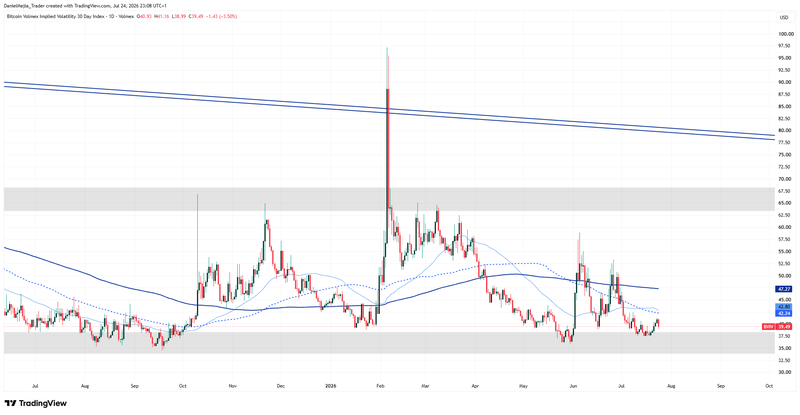
Figure 1. Bitcoin Volmex Implied Volatility BVIV (2025–2026). Source: Own analysis conducted via TradingView.
Technical analysis of Bitcoin
From a technical perspective, Bitcoin remains constrained within a downward trajectory, reflecting persistent distribution and sustained selling pressure. A detailed examination of the current market structure reveals several critical technical observations:
- Trend Context: On daily timeframes, Bitcoin continues to trade below both its 100-day and 200-day Simple Moving Averages (SMAs). This sustained positioning beneath major long-term moving averages reinforces the prevailing macro bearish bias.
- Resistance Levels: Should short-term resistance near $67,000 be reclaimed, the next major technical ceiling is identified at $72,000—a level that converges with the descending 200-day SMA. A decisive close above $72,000 would effectively invalidate the overarching macro downtrend and signal the potential for a broader structural recovery.
- Support Levels: If primary structural support at $60,000 is compromised, the next critical floor is situated at $53,000, which has historically functioned as a prominent long-term pivot point. A sustained break below $53,000 would substantially increase the probability of a deeper market correction.
- Momentum Indicators: Conversely, both the Moving Average Convergence Divergence (MACD) and the Relative Strength Index (RSI) are displaying an upward performance, suggesting that bullish momentum could build in the short term. Nevertheless, macroeconomic developments and geopolitical events are anticipated to remain the dominant drivers of immediate market direction.
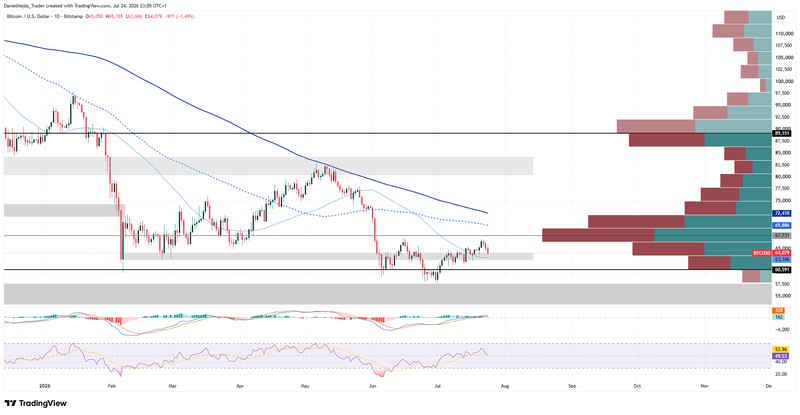
Figure 2. Bitcoin Prices (2025–2026). Source: Own analysis conducted via TradingView.


